Author: Michael Barnard

Hydrogen Learning Curves Are Counting The Wrong Doublings

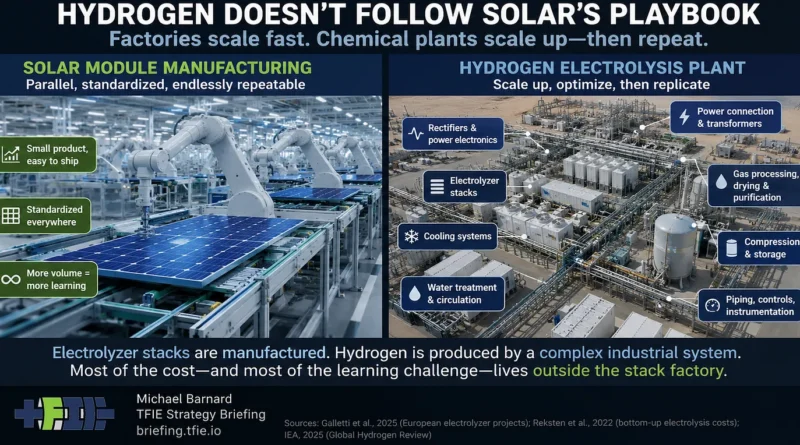
Hydrogen cost forecasts often borrow one of the clean-energy transition’s most useful empirical tools: the experience curve. If a technology has historically fallen by a given percentage in cost every time cumulative deployment doubles, analysts can estimate how many doublings lie ahead and compound the learning rate into a future … [continued]

Hydrogen Kept Failing The Test — And Getting Another Test

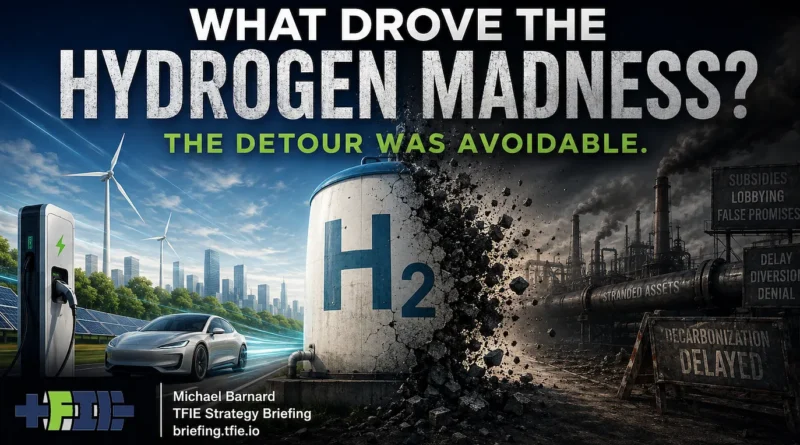
In 2023, a senior executive responsible for decarbonizing a major transportation company asked me, with some exasperation, what drove the “madness on hydrogen.” Hydrogen proposals kept arriving for applications where the energy balance and economics looked dreadful. That conversation became What Drives This Madness On Hydrogen?, an attempt to explain … [continued]

Africa’s Solar Boom Is Showing Up On Rooftops Before It Shows Up In The Statistics

Africa officially added about 4.5 GW of solar in 2025. It also imported about 18.2 GW of solar modules. Those numbers cannot simply be substituted for one another — panels sitting in warehouses or ports are not operating solar systems — but the gap is too large to dismiss as … [continued]

CUTRIC Has Lost The Right To Be Treated As A Neutral Transit Authority

CUTRIC has a credibility problem that extends well beyond its long enthusiasm for hydrogen buses. The underlying issue is whether an organization whose mission includes commercializing technologies should receive a presumption of neutrality when it advises transit agencies on investments worth hundreds of millions of dollars. After reviewing CUTRIC’s strategy, … [continued]

Hydrogen Gets Far More Attention Than Its Deployment Justifies

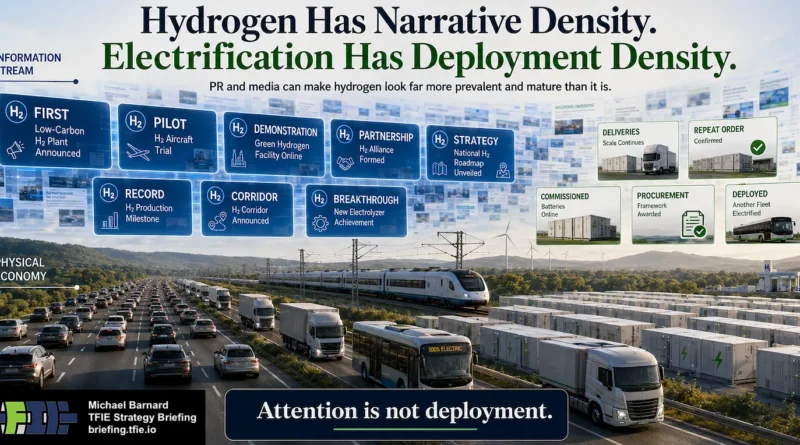
Hydrogen occupies an unusually large share of the energy-transition information stream for the amount of physical deployment behind it. Fuel-cell trucks, buses, trains, ships, storage projects, demonstrations and records recur through corporate releases, government announcements, trade publications and mainstream reporting, creating the impression that hydrogen remains a substantial parallel pathway … [continued]

Poland’s Coal Problem Has Changed

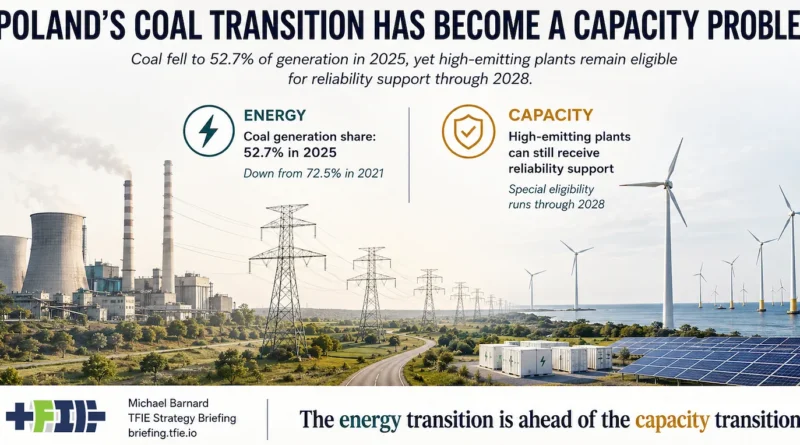
Poland’s coal transition is moving much faster than the country’s reputation suggests. Coal supplied 72.5% of Polish electricity in 2021. By 2025 it was down to 52.7%, while renewables reached 31.4%. Coal supplied less than half of generation in five separate months, and in June renewables generated more electricity than … [continued]

Methane Thermolysis Has A Carbon Market Problem

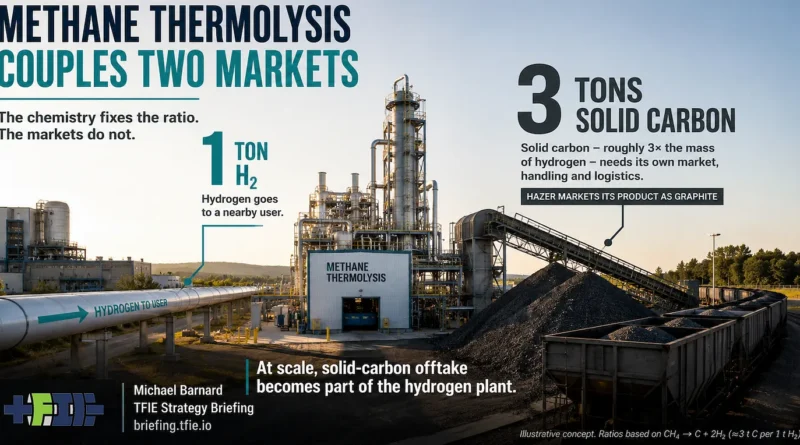
Methane thermolysis has one of the cleaner propositions in the hydrogen space. The process is also commonly called methane pyrolysis, but I prefer thermolysis. An engineer and founder working in the field pointed out to me that the useful distinction is straightforward: it is heat, not flames, doing the work. … [continued]

Energy Security Is Increasing The Value Of Cross-Border Electricity

Energy independence was an understandable slogan in Europe after Russia’s invasion of Ukraine sent gas and electricity prices through the roof. But it was also the wrong lesson. European countries had not erred by depending on one another. They had allowed too much of a critical energy supply to depend … [continued]

Battery Costs Are Global. Freight Geography Isn’t.

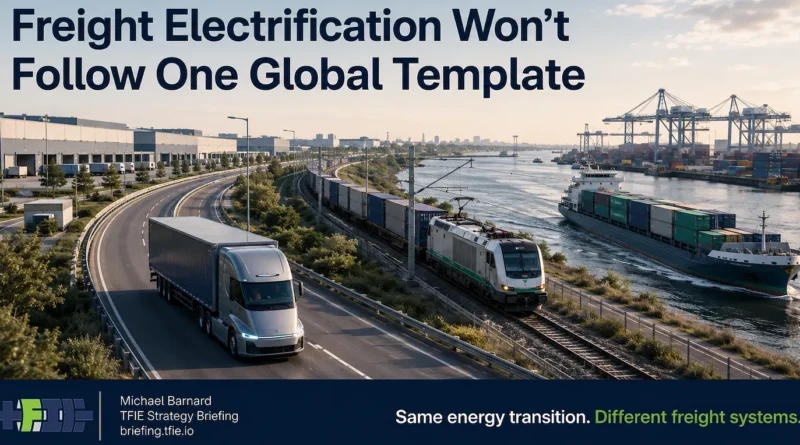
Battery costs are falling globally, but freight does not begin from a common starting point. China, India, Europe and the United States move domestic cargo through very different combinations of road, rail and water, so cheaper batteries will not produce one standard freight-electrification pathway. Using the best comparable data I … [continued]

A 1995 Dodge Ram Shows What US EV Policy Keeps Missing

A reader who owns a hand-me-down 1995 Dodge Ram plans to keep repairing it until rust, gasoline prices or regulation finally stop him. I think he is making a rational household decision. The truck is paid for, he knows how to maintain it, and a repair bill of hundreds or … [continued]