
C-Crete, A Cement-Free Concrete, Debuts In Seattle
C-Crete, a startup company begun by an MIT Ph.D, has invented a way to make concrete without using cement. Its first pour happened recently.

C-Crete, a startup company begun by an MIT Ph.D, has invented a way to make concrete without using cement. Its first pour happened recently.
There are a lot of exciting developments in the electric car industry, with record market shares in terms of electric car sales now being reported regularly in many countries around the world. Another sector that is also now starting to see some traction is the heavy electric truck sector. Heavy … [continued]
Researchers at MIT are discovering new ways of making concrete that will release less carbon dioxide in the atmosphere.
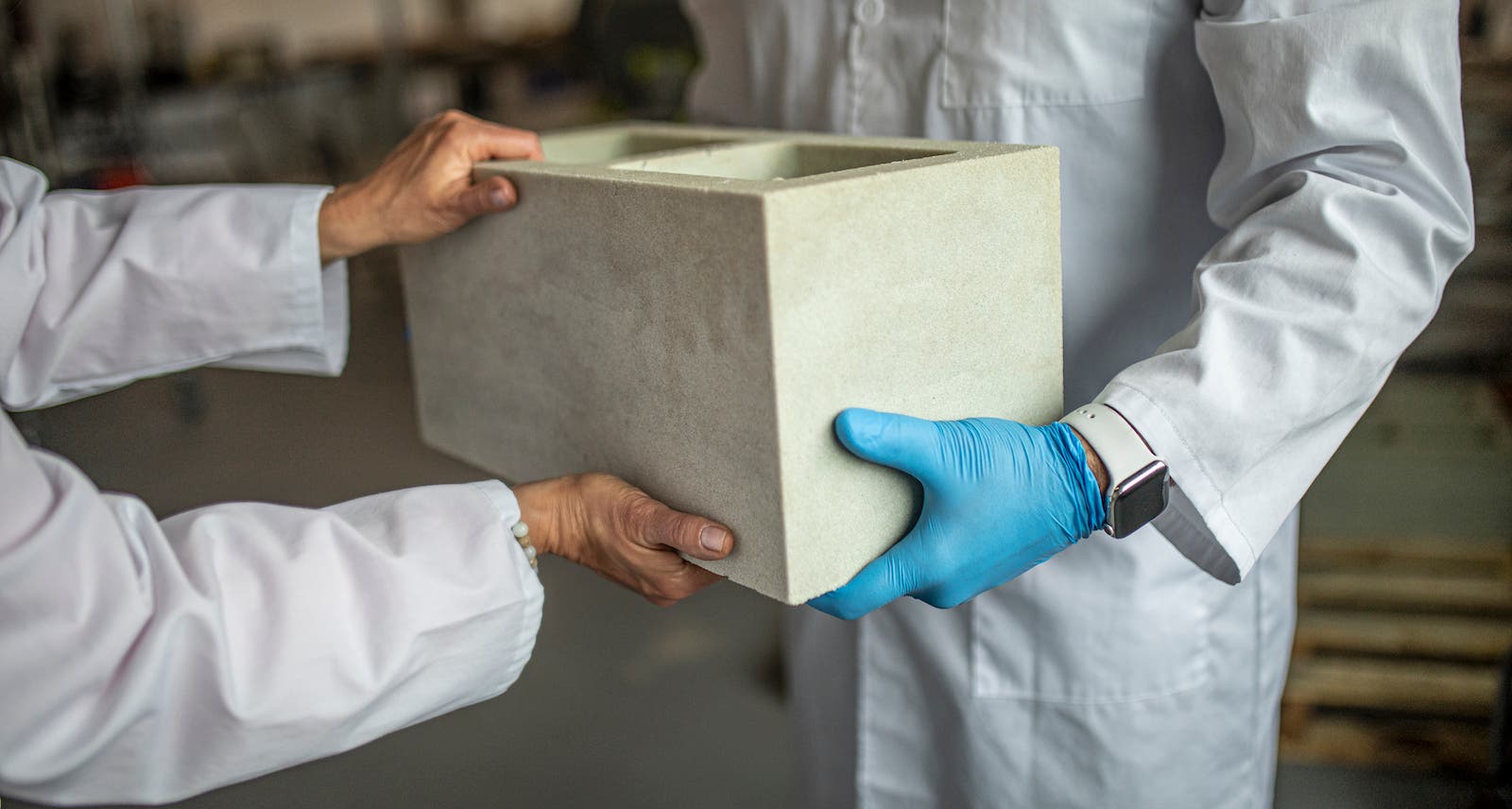 After stumbling on biofuel, algae steps up to save the concrete and cement industries from themselves (photo courtesy of Prometheus Materials).
After stumbling on biofuel, algae finds its footing and steps up to help the concrete industry cut its carbon footprint, too.
Demand Changes Can Drive The Future Of Zero-Carbon Concrete As world leaders convene at the World Economic Forum’s annual conference in Davos to discuss global issues including climate change, they will spend the day surrounded by concrete. Houses, skyscrapers, roads, freeways, bridges, sidewalks, water systems, dams, and more rely on … [continued]
Both the Biden administration and Congress recognize the importance of investing big in a clean and globally competitive industrial manufacturing base. A cornerstone of that effort is leveraging the federal government’s purchasing power to buy cleaner concrete, steel, and other industrial materials to catalyze market transformation. The Biden administration has … [continued]
The National Renewable Energy Laboratory (NREL) has been selected to receive over $5.4 million from the U.S. Department of Energy Advanced Research Projects Agency-Energy (ARPA-E) for the development of technologies that can transform buildings into carbon storage structures. The funding is part of ARPA-E’s Harnessing Emissions into Structures Taking Inputs from … [continued]
The California legislature has a big opportunity to cut greenhouse gas emissions from one of the world’s most carbon-intensive products — concrete.
A recent report in Nature not only highlighted the need for greening the building blocks of our civilization, but also made some strong suggestions for how to do so. “Cement and steel are essential ingredients of buildings, cars, dams, bridges and skyscrapers. But these industries are among the dirtiest on … [continued]
Originally published on RMI.org. By Audrey Rempher & Victor Olgyay It is unlikely that you know how much carbon was produced by making your driveway. But if you did, you might think about ways to build it better. That is the concept behind the “Buy Clean Colorado” legislation signed into … [continued]


