Author: Michael Barnard

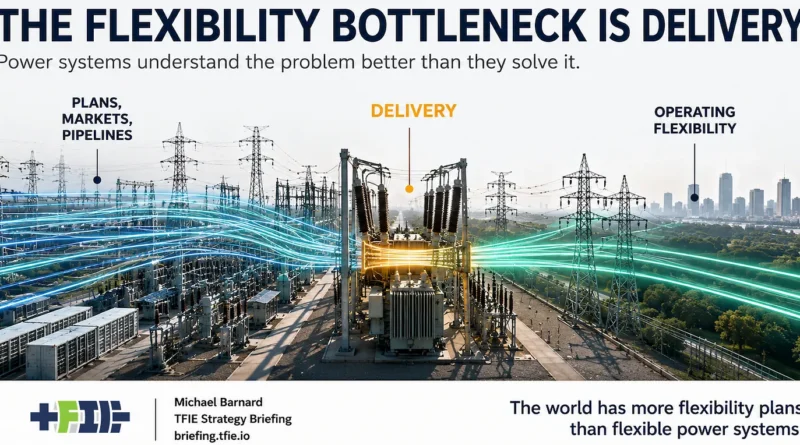
Power Systems Have More Flexibility Plans Than Flexible Grids

Grid flexibility is easy to mistake for a technology market. One jurisdiction announces several gigawatt-hours of batteries, another creates a new ancillary-service product, and a third launches a capacity auction, pumped-hydro program or demand-response target. Those are meaningful signs of activity, but they do not answer the harder question: can … [continued]
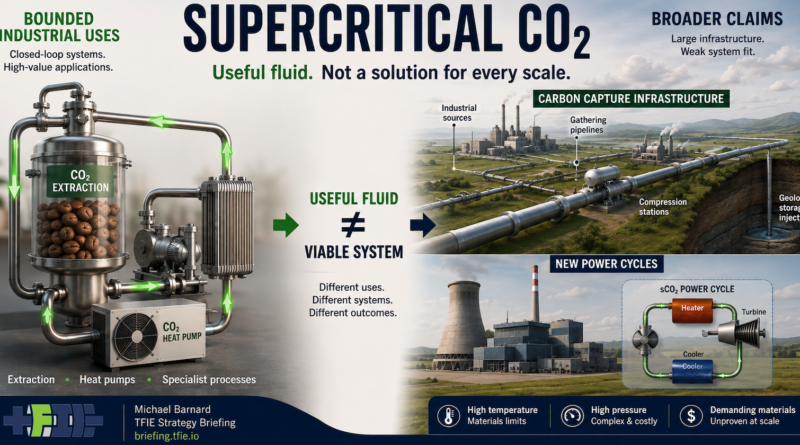
Supercritical CO₂ Is Useful. The System Claims Are The Problem.

Supercritical carbon dioxide is genuinely useful stuff. Above roughly 31° Celsius and 73.8 bar, CO₂ enters a state that combines gas-like flow behavior with densities that can become much closer to liquids. Engineers have found good uses for that combination. It can extract caffeine from coffee, separate valuable compounds from … [continued]

Hydrogen Trains Get Headlines. Battery Trains Get Used.

India’s first hydrogen passenger train arrived with an impressive label attached: the world’s most powerful hydrogen train. That’s a genuine engineering accomplishment, but it isn’t the competition railway operators are trying to win. They need trains that leave the depot, cover the timetable, receive fuel or charge reliably, return from … [continued]

Climate Change Is Rewriting Europe’s Nuclear Cooling Assumptions

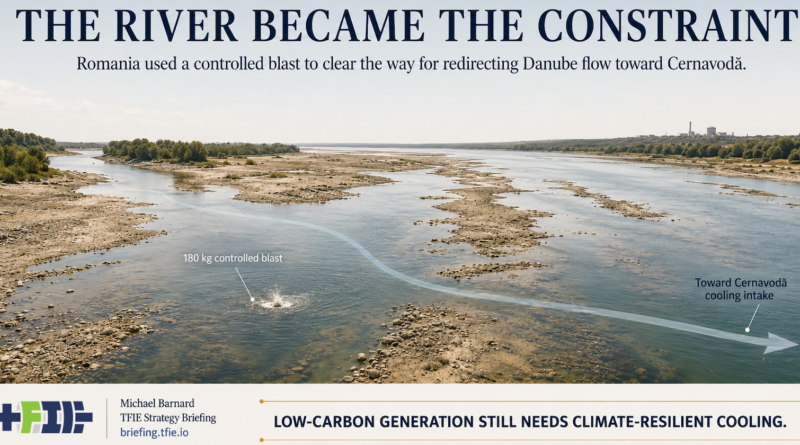
Romania gave Europe the kind of energy-transition image that should make planners uncomfortable. On August 3, Romanian naval engineers used 180 kilograms of explosives to remove a rock outcrop in the Bala Canal, a branch of the Danube. The controlled blast cleared the way for a temporary dam intended to … [continued]

Europe’s 700-Bar Hydrogen Network Is Closing And Reappearing

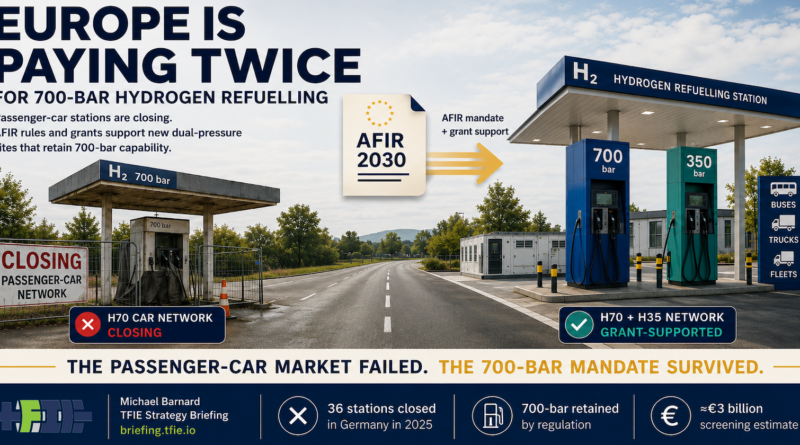
Europe’s public hydrogen refuelling network is not growing, but shrinking slightly. It is, however, changing shape. The part built for passenger cars is shrinking, while a new generation of dual-pressure stations is carrying 700-bar capability forward into the bus and truck layer. Germany closed 36 first-generation hydrogen refuelling stations during … [continued]

Ember’s Electric Coaches Show Intercity Bus Electrification Is Already Here

Edinburgh makes electric transit visible. The city has electrified regional rail, trams and a growing number of electric buses, including large battery-electric double-deckers that stand out from the pavement. That progress is important, but it is not especially surprising. Urban buses were always expected to be among the first heavy … [continued]

Lower Saxony’s Hydrogen Trains Are Now A Battery Exit Strategy Problem

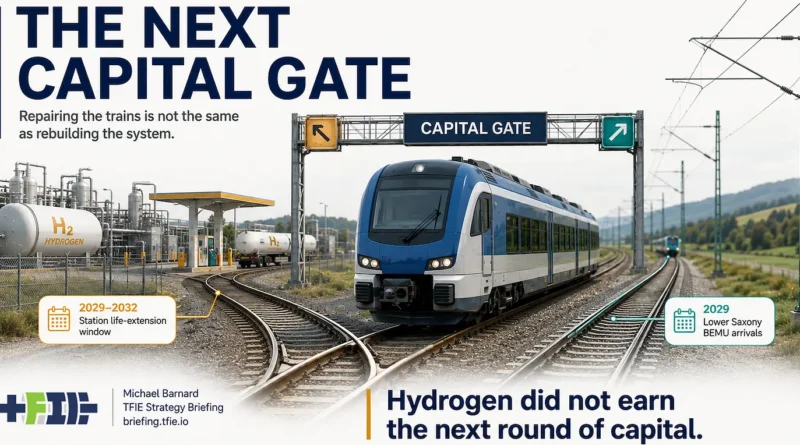
Lower Saxony’s hydrogen trains will probably not be retired because a politician announces that battery-electric multiple units were the better technology. They will be retired when the bill arrives for extending the life of an underused, specialized hydrogen system and the state has to compare that cost with buying the … [continued]

Germany Is Rebuilding Its Failed Russian Gas Strategy With Hydrogen

Germany’s hydrogen strategy keeps producing numbers that sound like market evidence until the subsidy structure is examined. Its latest hydrogen freight program attracted 526 applications seeking €455 million from a €220 million fund, including 71 applications for refueling stations and 455 for vehicles or fleets. That sounds like pent-up commercial … [continued]

Aviation’s $4 Trillion Footprint Does Not Prove Every Flight Adds Growth

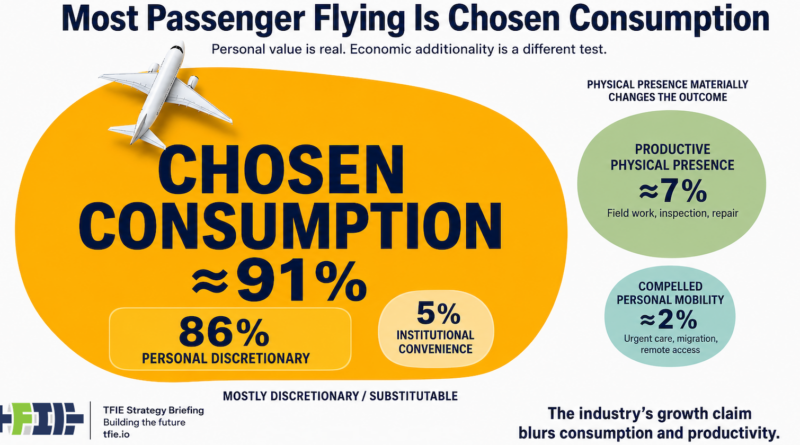
Aviation performs useful economic work. It connects remote communities, moves urgent and high-value cargo, brings visitors to places that genuinely depend on tourism and enables work that still requires people to be physically present with equipment, sites, customers or negotiating partners. Those are strong arguments for aviation as a service. … [continued]

The 2100 Projections Came First. Then Clients Asked For 2050 Roadmaps.

Most decarbonization scenarios stop at 2050 because policy targets do. Steel mills, aircraft fleets, ports, electricity grids and industrial supply chains do not. A pathway can reach net zero in a target-year spreadsheet while leaving behind an energy system that is expensive, physically implausible or dependent on technologies that never … [continued]