Author: Michael Barnard

2 GW HVDC Is Becoming Standard. The Rest Of The Grid Isn’t.

High-voltage direct current transmission used to look like a specialist technology reserved for unusually long lines, subsea links or awkward grid problems. That is changing. In a recent Redefining Energy conversation, Cornelis Plet, CTO of Grid Systems Integration at GE Vernova, described HVDC as something that is moving into the … [continued]
OCTA Is Spending Again On Hydrogen Because The Fuel Chain Failed

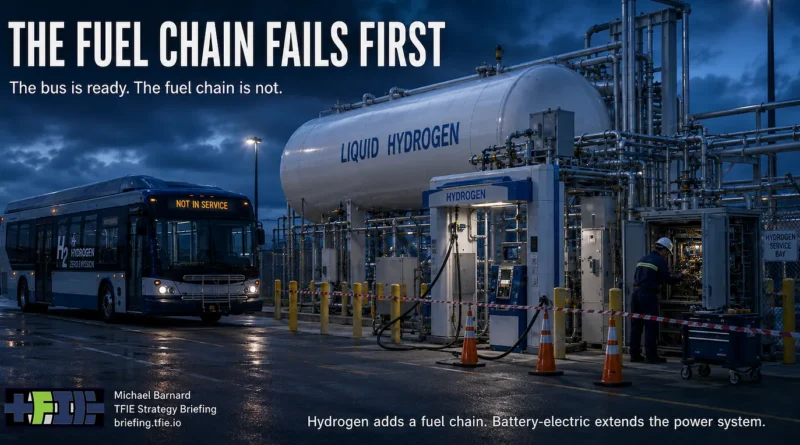
The Orange County Transportation Authority is spending another $27.6 million on hydrogen infrastructure as it expands its fuel-cell bus fleet from 10 buses toward 50. Read the announcement quickly and it sounds like ordinary fleet growth: more buses require more fueling capacity. OCTA’s history makes the story much less straightforward. … [continued]

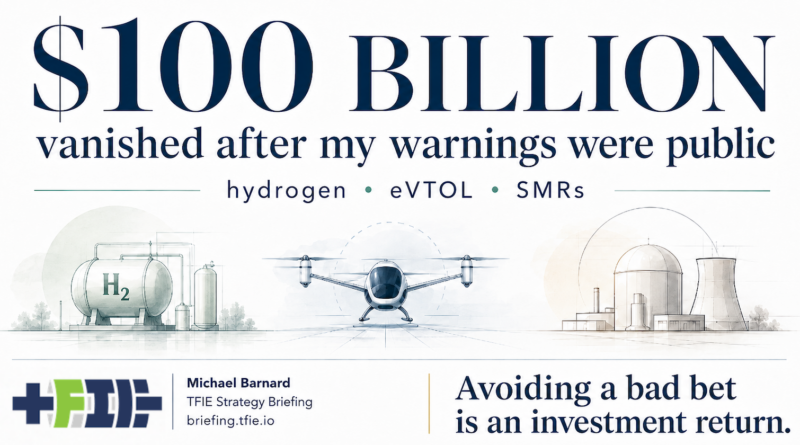
About $100 Billion Vanished After My Technology Warnings Were Public

The Financial Times supplied an interesting prompt this week. Short sellers have made an estimated $2.1 billion betting against Oklo, NuScale and Nano Nuclear, while $30.3 billion of their combined market value has disappeared since the three small modular reactor developers peaked in October 2025. I have been writing for … [continued]

Europe’s Banks Are Treating Hydrogen As A Niche, Not An Economy

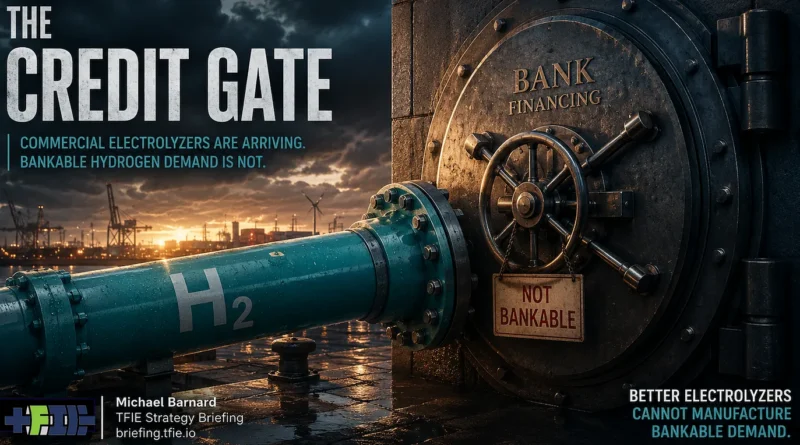
The Port of Antwerp-Bruges now has what its developer calls a commercial-scale AEM electrolyzer. Power to Hydrogen’s half-megawatt system is intended to make high-purity hydrogen for real users in a real industrial setting, and that is a legitimate engineering milestone. Moving anion-exchange-membrane electrolysis out of smaller stacks and into industrial … [continued]

New Science Says Scrapping A Working Gas Car For An EV Is Usually Greener

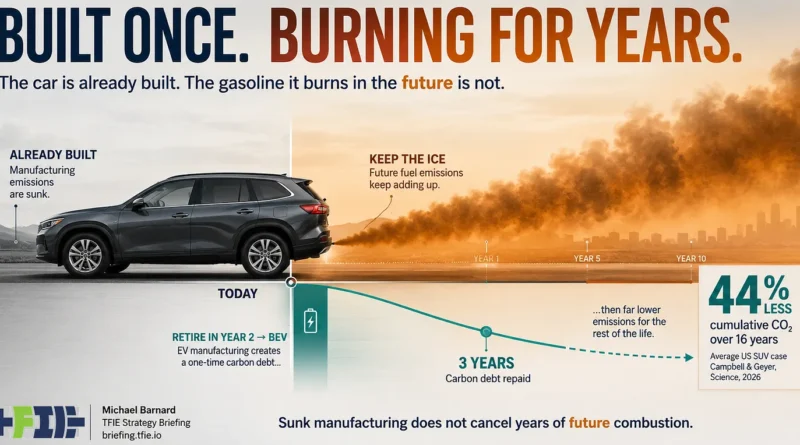
“The greenest car is the one already built” has been one of the more durable arguments against replacing internal combustion cars with EVs. It sounds sensible enough. Manufacturing a new vehicle has a carbon cost, while continuing to drive an existing car avoids another manufacturing event. But that framing quietly … [continued]

China Is Making More Aluminum. Its Emissions May Still Be Peaking.

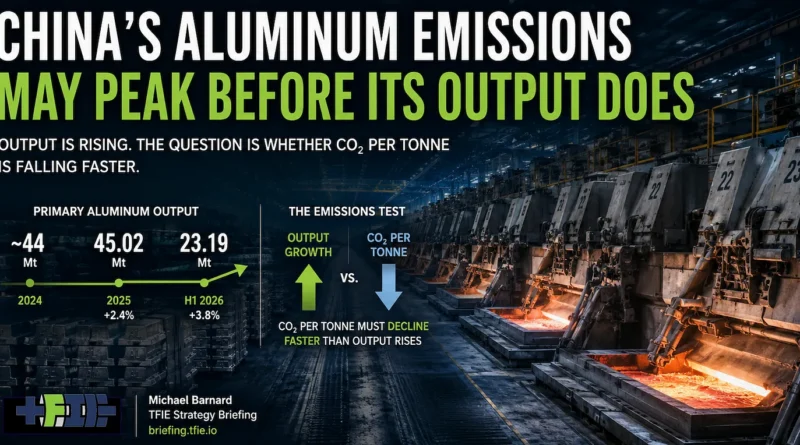
Earlier this year I argued that China’s aluminum-sector carbon emissions had probably peaked around 2024. Since then, the output data have weakened one important part of that case. China produced 45.02 million tonnes of primary aluminum in 2025, 2.4% more than the year before, and another 23.19 million tonnes in … [continued]

Ontario’s First Electricity Shortfall Isn’t A Capacity Shortfall

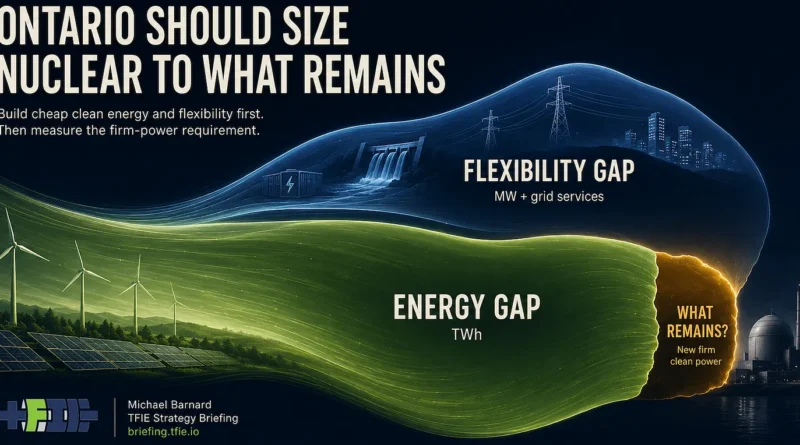
Ontario needs a lot more electricity. Demand hit 145.6 TWh in 2025, up 4.4% in a year, and IESO’s reference case gets to 250 TWh by 2050. But its own range runs from 207 to 297 TWh. That’s not a rounding error. It’s a completely different buildout depending on which … [continued]

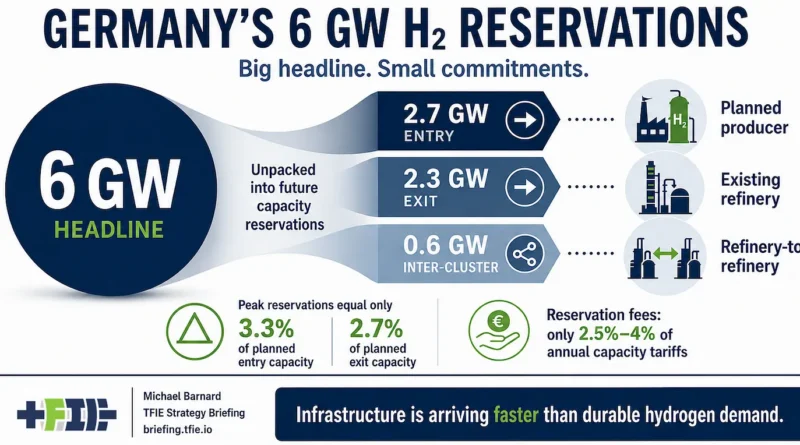
Germany’s Hydrogen Industry Is Overselling Its 6 GW Reservation Headline

Germany’s hydrogen industry finally has a demand number it can put in a headline: nearly 6 GW of paid reservations on the country’s emerging hydrogen core network. FNB Gas presented the reservations and customers’ willingness to pay as a strong indication that the hydrogen economy is gathering momentum. Six gigawatts … [continued]

AI Data Centers Are A Regional US Grid Issue, Not A Global Power Crisis

AI has changed the data-center electricity story. Demand is rising much faster than it did through much of the 2000s and 2010s, hyperscale facilities are being proposed and built at extraordinary scale, and utilities in several US regions are confronting loads large enough to affect generation planning, substations, transformers and … [continued]

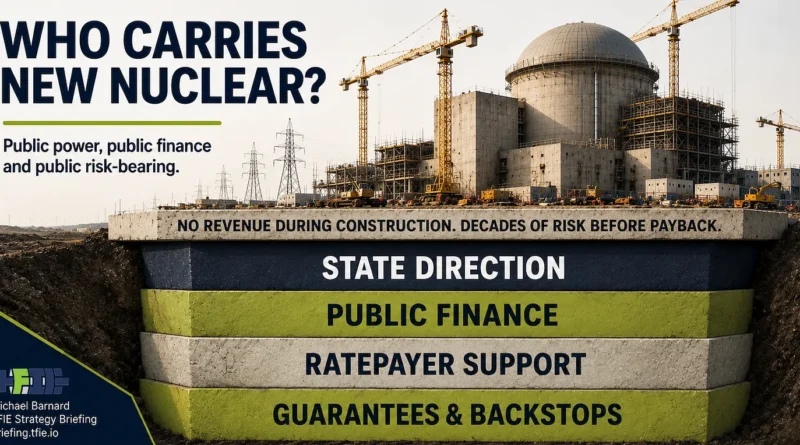
New Nuclear Gets Built When Governments Run Development & Taxpayers Take The Risk

Nuclear power works. It produces low-carbon electricity, avoids the health burden of fossil-fuel combustion, provides firm generation and can operate for many decades. My skepticism about building large new nuclear fleets has never depended on pretending otherwise. The more interesting question is why countries that have built nuclear successfully have … [continued]