
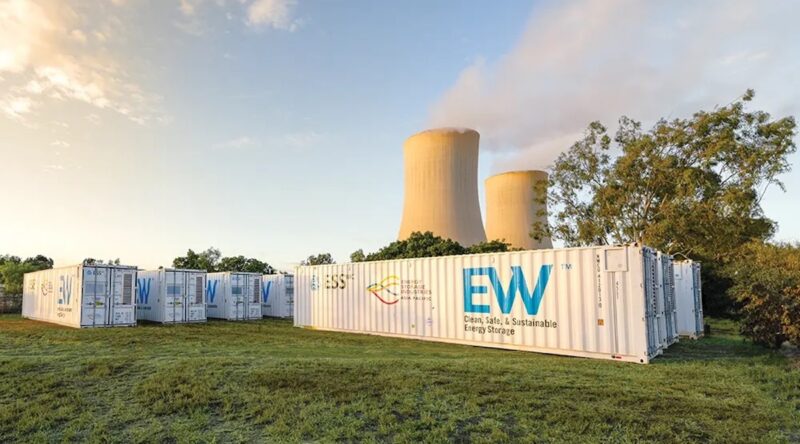
ESS & Juniper Energy Sign Agreement for 500 MWh+ of Sodium-Ion Energy Storage Deployments
Support CleanTechnica's work through a Substack subscription, on Patreon, or on Stripe. Help us produce all of the high-quality, original content we publish week after week despite the challenges of content-scraping AI, antisocial media, inflation, and other hurdles.
Partnership Begins with Planned 80 MWh California Project and Establishes Framework for Long-term Collaboration
WILSONVILLE, Oregon — ESS Tech, Inc. (ESS) (NYSE: GWH) (“ESS” or the “company”), a leading provider of non-lithium energy storage solutions, has announced the signing of a Letter of Intent (LOI) with Juniper Energy LLC, a renewable energy development company, for the deployment of 500 MWh or more of sodium-ion battery energy storage systems, representing a major milestone for ESS as it continues to expand its business with innovative, sodium-based battery solutions.
The LOI establishes a framework for a long-term partnership focused on deploying ESS’s sodium-ion battery energy storage systems across multiple projects over the coming years. As part of the agreement, the companies plan to collaborate on an initial 10 MW / 80 MWh energy storage project in California, which is expected to utilize ESS’s recently announced modular sodium-ion AC solution–Bridge™, along with an ESS Energy Management System (EMS), and is targeted for commercial operation in 2027.
“This agreement with Juniper Energy validates ESS’s strategy to expand our technology portfolio and bring sodium-ion energy storage to market,” said Drew Buckley, CEO of ESS. “The planned deployment and long-term procurement framework reflect the accelerating customer demand we are seeing for safer, domestically sourced alternatives to conventional lithium-ion batteries.”
Subject to successful project execution and future project development, Juniper Energy has expressed its intent to procure 500 MWh or more of ESS battery energy storage systems by 2032.
“Juniper Energy is focused on partnering with companies that can successfully bring innovative energy technologies from development into commercial operation,” said Keith McDaniels, Managing Partner of Juniper Energy. “ESS has demonstrated its ability to integrate, deploy, and scale advanced energy storage solutions, giving us confidence in its ability to execute on next-generation sodium-ion technology. We look forward to working together to validate the ESS Bridge energy storage platform and support its broader adoption across future energy storage projects.”
ESS believes increasing demand for its domestically sourced, non-lithium energy storage solutions is creating significant opportunities across utility-scale energy storage, AI data centers, commercial and industrial facilities, and critical infrastructure applications.
Unlike conventional lithium-ion systems, ESS’s sodium-ion technology utilizes abundant materials and is designed to reduce exposure to geopolitical supply chain risks and Foreign Entity of Concern (FEOC) restrictions while supporting domestic energy infrastructure development.
About ESS Tech, Inc.
ESS (NYSE: GWH) is a leading provider of non-lithium energy storage solutions. ESS was established in 2011 with a mission to accelerate decarbonization safely and sustainably through longer lasting energy storage. Using easy-to-source materials, ESS solutions enable energy security, reliability and resilience. We build flexible storage solutions that allow our customers to meet increasing energy demand without power disruptions and maximize the value potential of excess energy. For more information visit www.essinc.com.
Sign up for CleanTechnica's Weekly Substack for Zach and Scott's in-depth analyses and high level summaries, sign up for our daily newsletter, and follow us on Google News!
Have a tip for CleanTechnica? Want to advertise? Want to suggest a guest for our CleanTech Talk podcast? Contact us here.
Sign up for our daily newsletter for 10–15 new cleantech stories a day. Or sign up for our weekly one on top stories of the week if daily is too frequent.


CleanTechnica uses affiliate links. See our policy here.
CleanTechnica's Comment Policy

