
Yup, China’s EV Price War Was Brutal, But It Drove Innovation
Support CleanTechnica's work through a Substack subscription, on Patreon, or on Stripe. Help us produce all of the high-quality, original content we publish week after week despite the challenges of content-scraping AI, antisocial media, inflation, and other hurdles.
It’s been a popular topic lately to write about China’s EV sales slump in 2026, growing EV exports from China, and various policy changes and even controversies related to that. But there’s much more going on that isn’t typically acknowledged.
First of all, note that while China’s EV sales are down considerably in 2026 — from 7,188,923 looking at all plugin vehicle sales from January through May 2025 to 3,715,993 looking at January through May 2026 — it’s actually the whole Chinese auto market that’s down. For that same period of time, plugin vehicles dropped only slightly from 54% of the Chinese auto market to 52% of the Chinese auto market. Full electrics (BEVs) actually rose from 33% in 2025 to 34% in 2026. Just looking at the month of May, plugin vehicles soared to a record 63% of the Chinese auto market, up from 53% in May 2025. So, the broader story is really that Chinese new vehicle sales are down. China’s overall economy is in a tough period, and it’s dragging down auto sales.
Another thing to note: the Chinese EV market saw super hyper fast EV sales growth over the past several years. It was just growing, growing, growing, booming, booming, booming. Last year, trying to sustain that growth, auto companies got themselves into a price war. We covered this several times. Executives from top Chinese auto companies warned it wasn’t sustainable, that it was getting out of hand. The Chinese government stepped in a couple of times to try to calm things down and stop the trend, reportedly even holding meetings with top auto executives. Without EV sales growth, each company was trying to get their numbers by undercutting the others, but that was killing profits, and the warnings to stop the price war didn’t go far enough.
Eventually, the Chinese government made it illegal to sell a car at a loss. That kicked in this year and has certainly hurt sales. However, keep in mind that auto companies and dealers all over the world sell cars at a loss at times, for different reasons. All automakers essentially sell all new models at a loss for a while as they scale up production, work out kinks in the system, gain economies of scale, recoup investment costs, streamline supply chains and delivery, and basically just get everything running smoothly at the volumes needed. Telling automakers they can’t do this puts a lot of extra pressure on an automaker. Also, depending on trends in the market, new vehicle models coming in and making slightly older models look bad, etc., auto dealers are routinely forced to sell some vehicles at a loss in order to get them off the lot as they get out of date or are just determined to be not that popular. Saying it’s not legal to ever do that makes things much harder on the companies selling cars.
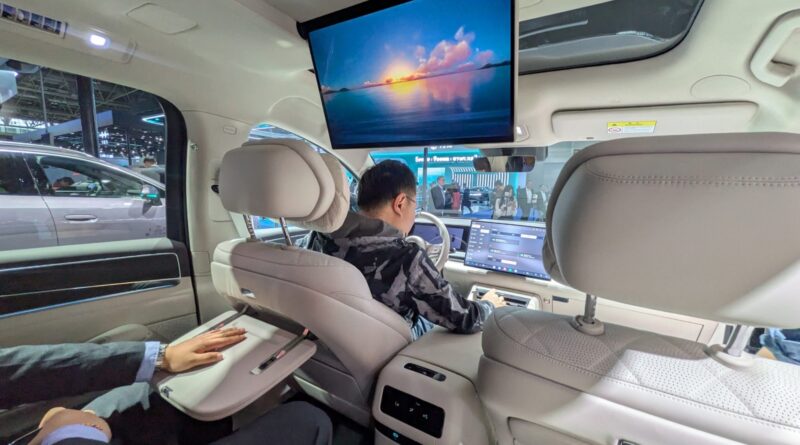
All of these pressures have been tough on the Chinese auto market as a whole and EV producers especially. But they also drove innovation. The EV price war drove innovation. The restrictive new policies are driving innovation. Chinese EV producers are refining their skills and their products tremendously now under this pressure in order to stay competitive and stay alive.
They are also exporting lots more electric cars than ever before. BYD’s exports have soared, growing 80% year over year in May and 65% across the first five months of the year. Other Chinese EV companies are also exporting cars more and more. Yes, that is partly a desperate push to keep sales up as the Chinese market slumps. However, it’s also an easy new path forward when you’ve innovated like crazy and now outcompete EVs developed for other markets. How is a much less advanced, much more costly EV developed in Europe or the US going to compete with one developed in that hyper-pressurized environment of China?
Furthermore, all of that innovation has led to Chinese EVs that now truly put gas cars to shame. As we’re seeing in South America thanks to new reporting from Juan Diego Celemín Mojica, market after market is electrifying extremely fast now. BYD especially is coming to town with hyper-competitive electric vehicles that are appealing, low cost, and obviously logical choices over outdated, polluting, expensive gas cars. The innovation that has occurred in China over the past few years — combined with the challenges of that domestic market — is opening up markets around the world to a new era of transportation. Aside from South America, we’re seeing a similar story of rapid EV uptake in Australia and in various Asian countries. Europe and North America have kept Chinese EVs out to some extent by putting up huge walls — tariffs. However, those walls are starting to crumble, and the EV competition is breaking in. How much longer can these big auto markets hold back Chinese EV growth?
We’ll see what happens. In any case, though, it’s important to realize that China’s low-cost, high-tech electric vehicles aren’t just far more competitive because of some government subsidies and support (all governments with domestic auto industries give their automakers tremendous support), but because of the intense competition and innovation that occurred in the world’s largest auto market (by far), EVs developed for the Chinese market seem to be a generation or three ahead of the rest of the industry. And they are just starting to get out there. So, if you think the last year or two has been a wild ride, stay tuned — things are probably about to get much more interesting globally.
Sign up for CleanTechnica's Weekly Substack for Zach and Scott's in-depth analyses and high level summaries, sign up for our daily newsletter, and follow us on Google News!
Have a tip for CleanTechnica? Want to advertise? Want to suggest a guest for our CleanTech Talk podcast? Contact us here.
Sign up for our daily newsletter for 15 new cleantech stories a day. Or sign up for our weekly one on top stories of the week if daily is too frequent.


CleanTechnica uses affiliate links. See our policy here.
CleanTechnica's Comment Policy

