Red & Blue States In Cahoots On US Solar Industry
The US solar industry is getting a shot of adrenaline from South Carolina, which is adding another new solar factory to its roster along with 500 new jobs.

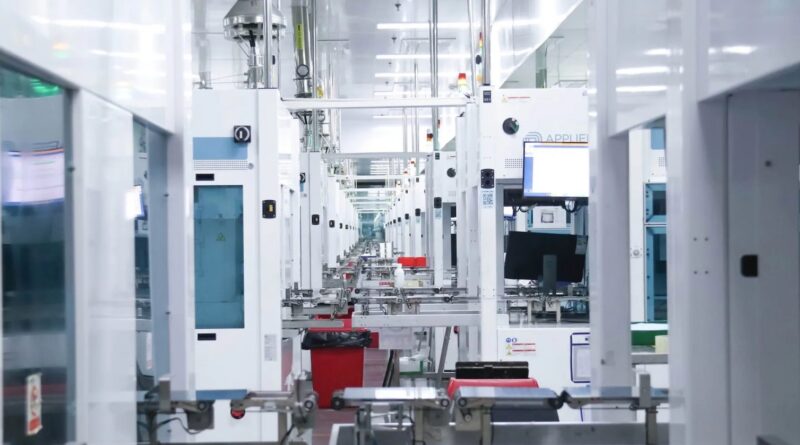 The US solar industry is getting a shot of adrenaline from South Carolina, which is adding another new solar factory to its roster along with 500 new jobs.
The US solar industry is getting a shot of adrenaline from South Carolina, which is adding another new solar factory to its roster along with 500 new jobs.
 VinFuture Grand Prize Laureates (from left to right) Professors Martin Green, Stanley Whittingham, Rachid Yazami and Akira Yoshino, who collaborated and created the lithium-ion battery. Photo by Ludi E. Tribdino.
Electrifying is most appropriate to describe the emotion of being among the creators of renewable and energy storage systems that we all know and depend upon now. At the VinFuture Prize Awards held at the Hanoi Opera House on December 20, the brilliant minds of professors Martin Green, Stanley Whittingham, … [continued]
A recent report from Greener, a Brazilian consultancy, showed that Brazil imported 4.76 gigawatts (GW) of solar PV module capacity last year. Domestic photovoltaic (PV) module producers had a minor 3.8% market share, with approximately 190 megawatts (MW) of the year’s shipped modules. Greener also noted that prices for distributed … [continued]
In 2010, 17,151 megawatts (17.151 gigawatts) of solar modules were deployed worldwide. A decade later, one company, LONGi, has shipped more solar PV modules worldwide in the first 11 months of the year. LONGi is the first solar brand to ship more than 20 gigawatts (GW) of solar…
Continuing a decades-long trend, the US Department of Energy (DOE) has put a few million dollars into further research and development of solar power technologies — $130 million, to be precise.
If you were to walk into a solar store and purchase some of their best-selling PV panels, it is likely that their solar irradiance-to-electricity conversion efficiency would be around 17%. This is the typical efficiency (Fraunhofer ISE Photovoltaics Report, 2017) of the top-selling PV product, a multi-crystalline silicon panel. This means that for a typical panel, 17% of all incident solar energy is converted directly to usable electricity. This is quite impressive for a device that has no moving parts and can generate power at the location where the electricity is required (no transmission losses). It is no wonder that PV is already one of the cheapest power technologies available.
REC Solar is switching all of its manufacturing/production capacity at its manufacturing plant in Tuas, Singapore, over to its half-cut PERC cell technology, according to recent reports. The company’s TwinPeak series of solar photovoltaic (PV) modules features the aforementioned technology. The production conversion will run around SG$200 million (~$182 million), … [continued]
A few months ago, I wrote a piece for GE Look Ahead, a project of The Economist Group, about the future of solar energy — particularly, costs and how “breakthrough” technologies could play into the story (or not). For the piece, I interviewed some of the leaders in the solar energy research realm. An initial … [continued]
Neo Solar Power announced that is has created a 21.1% efficient solar cell with passivated emitter rear contact (PERC) technology. The maximum efficiency was certified by the Taiwan Industrial Technology Research Institute (ITRI). The p-type mono record was set by Trina Solar at 21.4% last November, so Neo Solar is close with its … [continued]

