DNV

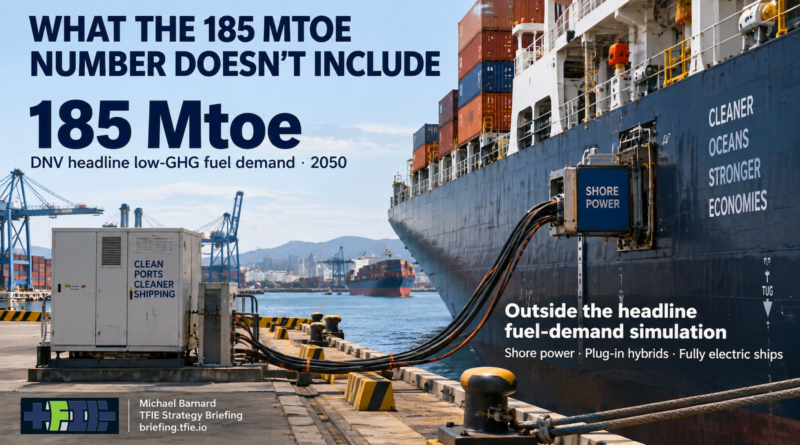
DNV’s 2050 Fuel Forecast Leaves Out Electrification

DNV’s new Maritime Forecast to 2050 puts a very large number on shipping’s future demand for low-carbon molecules. In its strongest global-regulation scenario, internationally operating ships above 400 gross tonnes require about 185 million tonnes of oil equivalent of low-GHG fuel in 2050, roughly 7.7 to 7.8 exajoules. That implies … [continued]
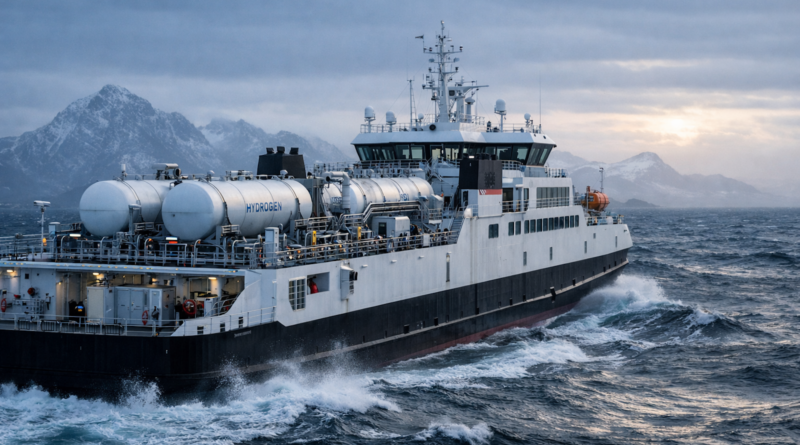
Hydrogen at Sea Just Got Even More Expensive: What DNV’s Safety Findings Mean

The final DNV study for the European Maritime Safety Agency (EMSA) matters because it changes the hydrogen shipping debate from an argument about theoretical decarbonization potential into an argument about engineering burden and cost. DNV is not saying hydrogen-fuelled ships are impossible. It is saying that hydrogen requires a design-based … [continued]

Wind Power Gets The Last Laugh As Trump Fades Into The Mists Of Twilight

US President Donald Trump began his war against offshore wind turbines with a bang in January, but the writing of defeat is already on the wall. Despite his efforts here in the US, the domestic offshore wind industry is not an entirely lost cause, and activity continues apace overseas. Additionally, … [continued]

ESG Reporting Can Be A Strategic Business Advantage (Study)

A new study from Cambridge University’s Centre for Sustainable Development and DNV, an independent expert in assurance and risk management, has yielded some relevant and interesting insights into Environmental, Social, and Governance (ESG) reporting.  While some organizations don’t like ESG reporting because they consider it to be extra documentation and … [continued]

Offshore Hydrogen Would Be 10x Cost Of Already Expensive LNG, Yet Europe Is Serious About…

Even a firm as committed to hydrogen for energy as DNV is, using oil and gas analysts who won’t have a job if hydrogen doesn’t become a dominant energy carrier, can’t make it make sense in their reports as hard as they try.