LED

U.S. Department of Energy Awards $11 Million to 49 State, Local, and Tribal Governments to…

The U.S. Department of Energy (DOE) today announced its next round of award recipients through the Energy Efficiency and Conservation Block Grant (EECBG) Program. Grants Will Fund Energy Infrastructure Projects in Communities Ranging from Energy Workforce Development Programs, Cost-saving building upgrades WASHINGTON, D.C. — The U.S. Department of Energy (DOE) today … [continued]

Biden-Harris Administration Awards More than $12 Million to 35 State, Local, & Tribal Governments to…

Funding from Investing in America Agenda Will Improve Energy Efficiency and Support Grants for Fleet Electrification, Solar Installations on Municipal Buildings, and Efficiency Upgrades for Low-Income Communities  WASHINGTON, D.C. — As part of the Biden-Harris Administration’s Investing in America agenda, the U.S. Department of Energy (DOE) today announced its latest … [continued]

18 Organizations Recognized for Excellence in Integrated Lighting Systems

The U.S. Department of Energy’s (DOE’s) 2024 Integrated Lighting Campaign (ILC) recognized 16 organizations for exemplary commitment to energy efficiency and environmental responsibility in their buildings and outdoor spaces and 2 organizations for exhibiting exemplary support for this work. Partners were recognized on Aug. 16 at the Illuminating Engineering Society (IES) annual … [continued]

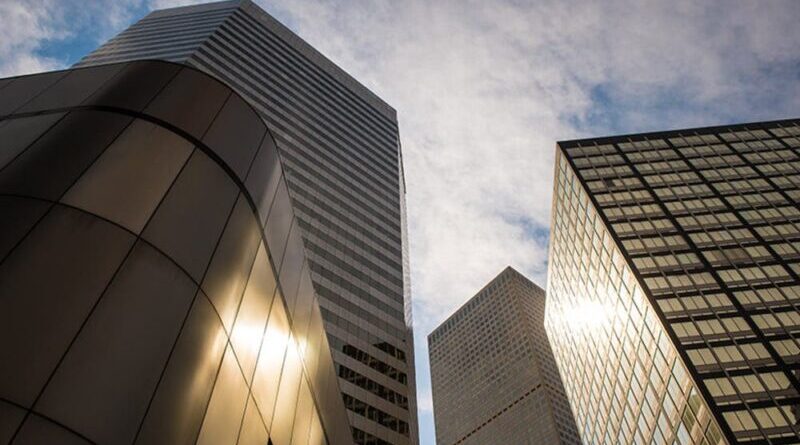
Downtown Denver features many buildings with glass facades. Researchers from NREL say retrofitting these windows with thermochromic ones can improve energy efficiency across all climate zones in the United States. Photo by Dennis Schroeder, NREL.

General Services Administration, Department of Energy Issue RFI for Technologies that Increase Sustainability of Buildings

The General Services Administration’s (GSA’s) Green Proving Ground program, in collaboration with the U.S. Department of Energy’s (DOE’s) Building Technologies Office (BTO), announced a new request for information (RFI) on August 1, 2024, focused on enabling energy efficiency and decarbonization in commercial buildings, contributing to a more efficient electric infrastructure, and improving resiliency and … [continued]

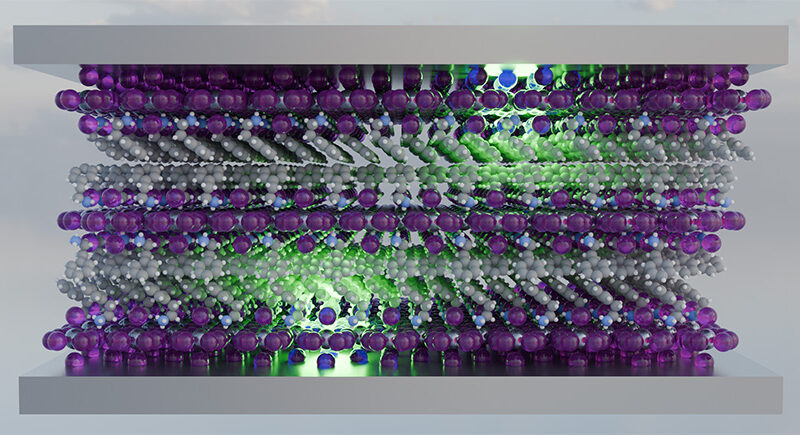
In this artistic rendering of the two-dimensional perovskite PEPI in an optical cavity depicted by top and bottom mirrors, lead iodide layers (in metal and purple) are separated by organic phenyl-ethylammonium layers (grey) forming a two-dimensional structure that causes the material to be excitonic in nature. Two excitons depicted in green glow are avoiding interaction with each other due to the presence of the optical cavity. Image by Jao van de Lagemaat, NREL

Stronger Together: Coupling Excitons to Polaritons for Better Solar Cells & Higher Intensity LEDs

In solar cells and light-emitting diodes, maintaining the excited state kinetics of molecules against annihilation is a race against time. These systems need to strike a careful balance between different processes that lead to loss of energy and those that lead to the desired outcome. A major loss mechanism especially … [continued]

BioHome3D. Image courtesy of University of Maine

Abundant, Affordable, Climate-Friendly Homes: What Part 1 of the National Definition of a Zero Emissions…

This week, the US Department of Energy (DOE) finalized Part 1 of a national definition of a zero emissions building, focused on operational carbon emissions. The long-anticipated definition includes three key criteria: energy efficiency, no on-site emissions, and all-clean power sources. Buildings following the definition will improve peoples’ health and safety … [continued]