Buildings

How Fault-Managed Power Cuts Labor and Material Costs in Smart Complexes

When I wrote recently about the rise of DC power, from long HVDC transmission lines to the direct current loads inside our laptops and EVs, someone pointed me toward what they described as a third type of electricity. They called it fault-managed power, or FMP, and said it combined the … [continued]

How Will Boston And Other Coastal Cities Fight Sea Level Rise?

In the 1980s Boston converted mud flats into prized land for its Seaport area. Even then, thoughts of sea level rise hovered in the back of developers’ minds, but the opportunity for growth and prime assets won out. Safeguards such as elevating the whole neighborhood or building sea walls around … [continued]

Supporting New York’s Clean Energy Workforce

The New York City Employment and Training Coalition (NYCETC) and The Green Launchpad recently announced the NYC Energy Efficiency Workforce Coalition. Workforce development is critically important for supporting clean energy and energy efficiency jobs. Even though at the moment, the social media sphere and news appear to be nearly dominated … [continued]

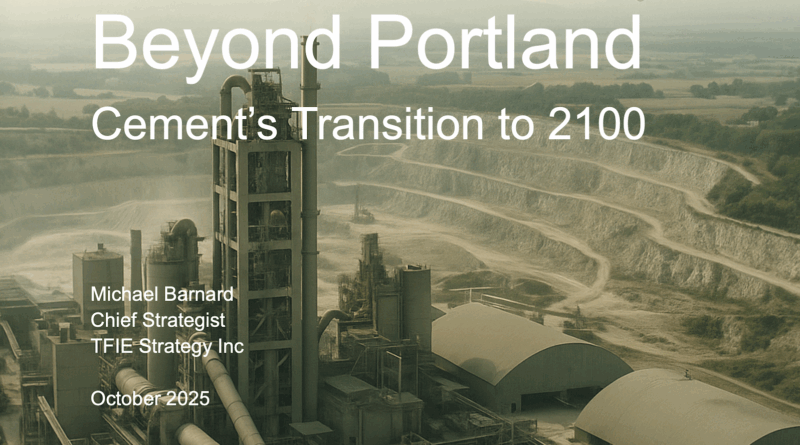
From Gray Glue to Green Foundations: Cement’s 2100 Transition

The publication of the white paper Beyond Portland: Cement’s Transition to 2100 by TFIE Strategy Inc comes at a moment when the cement and concrete industries stand at the center of the global climate challenge. Cement is everywhere—in the foundations of homes, the bridges that span rivers, the ports that … [continued]

Underground Heat, Urban Cool: The Physics & Promise of Geothermal Cooling

Cooling in the Persian Gulf is one of the hardest energy challenges anywhere on the planet. Air conditioning is not a luxury in the United Arab Emirates but a necessity, and it consumes as much as 70% of the country’s electricity. That reality has made Masdar City, the experimental urban … [continued]

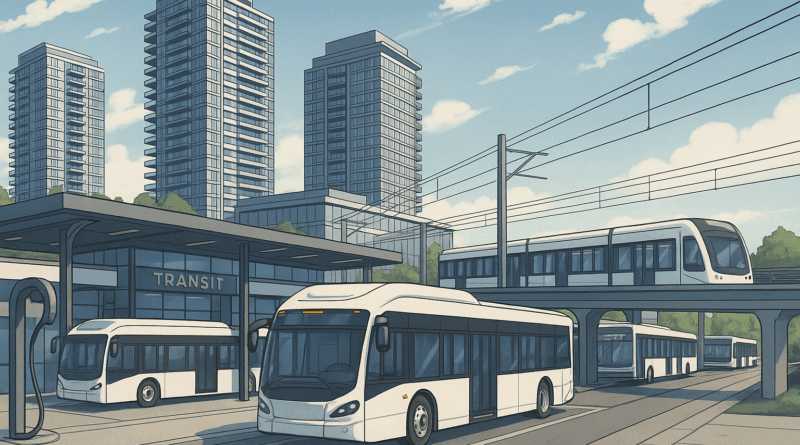
New Canadian Transit Fund Aligns Housing & Mobility, Retires Flawed Hydrogen Push

Canada has taken a major step forward in its approach to public transit funding. The new Canada Public Transit Fund, announced last year and going into effect in 2026, replaces the Zero Emission Transit Fund with a permanent, predictable framework that will shape investments for decades. Instead of short-term envelopes … [continued]

Higher Value, Lower Volume: The Future Of Canadian Forestry

Canada’s forests are immense, covering nearly 350 million hectares and holding almost 9% of the world’s forested land. They are central to the country’s identity, economy, and climate profile. For decades, forestry has provided jobs and exports while maintaining relatively stable forest cover, but the climate and biodiversity math has … [continued]

Affordable Homes, New Jobs, Lower Carbon: Inside the Carney Housing Plan

Canada has been facing a housing affordability crisis for years, and it has only become more acute. Population growth, immigration, and urban concentration have run headlong into a construction industry that has not kept pace. Annual completions of 240,000 to 270,000 units fall well short of the 500,000 required to … [continued]

$39,000 House Has Some Solar Power

A Colorado couple built their own small house for $39,000. You might think such a low-cost house would be unpleasant, cramped, or extremely spartan. This house is just the opposite — it has plenty of open interior space and its own aesthetic touches with a Southwestern theme. The living room … [continued]