
Huawei Scales EV Platform Deliveries As Automated Driving Partnerships Expand Across China
Support CleanTechnica's work through a Substack subscription, on Patreon, or on Stripe. Help us produce all of the high-quality, original content we publish week after week despite the challenges of content-scraping AI, antisocial media, inflation, and other hurdles.
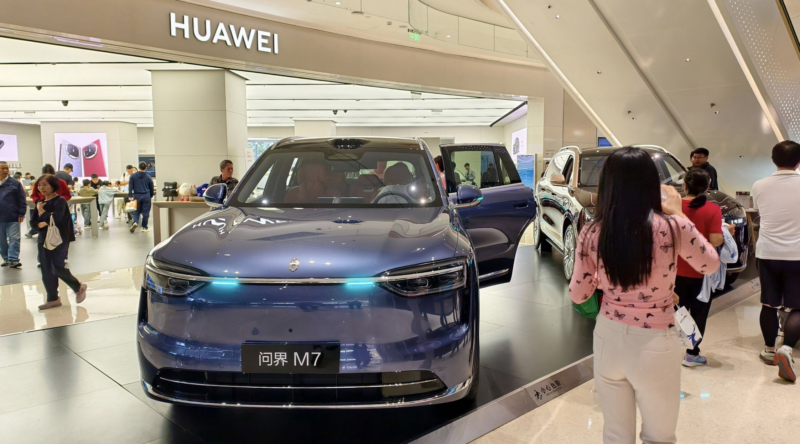
BEIJING — Huawei Technologies Co. expanded its foothold in the electric vehicle sector through July, scaling sales across its smart vehicle alliance while integrating automated driving software into major automotive manufacturing groups. Rather than assembling vehicles under its own name, the technology company operates as a Tier 1 supplier and joint brand partner. Through its Harmony Intelligent Mobility Alliance, Huawei provides autonomous driving platforms, digital cockpits, and electric powertrains, leaving physical assembly to established vehicle manufacturers.
Harmony Intelligent Mobility Alliance reported delivering 45,046 vehicles in July, pushing cumulative deliveries for the first seven months of the year to 286,000 units. The figure represents a 13.7 percent increase compared with the same period in 2025. Luxeed, a joint venture brand developed with Chery Automobile, contributed 10,709 deliveries to the July total as sales grew for its electric sedan and crossover lines.
Research and development backing
The commercial momentum follows a heavy investment cycle initiated earlier in the year. During an April technology conference in Beijing, Jin Yuzhi, chief executive officer of Huawei’s Intelligent Automotive Solution unit, outlined an 18 billion yuan ($2.63 billion) global budget for intelligent driving research and development in 2026.
More than half of that budget, totaling 10 billion yuan ($1.46 billion), was allocated to cloud computing infrastructure to train driver-assistance models. Huawei’s cloud compute capacity expanded from 2.8 EFLOPS in 2023 to 60 EFLOPS by April, with plans to spend up to 80 billion yuan on computing power over five years.
By mid-July, Huawei reported that its Qiankun smart driving platform was deployed across 1.9 million vehicles on the road, covering 50 co-developed models across 25 automotive brands. These integrations range from full-stack software configurations to hardware component supply agreements with state-owned manufacturers like Changan Automobile and Dongfeng Motor, alongside joint-venture operations including GAC Toyota and Dongfeng Nissan.
New models and market footprint
The platform relies on Huawei’s Qiankun Advanced Driver Assistance System 5.0, which incorporates an 896-line dual-optical-path lidar sensor capable of identifying 14-centimeter-high obstacles at a distance of 120 meters. The software operates alongside the HarmonySpace 6 digital cockpit and the Zhiqing motion control system, which uses silicon carbide power architecture to regulate braking, steering, and suspension dynamics.
Automakers accelerated the market entry of Qiankun-equipped models through the summer. Pre-sales for the Avatr 07L, co-developed with Changan Automobile, opened on July 17 featuring the ADS 5.0 suite and 896-line lidar hardware. That launch followed the May 8 debut of the Baojun Huajing S, built in partnership with SAIC-GM-Wuling. The six-seat plug-in hybrid SUV pairs a 1.5-liter turbocharged engine with electric drive motors to produce 386 kilowatts of power, yielding an electric range of up to 255 kilometers and a combined range exceeding 1,100 kilometers under Chinese test cycles.
Dongfeng Motor also unveiled the Yijing X9, a flagship luxury SUV built under its joint brand with Huawei, featuring full-stack Qiankun integration and dual 17-inch cabin displays. Meanwhile, development continued on the Maextro S800, an ultra-luxury executive sedan designed alongside Jianghuai Automobile Group. The model represents the flagship tier of the alliance network, operating alongside established co-developed brands Aito with Seres, Stelato with BAIC, and Shangjie with SAIC Motor.
Sign up for CleanTechnica's Weekly Substack for Zach and Scott's in-depth analyses and high level summaries, sign up for our daily newsletter, and follow us on Google News!
Have a tip for CleanTechnica? Want to advertise? Want to suggest a guest for our CleanTech Talk podcast? Contact us here.
Sign up for our daily newsletter for 15 new cleantech stories a day. Or sign up for our weekly one on top stories of the week if daily is too frequent.


CleanTechnica uses affiliate links. See our policy here.
CleanTechnica's Comment Policy

