

Op-Ed: Pax Silica Could Complicate Philippine and Regional Sustainable Energy Goals
Support CleanTechnica's work through a Substack subscription, on Patreon, or on Stripe. Help us produce all of the high-quality, original content we publish week after week despite the challenges of content-scraping AI, antisocial media, inflation, and other hurdles.
(Note: updated as of August 13, EST to add this sentence to the 5th paragraph: “It could also be a way of recovering the soft power America lost when the Department of Government Efficiency (DOGE) dismantled USAID.” – the author)
The US-led Pax Silica initiative was created to strengthen trusted supply chains for semiconductors, artificial intelligence infrastructure, and other strategic technologies among allied nations. The Philippines has signaled its participation, but the initiative has already drawn criticism from some academics, civil society groups, policy commentators and other non-government voices. That is hardly surprising for a project that sits at the intersection of technology, economics and geopolitics.
Most of the initial arguments were weak, grounded mostly on position. And on emotion. Not on science. The op-eds made little sense until this lengthy and complete dissertation by Engineer Pierre Tito Gala published in Newsbytes. The other worthy reading is TechSabado’s piece on the post Marco Rubio visit.
Gala’s op-ed alone became the source of information for many other articles and opinions, some coming from dubious sources or persons of dubious natures and backgrounds pushing a sensationalist agenda — the “neocolonialism of technology,” as if technology itself is a political issue. But that’s not what I am writing about.
Hyperscaling hyperbole?
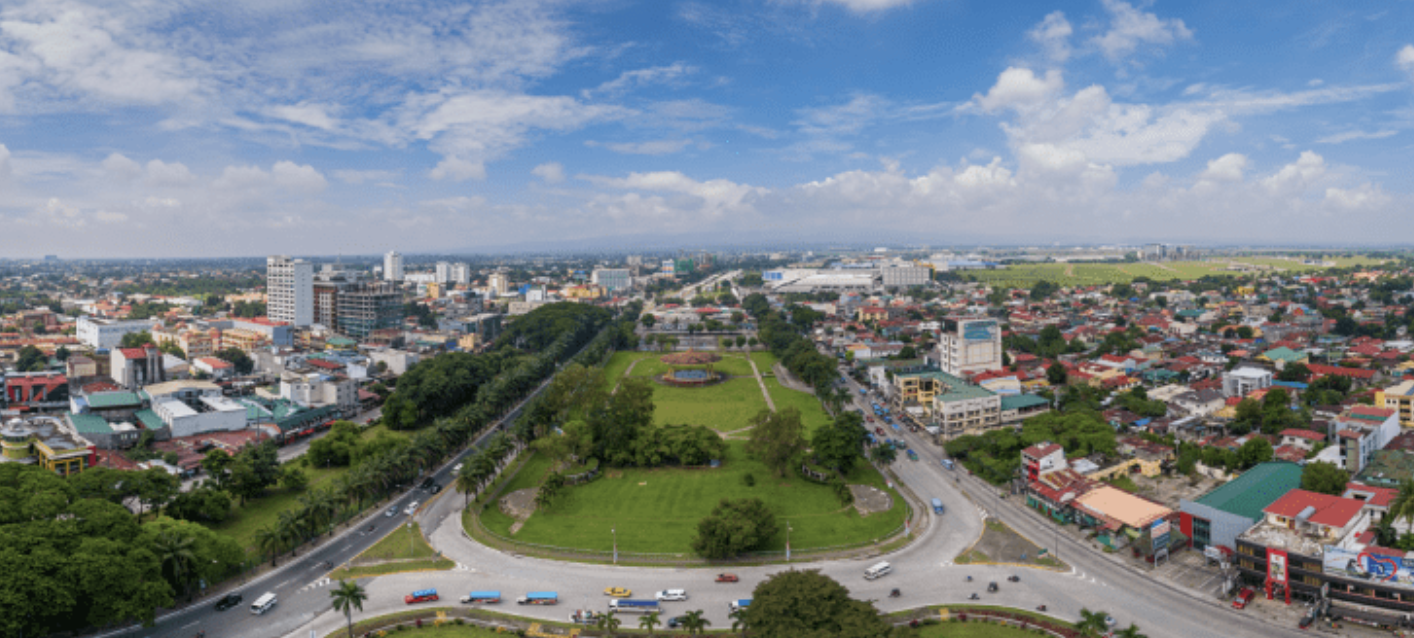
Pax Silica, according to its proponents, represents an opportunity to attract advanced manufacturing, hyperscale data centers and other high-value technology investments through the proposed Economic Security Zone in New Clark City.
Remember however, the proposal remains until today, a concept. Nothing but a handshake and some kind of promise that the Philippines will be included it this massive multi-page plan by the US State Department to build an industrial ecosystem of chip and wafer manufacturing. That said this hard industrial estate is actually a manifestation of a soft power which will be now based on conceptual hub for the advancement of AI and the manufacturing of the needed components for the world’s continuing digital frontier. It could also be a way of recovering the soft power America lost when the Department of Government Efficiency (DOGE) dismantled USAID.
Yet the infrastructure needed to support those ambitions could create significant challenges for the country’s clean energy transition, and, by extension, regional sustainability goals.
A still insignificant debate
At the heart of the debate is the enormous demand for electricity and water that accompanies semiconductor manufacturing, AI computing, and advanced industrial operations. While Pax Silica aims to enhance economic resilience and reduce dependence on vulnerable global supply chains, it also raises difficult questions about whether the Philippines can expand its technology ecosystem without increasing fossil fuel dependence or placing additional pressure on already constrained natural resources.
The proposed Economic Security Zone is expected to require at least 5,000 megawatts of electricity to support semiconductor packaging, advanced manufacturing, AI data centers, and other strategic industries. Current plans call for a 500-megawatt solar facility and a 1,200-megawatt natural gas power plant, providing a combined 1,700 megawatts of dedicated generation. That leaves an estimated 3,300-megawatt shortfall that would have to be supplied by the Luzon grid unless additional generation capacity comes online.
But generation is only one part of the challenge. Delivering an additional 5 GW to New Clark City would require major upgrades to the transmission network, including new high-voltage lines, substations and redundant connections. Without corresponding investments in grid infrastructure, transmission capacity itself could become a bottleneck.
Meeting that demand from the existing grid could tighten Luzon’s operating reserve. With the grid currently maintaining an operating margin of approximately 4,848 megawatts above peak demand, diverting another 3,300 megawatts to a single industrial hub would reduce the reserve available to absorb power plant outages, transmission disruptions, or unexpected surges in electricity consumption. A narrower operating margin could increase the risk of supply constraints, higher wholesale electricity prices, and greater reliance on fossil fuel generation to preserve grid stability, potentially slowing the country’s decarbonization efforts while affecting regional electricity markets as cross-border power integration expands.
No alternative energy system is available yet
Offshore wind, utility-scale battery storage, and small modular reactors are frequently identified as long-term solutions for supplying clean electricity to energy-intensive industries. However, none of these technologies can be deployed quickly enough to satisfy the initial power requirements of the proposed zone.
Offshore wind projects can take close to a decade from planning to commercial operation. Identifying suitable sites is only the beginning. Resource assessment, environmental permitting, financing, transmission development and port modernization all require years of preparation. The latter is especially critical because turbine towers, blades, nacelles and floating platforms demand specialized heavy-lift port facilities that the Philippines is only beginning to develop.
Utility-scale battery energy storage systems (BESS) can be developed and deployed within months, but it would not only be expensive, it would require a massive system even bigger than what is currently available. Even the world’s largest battery installations cannot continuously supply a 5 GW industrial load. The world’s largest operating BESS installation in China is a cluster of multiple battery storage projects in Inner Mongolia with a combined capacity of 12.8 GWh. Within that cluster is the Envision Jingyi Chagan Hada Energy Storage Power Station, which at 4 GWh is currently the world’s largest single-site operational electrochemical battery storage facility.
Even that cannot supply the power needs of Pax Silica. A theoretical 19 GWh BESS, for example, could deliver 5 GW for less than four hours before requiring recharge. This illustrates why battery storage alone cannot support a technology hub of that scale without a massive expansion of renewable generation and firm power sources.
Battery storage should also not be mistaken for new generation capacity. Batteries store electricity produced elsewhere; they do not create it. Every megawatt-hour discharged must first be generated and later replenished, making storage an important supporting technology rather than a substitute for new power plants.
A nuclear solution?
SMRs remain in the early stages of commercial deployment and regulatory approval. The World Nuclear Association reports that of July 2026, only two countries have commercial grid-connected SMRs in operation: Russia and China.
Russia was the first. It operates the Akademik Lomonosov, the world’s first floating nuclear power plant. Commissioned in 2020, it uses two KLT-40S pressurized water reactors producing about 70 MW of electricity (35 MW each) and supplies power to Pevek in Russia’s Far East. Rosatom is also building additional land-based SMRs.
Since 2023, China one HTR-PM (High-Temperature Gas-cooled Reactor) at Shidao Bay in Shandong Province. It uses two pebble-bed reactors driving a single steam turbine with a net electrical output of about 210 MW. It is the world’s first commercial Generation IV reactor. It is also completing Linglong One (ACP100) on Hainan Island, a 125-MWe pressurized water SMR intended as the country’s first commercial light-water SMR. It is expected to begin commercial operation towards the end of this year.
Until these technologies become commercially available at scale, natural gas—and potentially coal-fired generation during periods of peak demand—could remain the primary sources of reliable baseload power. That also means greater dependence on imported liquefied natural gas. While LNG provides a practical bridge fuel, it continues to expose the country to fluctuations in global fuel prices and supply disruptions, making energy security just as critical as electricity availability.
A water crisis?
The challenge extends beyond electricity. Semiconductor manufacturing and hyperscale data centers are among the world’s most water-intensive industries, requiring substantial volumes for wafer fabrication, cooling systems and process operations. Surface water harvesting at the New Clark City site is projected to yield a maximum of about 20 million cubic meters annually, equivalent to less than 55,000 cubic meters per day. That supply may prove insufficient if multiple fabrication facilities and large-scale data centers begin operating simultaneously, potentially increasing competition for water resources unless stringent recycling, reclamation and advanced cooling technologies are adopted.
The Asean Silica?
Pax Silica is also creating a new technology geography in Asia. Rather than operating through ASEAN as a bloc, the initiative is building a network of like-minded countries with trusted semiconductor, AI and critical mineral supply chains. This could reshape investment flows across Southeast Asia, with member countries potentially gaining preferential access to future high-value technology projects while non-members pursue alternative partnerships. Malaysia, Indonesia and Vietnam have so far prioritized bilateral industrial and trade agreements while continuing to develop their own semiconductor ecosystems rather than joining Pax Silica as of now.
Thailand needs special mention because it has Siam Silica–an industrially driven, self-draw roadmap for creating indigenous semiconductor capabilities, strengthening local companies, commercializing research and developing its own talent base. The strategy was formally unveiled in June this year and expanded into the Siam Silica Framework in July. It is led by the Thai government through the Ministry of Higher Education, Science, Research and Innovation, together with the National Research Council of Thailand (NRCT) and the National Higher Education, Science, Research and Innovation Policy Council (NXPO).
Should the Philippines go Pax Silica? Yes, they don’t.
The point of my opinion piece is not whether the Philippines should join Pax Silica. Along with 26 other countries, it already has. But like I repeat often this is just an idea. The concept is sound and whether the infrastructure will be ready when the investments arrive, that’s about as much time as watching paint dry. Electricity, transmission, water and logistics are surely not afterthoughts. But they are lacking. They have to be built earlier (that means now) or alongside the industrial ecosystem, not years later.
Industrial policy and energy policy have to move together. Every new technology locator should be required to use energy-efficient systems, recycle water and secure as much renewable power as possible. At the same time, government has to accelerate new generation, expand the transmission grid and modernize critical infrastructure. Otherwise, Pax Silica could end up exposing the country’s weakest link—not semiconductors or AI, but the systems needed to keep them running.
The real issue is socio-economic and even geopolitical. And that is another story.
Sign up for CleanTechnica's Weekly Substack for Zach and Scott's in-depth analyses and high level summaries, sign up for our daily newsletter, and follow us on Google News!
Have a tip for CleanTechnica? Want to advertise? Want to suggest a guest for our CleanTech Talk podcast? Contact us here.
Sign up for our daily newsletter for 15 new cleantech stories a day. Or sign up for our weekly one on top stories of the week if daily is too frequent.


CleanTechnica uses affiliate links. See our policy here.
CleanTechnica's Comment Policy

