
Malaysia Is Emerging As Southeast Asia’s Next EV Manufacturing Hub
Support CleanTechnica's work through a Substack subscription, on Patreon, or on Stripe. Help us produce all of the high-quality, original content we publish week after week despite the challenges of content-scraping AI, antisocial media, inflation, and other hurdles.
XPENG is the latest proof
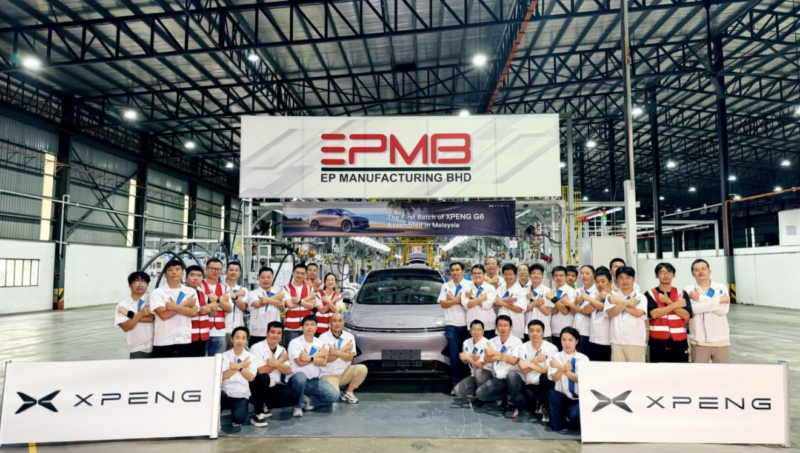
Malaysia’s ambitions to become a regional electric vehicle manufacturing center took another significant step forward in June, as the first locally assembled XPENG G6 rolled off the production line at EP Manufacturing Berhad’s (EPMB) facility in Melaka.
On its own, the milestone marks the beginning of completely knocked-down (CKD) production for one of China’s fastest-growing EV brands. But viewed alongside a series of investments over the past two years, it tells a much larger story: Malaysia is steadily transforming itself into one of Southeast Asia’s most important EV production hubs.
The first Malaysian-built XPENG G6 was unveiled at EPMB’s HICOM Pegoh Industrial Park less than six months after the two companies signed an agreement to localize production. The partnership initially covers the G6 electric SUV and the X9 premium MPV, including its range-extended PowerX REEV variant. More importantly, the agreement gives EPMB the first right to assemble three future XPENG models, suggesting that the Chinese automaker sees Malaysia as a long-term manufacturing base rather than simply another export destination.
XPENG itself has described Malaysia as one of its strategic overseas assembly locations. The company already manufactures vehicles in China, while expanding localized production in Indonesia, and its European vehicles are assembled through Magna Steyr in Austria. Malaysia now joins that relatively small group of international production sites supporting the company’s global expansion.
Changing strategy among Chinese automakers.
For years, Southeast Asia was treated primarily as an export market. Manufacturers built vehicles in China and shipped them across the region. Today, the strategy is evolving. Local production reduces shipping costs, shortens delivery times, improves supply-chain resilience, and allows manufacturers to respond more quickly to changing regulations and consumer demand.
Malaysia offers several advantages. It has decades of automotive manufacturing experience, an established supplier base, modern industrial infrastructure, and extensive experience producing right-hand-drive vehicles for domestic and export markets. Combined with supportive government policies encouraging EV investment, the country has become increasingly attractive for manufacturers looking beyond China.
XPENG is far from alone
Leapmotor selected Malaysia as its ASEAN production base through Stellantis’ manufacturing facility in Gurun, Kedah. MG has begun local assembly of its S5 EV through EPMB in Melaka. Great Wall Motor also assembles electrified vehicles with EPMB. Last but not least, BYD has announced plans to establish manufacturing operations in Malaysia as demand for its vehicles continues to grow across the region. Together, these investments are creating an industrial ecosystem rather than isolated assembly operations.
Domestic automaker Proton is also accelerating the country’s transition. Following the successful launch of the e.MAS 7, the company is expanding its electrified lineup while leveraging technology from Geely, demonstrating that Malaysia’s EV ambitions extend beyond attracting foreign investment to developing competitive domestic brands.
Infrastructure is expanding alongside manufacturing
Earlier this month, the first locally assembled XPENG G6 rolled off the line. Just weeks later, Kuala Lumpur’s Merdeka 118 officially opened Malaysia’s largest AC charging hub, with 32 charging bays, highlighting that the country is investing not only in building electric vehicles but also in supporting their daily use. Highway charging networks continue to expand through operators such as chargEV, Gentari, and JomCharge, while destination charging is becoming increasingly common at commercial developments.
The timing is particularly noteworthy as Malaysia’s EV policies enter a new phase. Initial tax incentives helped stimulate demand and encouraged manufacturers to enter the market. More recently, government policies have increasingly emphasized local value creation through assembly, component manufacturing, and technology development. That shift aligns closely with the investments now being made by Chinese automakers.
The XPENG G6 itself represents the type of vehicle Malaysia hopes to build. Riding on the company’s 800-volt SEPA 2.0 architecture, the electric crossover supports ultra-fast DC charging and integrates XPENG’s advanced software platform and intelligent driver assistance technologies. Rather than assembling entry-level EVs, Malaysia is beginning to manufacture vehicles equipped with many of the latest electric mobility technologies.
Perhaps the most important takeaway is that Malaysia’s EV strategy is becoming increasingly comprehensive. Many countries focus on one part of the electric vehicle ecosystem, whether consumer incentives, charging infrastructure, or manufacturing. Malaysia is pursuing all three simultaneously. Vehicle assembly is expanding, charging infrastructure is growing, local suppliers are becoming more involved, and government policy continues to encourage investment.
Sign up for CleanTechnica's Weekly Substack for Zach and Scott's in-depth analyses and high level summaries, sign up for our daily newsletter, and follow us on Google News!
Have a tip for CleanTechnica? Want to advertise? Want to suggest a guest for our CleanTech Talk podcast? Contact us here.
Sign up for our daily newsletter for 10–15 new cleantech stories a day. Or sign up for our weekly one on top stories of the week if daily is too frequent.


CleanTechnica uses affiliate links. See our policy here.
CleanTechnica's Comment Policy

