
Energy Forum Signals Asia’s Clean Energy Transition Is Entering A New, High-Stakes Phase
Support CleanTechnica's work through a Substack subscription, on Patreon, or on Stripe. Help us produce all of the high-quality, original content we publish week after week despite the challenges of content-scraping AI, antisocial media, inflation, and other hurdles.
The Asia Clean Energy Forum (ACEF) 2026 in Manila arrived at a moment when the region’s energy systems are under unprecedented pressure.
As geopolitical tensions continue to disrupt global fuel markets, artificial intelligence data centers are driving electricity demand to historic highs, and more than 400 million people across Asia still lack reliable access to power — over 350 million with limited access and another 53 million with none at all.
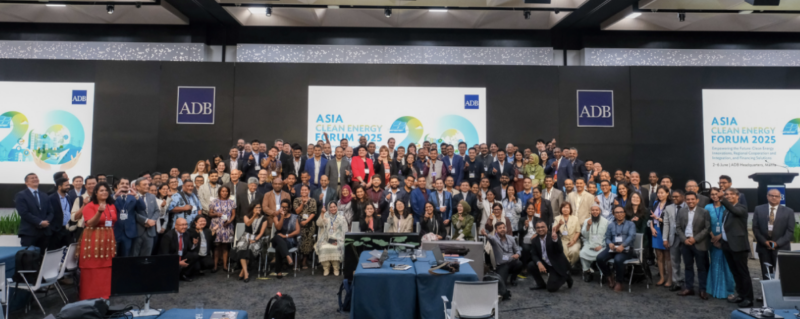
Held at the Asian Development Bank’s Manila headquarters from June 8 to 11, under the theme “Beyond Transition: Building Secure, Resilient, Inclusive, and Intelligent Energy Systems,” the forum also marked ADB’s 60th anniversary and brought together governments, developers, financiers, and researchers from across the region. What emerged over four days was a clear shift: Asia is no longer debating whether to transition to clean energy.
CleanTechnica was there to witness key how the region is grappling with how fast it can move, how interconnected its systems must become, and how intelligently it can manage the complexity that comes with a renewable-heavy grid.
ADB President Masato Kanda set the tone in his opening remarks on June 9, telling delegates that the region faces one of its most serious energy challenges in decades. “We have been painfully reminded in recent weeks that, when it comes to energy security, no country can go it alone,” Kanda said, pointing to how the conflict in the Middle East had rippled through fuel markets and shown how exposed Asia’s import-dependent economies remain. His prescription was blunt: “We must build a power system that connects our economies, strengthens our resilience, and delivers energy across the region.” The line that “no country can go it alone” was no longer a philosophical statement — by the end of the week, it had become the forum’s working assumption.
A region betting on offshore wind — and waiting on its grid
One of the most dynamic conversations at ACEF centered on offshore wind, particularly in the Philippines. The session hosted by the Norwegian Embassy drew a standing-room-only crowd, a sign of how quickly investor interest is accelerating. The Philippines, with its deep waters and strong wind resources, is emerging as a potential offshore wind powerhouse in Southeast Asia. But the enthusiasm was tempered by a familiar reality: large-scale offshore wind cannot thrive without major upgrades to transmission infrastructure. Grid modernization, in other words, isn’t just a technical line item — it’s the gate that determines whether the Philippines can capture billions in investment and become a regional leader in renewable deployment, or watch that investment flow to neighbors with readier grids.
Nuclear’s cautious return to the table
Nuclear energy also re-entered the regional conversation, though with caution. IAEA Director General Rafael Mariano Grossi noted that several Southeast Asian countries are now on serious exploratory roadmaps for nuclear power. ADB, for its part, made clear that its support will focus on capacity building rather than direct financing — a pragmatic read of the moment: nuclear may eventually play a role in long-term energy security, but it isn’t a near-term fix for countries wrestling with immediate reliability and affordability problems. The renewed interest reads less as ideology and more as diversification, one more option on the table as the limits of fossil fuel dependence become harder to ignore.
The Pan-Asia Power Grid Initiative
The most ambitious idea floated at ACEF was the Pan-Asia Power Grid Initiative (PAGI), which Kanda unveiled in his opening remarks. This is a plan to mobilize $50 billion by 2035 to connect national grids and scale up cross-border clean energy trade. PAGI is meant to stitch together existing efforts — the ASEAN Power Grid, South Asia’s connectivity projects, the Caspian green energy corridor — into the foundation of something closer to a continental electricity market. ADB officials described it as the bank’s answer to a fragmented regional energy landscape: a shift away from small, bilateral deals toward coordinated, region-wide power trade. The logic is straightforward — renewable resources are unevenly distributed across Asia, and no country can fully capture their value alone. Cross-border power trade, once treated as a distant aspiration, is now being discussed as a practical near-term pathway to resilience and affordability.
What I saw on the ground:
AI, decentralized grids, and EVs as the missing piece
I was at ADB’s Manila headquarters for the forum’s final day, June 11, which centered on AI-driven grid management, decentralized energy systems, and the digitalization of the region’s power infrastructure — and it was here that the abstractions of the earlier days started to feel like an actual roadmap.
The throughline across the sessions I sat in on was that software is catching up to hardware as the thing that determines whether a renewable-heavy grid actually works. Forecasting demand, balancing intermittent solar and wind, and managing distributed energy resources in real time were treated less as futuristic add-ons and more as basic infrastructure — the kind of capability a grid operator simply has to have once renewables make up a serious share of the mix. That’s a notable shift in framing from even a year or two ago, when “smart grid” conversations in the region often felt aspirational. On June 11, they felt operational.
Electric mobility, though not the headline topic of the day, came up repeatedly — and in a way that reframed how I think about EVs in this region. The conversation wasn’t really about EVs as a transportation story; it was about EVs as a grid asset. Vehicle-to-grid integration, smart charging, and the storage potential sitting in parked car batteries were discussed as tools for stabilizing a renewable-heavy grid, not just as a decarbonization checkbox. Given how fast vehicle ownership is rising across urbanizing Southeast Asia, that reframing matters: EV adoption isn’t just an environmental target anymore, it’s becoming part of how the region plans to keep the lights on.
Charging infrastructure came up as the obvious bottleneck. Several speakers were candid that without coordinated regional investment in fast-charging corridors and renewable-powered charging hubs, EV adoption stalls regardless of how cheap the vehicles get. And the challenge isn’t simply building more chargers — it’s plugging them into grids that are already under strain in a way that doesn’t make the strain worse. That’s precisely the kind of problem the day’s AI and decentralization discussions were aimed at solving, and by the end of the session it was clear those two conversations — EVs and intelligent grid management — aren’t separate tracks. They’re the same problem, viewed from two ends.
The bigger picture
ACEF 2026 ultimately revealed a region that is both under pressure and on the cusp of transformation. The conversations in Manila reflected a growing recognition that clean energy is no longer a climate agenda alone — it’s an economic, security, and technological imperative. Asia’s transition is accelerating, but it’s also becoming more complex, requiring smarter systems, stronger grids, and deeper cooperation. The next decade will define the region’s energy trajectory, and from what I saw on June 11, the tools to navigate that complexity — AI-driven forecasting, decentralized management, EVs as grid assets — are no longer theoretical. They’re already on the agenda. The question now is how fast the region can put them to work.
Sign up for CleanTechnica's Weekly Substack for Zach and Scott's in-depth analyses and high level summaries, sign up for our daily newsletter, and follow us on Google News!
Have a tip for CleanTechnica? Want to advertise? Want to suggest a guest for our CleanTech Talk podcast? Contact us here.
Sign up for our daily newsletter for 15 new cleantech stories a day. Or sign up for our weekly one on top stories of the week if daily is too frequent.


CleanTechnica uses affiliate links. See our policy here.
CleanTechnica's Comment Policy

