
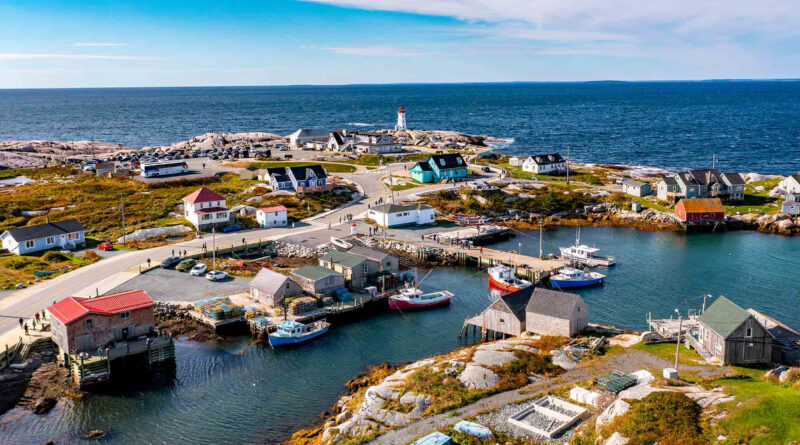
Nova Scotia Wants To Embrace Fracking To Pay Its Bills
Support CleanTechnica's work through a Substack subscription, on Patreon, or on Stripe. Help us produce all of the high-quality, original content we publish week after week despite the challenges of content-scraping AI, antisocial media, inflation, and other hurdles.
Tim Houston, the premier of Nova Scotia, wants to encourage oil and methane companies to begin tapping the province’s natural resources. It has been nearly a decade since the last wells were drilled either on land or offshore, primarily because of the policies of Justin Trudeau at the national level and environmentalists at the provincial level.
Sadly, the only constant in life is change. The Trudeau era is in the history books, as he was replaced by Mark Carney, the former Bank of England official who is now the prime minister of Canada. There is also a very foolish old man stomping around Washington, DC, who has treated Canada more as an enemy than as a friend, levying new tariffs and sending his minions to plot with leaders in Alberta about joining the US.
Those insults have left a bitter taste in the mouth of most Canadians. That has made it necessary for Canada to chart its own course in the world, rather than relying on Uncle Sugar to do the heavy lifting. Part of coming to grips with the new world order involves prioritizing investments in oil and methane that are produced within the country to supply Canada’s energy needs. Carney has proposed a series of policy initiatives designed to streamline both federal and provincial environmental approvals for large infrastructure and resource projects. “The federal government has been good partners with the province of Nova Scotia on this, and the industry has noticed,” Houston says.
One of the things that sticks in Tim Houston’s craw is that in order for the methane produced in Alberta to reach Nova Scotia, it must travel through the Maritimes & Northeast Pipeline, which connects Atlantic Canada to the Northeastern US. “Being completely dependent on the United States, it’s not a great feeling right now. It’s kind of embarrassing,” he said recently.
Last year, Houston lifted the ban on onshore shale fracking that had been in place for a decade, claiming there are 7 trillion cubic feet of methane beneath the province — methane that could help eliminate the province’s annual deficit, which exceeded $1 billion last year. 7 trillion cubic feet is not a lot by global standards, but it would be enough to meet Nova Scotia’s needs for 200 years. Fracking could start as early as this year or definitely by next year if the necessary equipment is available, Houston told Bloomberg recently.
There is also plenty of opportunity to explore for oil and gas in the waters of the North Atlantic that are under the jurisdiction of the province, and that is where the interests of the government and those of its citizens collide. Nova Scotia’s primary economic activity is harvesting lobsters. Only in Nova Scotia does McDonald’s offer a lobster omelet for breakfast. But changes in the environment have made lobsters more scarce and the business of lobstering economically challenging.
A Way Of Life
Lobster is a way of life for many people in Nova Scotia, where the lobster season begins on January 1 and ends on June 30. By New Year’s Eve, the docks in every harbor are piled high with newly mended lobster traps and the boats begin transporting them offshore at the crack of dawn on the first day of the year.
I once owned a house in one of those fishing villages and heard stories from my neighbors of how as children they would go out in their dories before dawn to pull their traps. In the days before mechanical winches, they would haul as many as 40 traps through the frigid water every morning by hand, which is why most of them were barrel-chested with arms that looked like they belonged to Popeye. They were tough, honest people for whom a hard day’s work was a way of life.
Nova Scotia is also heavily dependent on tourism. My interest in visiting the province began with a Carly Simon song about a former lover who flew his Lear Jet up to Nova Scotia to see a total eclipse of the sun. I made the mistake of requesting a tourist’s guide and got back a large book packed with more than 100 pages of history, museums, and campsites. I was hooked when I was welcomed at the border by a bagpiper dressed in Nova Scotia tartans.
Over a period of 10 years or so, I made it a point to see every part of the province and was mesmerized by its pristine beauty and monster tides in the Bay of Fundy. The public gardens in Halifax rival those of any city on Earth, but the quintessential feature of Nova Scotia is its people, who are warm and welcoming in a way that was frankly a little startling to someone like me who had grown up in New England with its taciturn ways.
Today, those who depend on lobstering for their livelihood and the descendants of the Mi’qmaq people who claimed Nova Scotia as their own long before Europeans arrived are protesting the disturbance of the province’s pristine land and water for fossil fuel exploration. Especially when it has access to other natural resources — solar and wind — that can provide the electrical power it needs without the inevitable pollution from oil and methane wells.
Yes, Nova Scotia is rather far north, so its suitability for grid-scale solar is less than it would be if it were nearer the equator, but solar seems to work just fine in Sweden and other Nordic countries. The province also has plenty of wind. There may be no place on Earth other than West Texas that has more constant wind than Nova Scotia. It blows constantly, day and night, rattling the shutters and jostling the windows nonstop all day, every day.
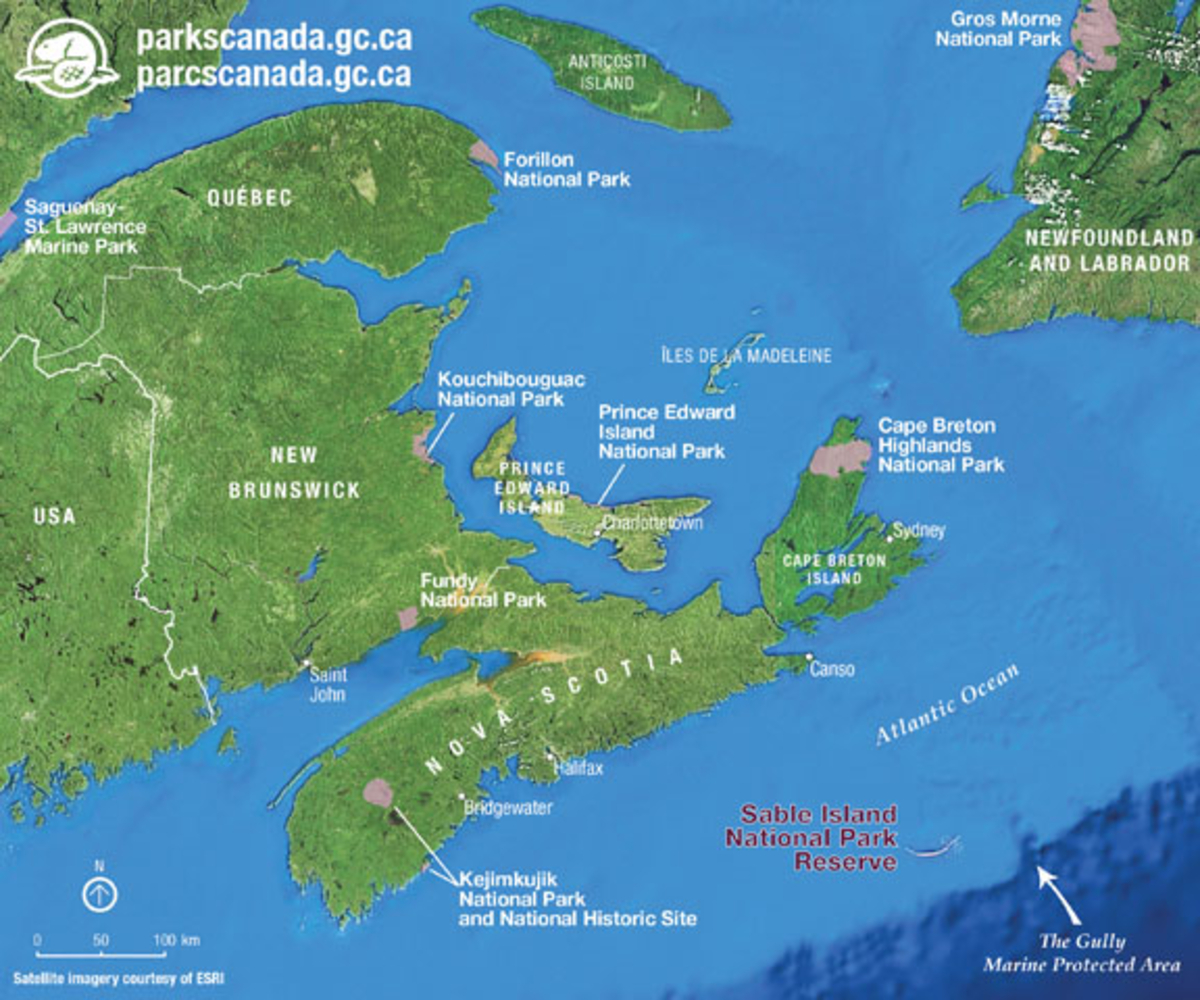
Sable Island is part of Nova Scotia, a 26-mile-long sandbar about 100 miles south of the mainland. It is known as the “graveyard of the Atlantic” because of the hundreds of boats that have run aground there over the centuries due to fierce Atlantic storms. Today, it is a Canadian National Park that is best accessed by helicopter. The province wants to see offshore drilling take place in the waters between Sable Island and the mainland. But drilling rigs require massive support operations onshore, and that has the lobster industry mighty upset.
Nova Scotia is about 500 miles tip to tip, but it has over 8,000 miles of coastline. With few exceptions, the picturesque harbors that define its coast are quite small, with room for only a few dozen fishing boats. The locals fear the onshore support activities would take up so much room there would not be enough left for their boats.
They also worry that commercial oil and gas operations would pollute the pristine waters Nova Scotia is known for, and decrease the lobster population. Nova Scotia may be running a deficit, but it is nothing compared to the havoc the loss of the lobster industry would have on the province’s economy.
Tim Houston may be a lovely man, but his vision does not extend beyond the end of next week. The province could commission a fleet of offshore wind turbines that would power the entire province in perpetuity with no pollution and at lower cost than what local residents pay now. The technology is mature and ready to go. In fact, there are wind turbines rejected by the US that could easily be moved a few miles north.
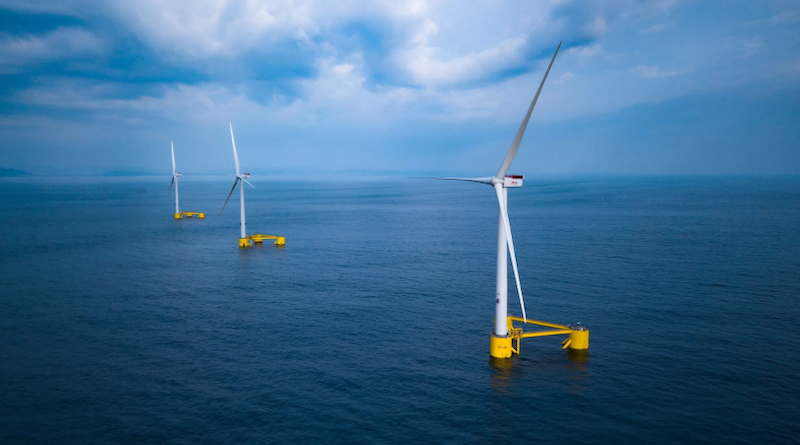
What could be more rewarding for beleaguered Canadians than to give the Jackass In Chief in Washington the fickle finger of fate by putting the offshore wind turbines he banned into service in the waters around Nova Scotia? Lower utility bills, less pollution, and clean energy — that’s a winning combination that would benefit everyone in the province, especially those in the lobster business.
As someone who has an abiding fondness for Nova Scotia, I shudder at the thought of its stunning beauty being ruined by fossil fuel production, especially when there is a far better alternative at hand. Houston seems to think the only alternative to methane is coal. What rock has he been living under? Coal is about the most expensive and dirtiest form of electricity there is. Time to take off the fossil fuel tinted glasses, Tim. Nova Scotia deserves the best energy, not the worst. Put your dreams of fracking back in the vault at provincial headquarters before you turn this beautiful province into a pollution laden hellscape.
Take 30 seconds to watch the video below. Why would anyone want to screw up this magical place?
Sign up for CleanTechnica's Weekly Substack for Zach and Scott's in-depth analyses and high level summaries, sign up for our daily newsletter, and follow us on Google News!
Have a tip for CleanTechnica? Want to advertise? Want to suggest a guest for our CleanTech Talk podcast? Contact us here.
Sign up for our daily newsletter for 10–15 new cleantech stories a day. Or sign up for our weekly one on top stories of the week if daily is too frequent.


CleanTechnica uses affiliate links. See our policy here.
CleanTechnica's Comment Policy

