
Kenya Is Surprisingly One Of The Slowest Markets In Africa When It Comes To Adoption Of Electric Cars
Support CleanTechnica's work through a Substack subscription or on Stripe.
Electric cars sales are gaining significant traction globally, as covered regularly here on CleanTechnica. We are starting to see significant action in several African countries as well.
The Ethiopian story is now widely known around the world after CleanTechnica covered that in detail over the past couple of years. In 2024, Ethiopia shocked the world and became the first country in the world to restrict the importation of ICE vehicles. Ethiopia has progressively added measures and incentives for EVs along with what is essentially a total ban on the importation of ICE vehicles. This has resulted in a surge of electric vehicle imports in Ethiopia, mostly from China. According to Ethiopia’s Transport Ministry, imports of electric cars jumped from 7,000 in 2022 to 115,000 in 2025. Incredible progress!
Another country that is now seeing rapid adoption of electric cars is Egypt. 11,500 electric cars were sold in 2025. Projections for 2026 sales will double according to multiple reports.
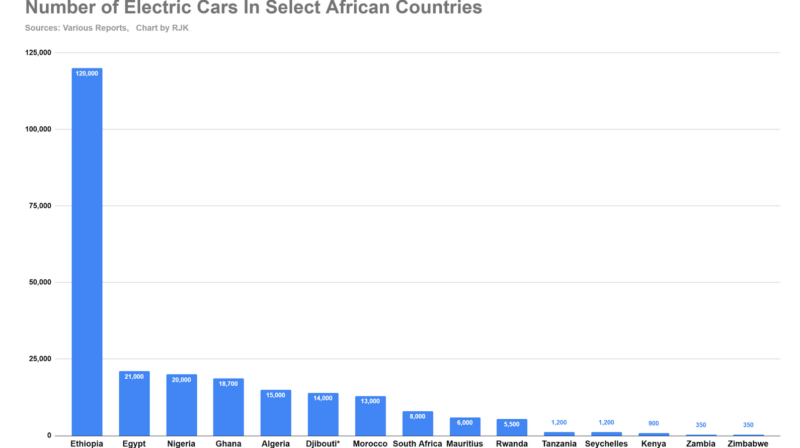
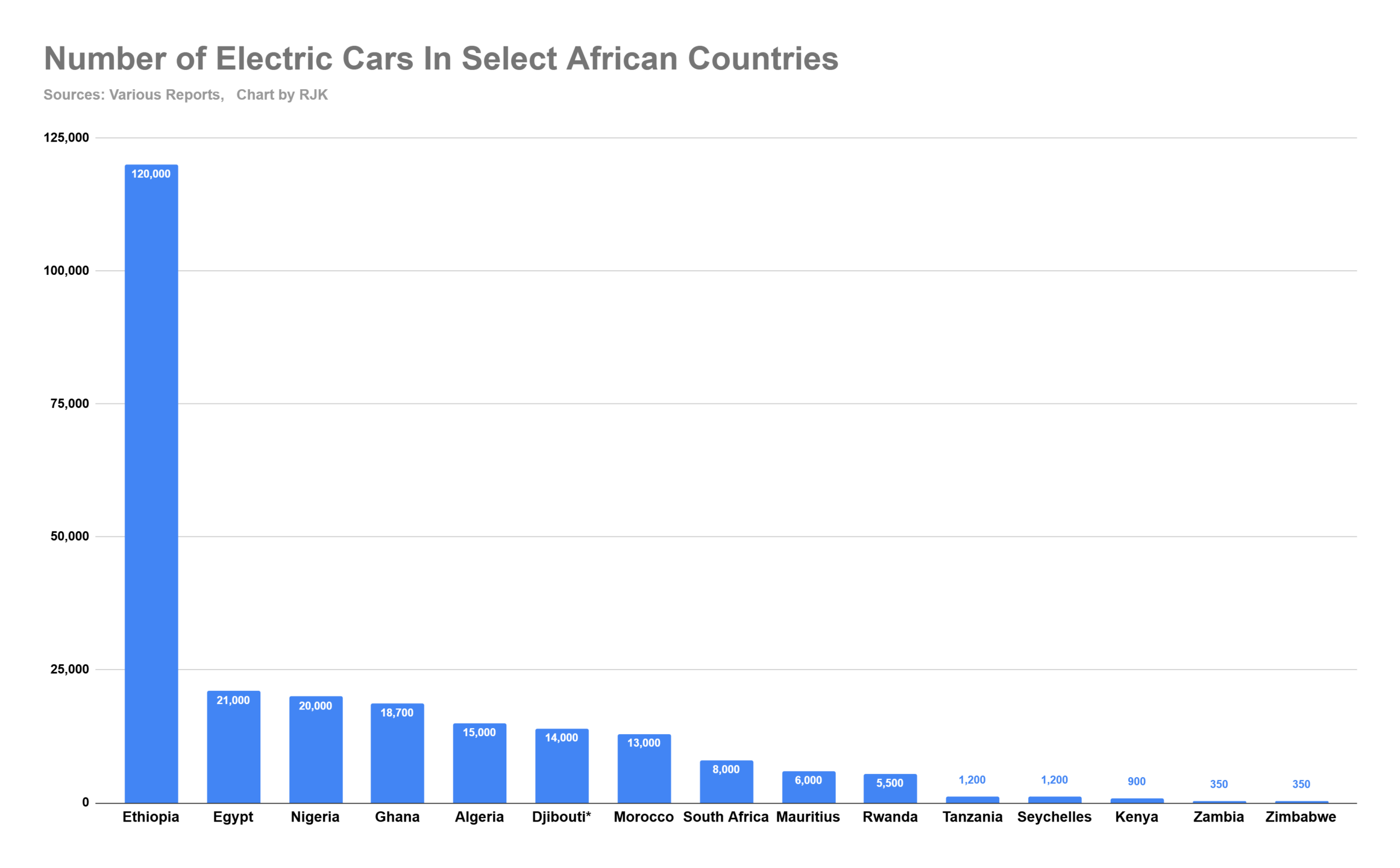
Here is a snapshot of the number of electric cars in select African countries.
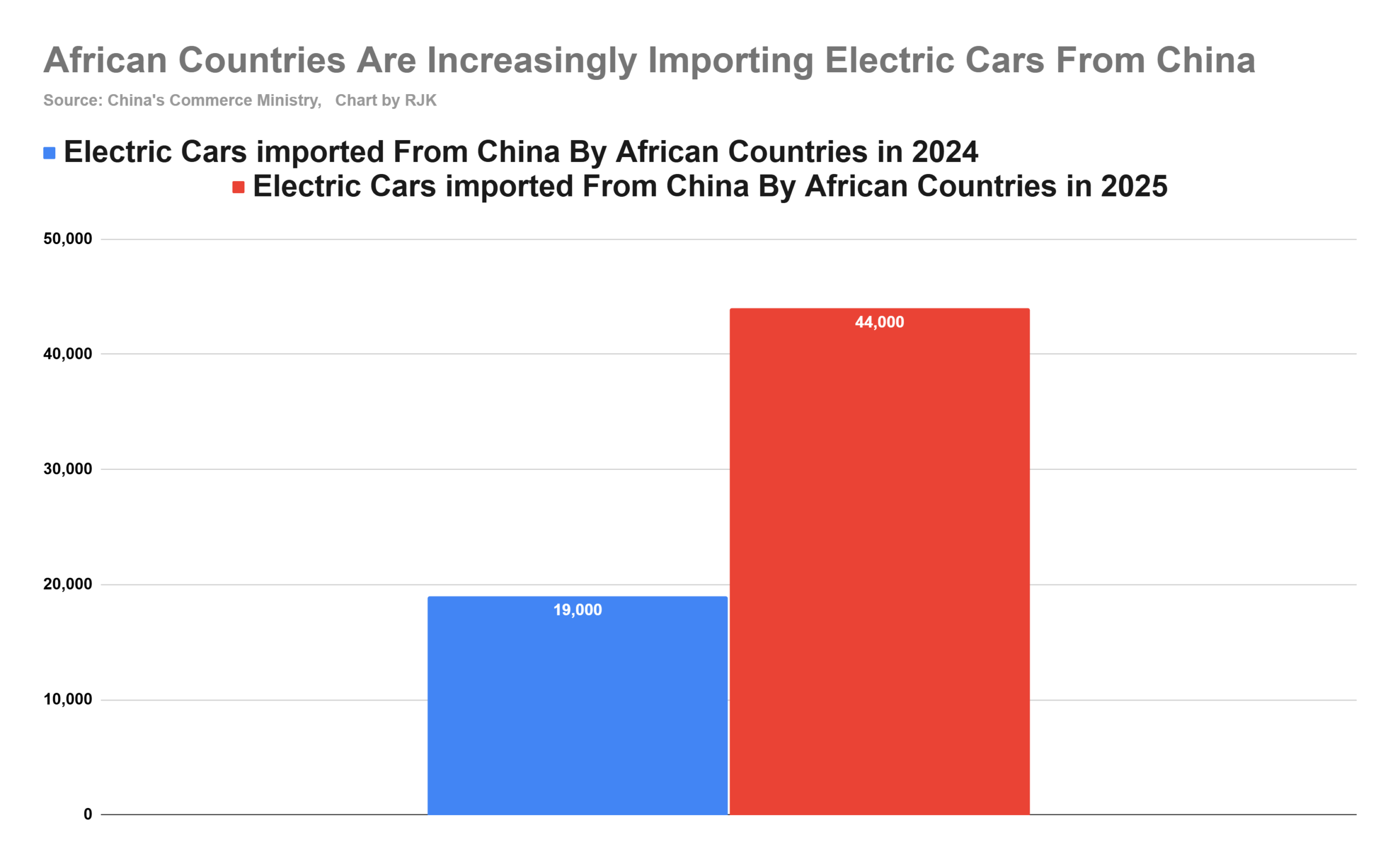
A lot of these EVs are coming from China. Data from China’s Commerce Ministry shows exports of electric cars from China into Africa are growing. Just over 19,000 electric cars were imported from China by African countries in 2024, with this number surging to over 44,000 EVs in 2025.
The number is expected to jump again this year in light of rising fuel prices resulting from the conflict in the Middle East.
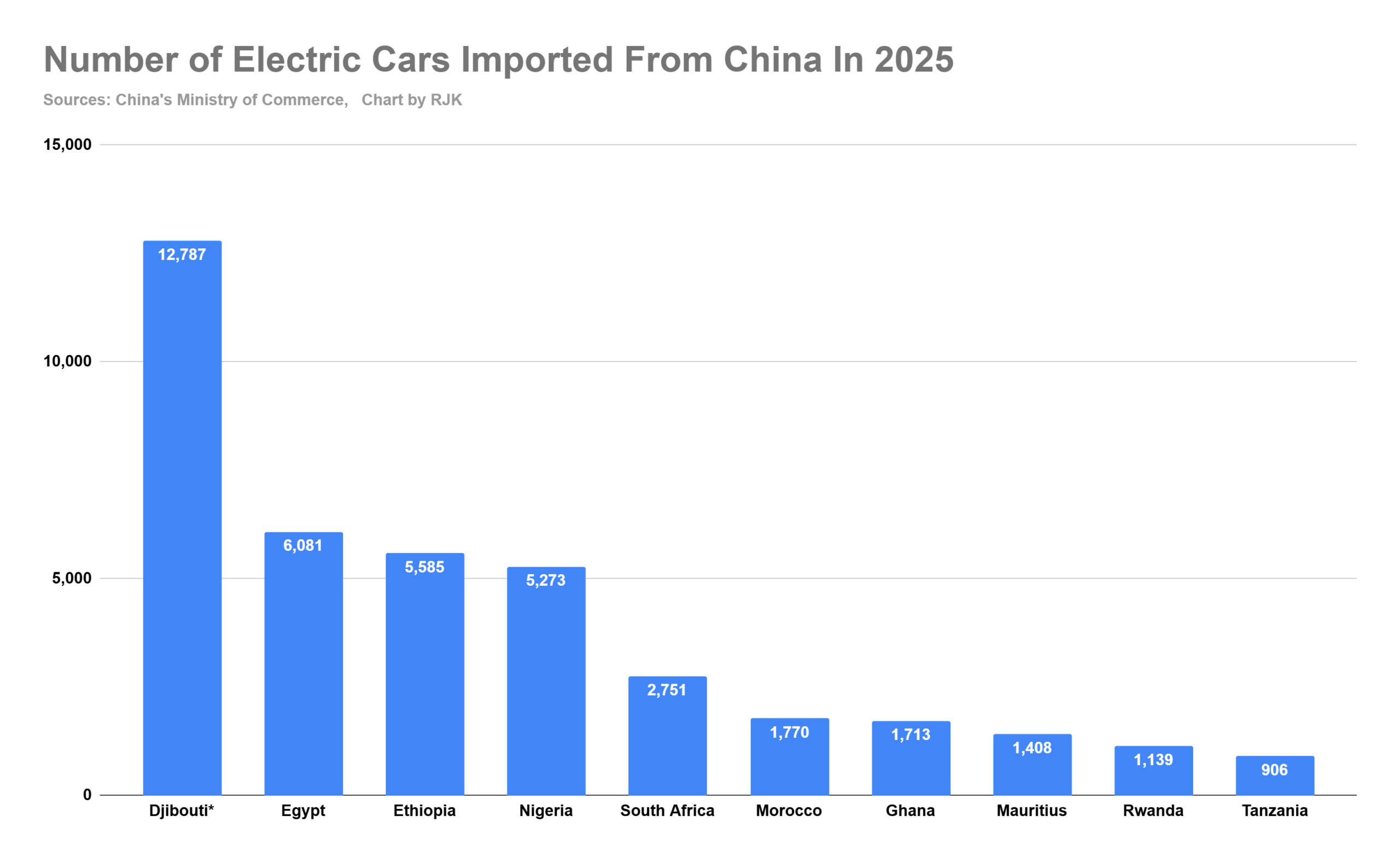
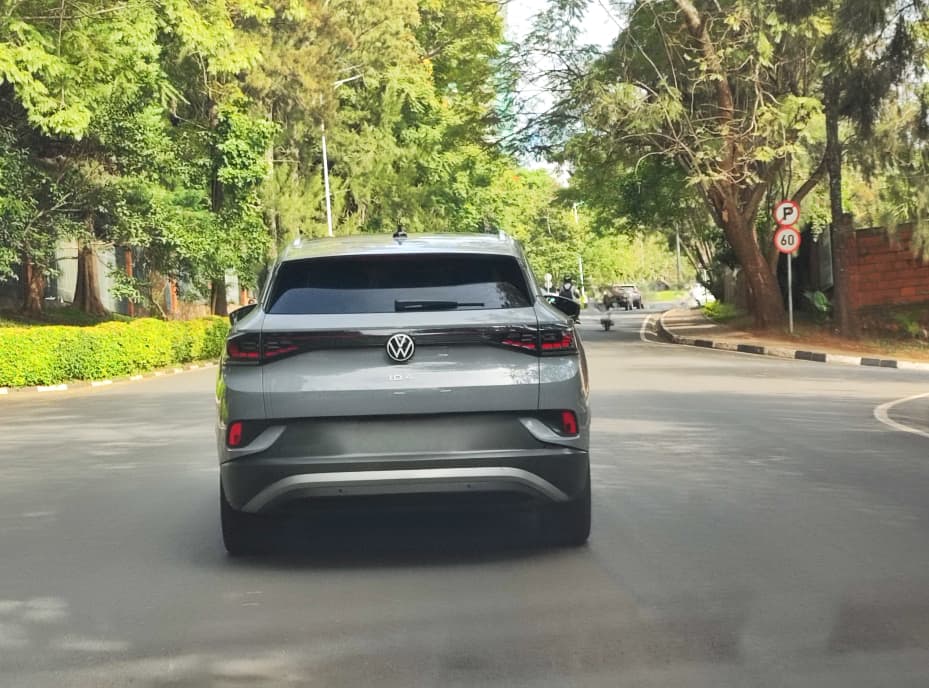
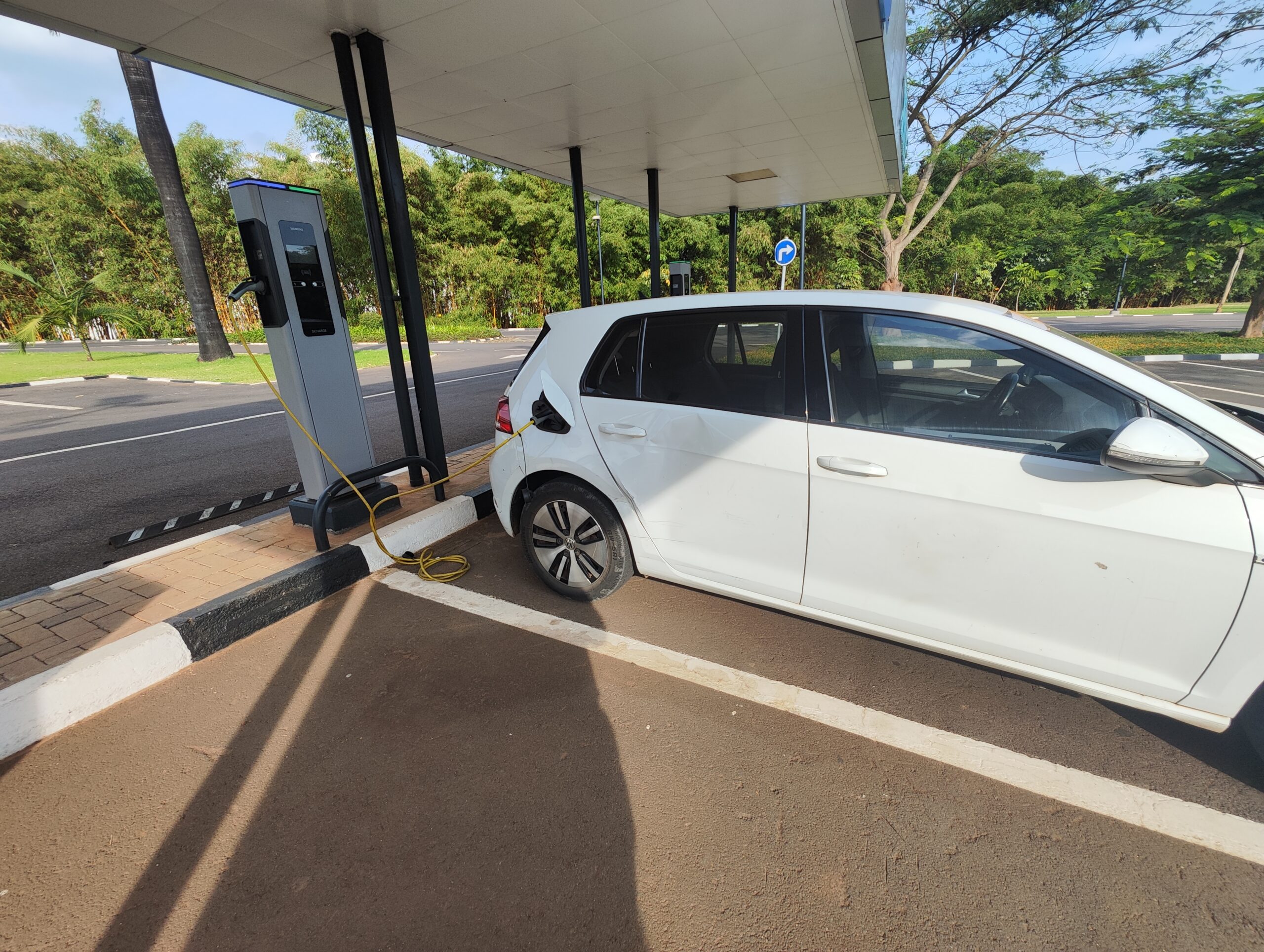
An interesting one on that chart is Djibouti. Could it be some of those are destined for Ethiopia? Or the transition is also well underway in Djibouti? We will look into this in more detail. In any case, it’s good progress either way. What is surprising in all of this is how far Kenya has fallen behind. Kenya is usually a leader in innovation and driving adoption of new tech in Africa, but when it comes to electric cars, Kenya is the laggard. I’m sure you have heard a lot of exciting news around electric vehicles in Kenya, led especially by coverage from us here at CleanTechnica. But you will soon notice that all the action in Kenya is revolving around electric motorcycles, whose penetration is now over 15% of new motorcycle sales. There is also some action around electric buses. Notice that traditionally smaller car markets now have way more electric cars than Kenya. There are still fewer than 1,000 electric cars in Kenya, whilst there are over 5,500 fully electric cars in Rwanda.
The difference is due to contrasting policies. While Kenya has put in place a number of incentives to catalyse the adoption of electric motorcycles, the same has not been applied to electric car imports. As a result, electric cars in Kenya are still subject to high import duties and taxes, to the effect that when you bring in a car from overseas, by the time you get it registered in Kenya and drive away, you could be paying almost double the original price from where the vehicle came from. This has made electric cars expensive in a market where over 90% of vehicle registrations are used vehicle imports. If you look at the countries seeing increasing adoption of electric cars like Rwanda, they have implemented progressive pro-EV policies. These included:
Fiscal Incentives:
- Electricity tariffs for charging stations to be capped at the industrial tariff. This means that charge point operators will be billed at close to USD 10 cents/kWh instead of over 20 cents/kWh.
- Electric vehicles will also benefit from reduced tariffs during off-peak periods.
- Electric vehicles, spare parts, batteries, and charging station equipment will all be exempted from import and excise duties. All of these would also be treated as zero-rated VAT products and will also be exempt from withholding tax.
Non-Fiscal Incentives:
- Rent-free land for charging stations on land owned by the government.
- Provisions for EV charging stations in the building code and city planning rules.
- Provide preference to electric vehicles for government-hired vehicles.
- Regulate the importation of used vehicles by imposing an age limit.
- Establish restricted zones where only green vehicles can have access.
- Enforcement of existing emission standards to discourage the purchase of polluting vehicles.
The government of Rwanda recently announced that at least 30% of all vehicles sourced by government departments must be electric. This will accelerate adoption of EVs in Rwanda. Kenya has made some announcements recently. There was an announcement about plans to waive import duties for 100,000 electric vehicles. No further details were given and there is no word yet on when or if this will be implemented and enacted into law. EMAK says this proposed duty-free EV import quota will be the largest fiscal commitment to e-mobility in Kenya’s history. If implemented, the call is to ensure that it should include all vehicle types, particularly passenger cars, trucks, and tuk-tuks to catalyse adoption in these segments that have lagged behind the electric motorcycle and bus sector so far in terms of growth.
The Electric Mobility Association of Kenya (EMAK) is a diverse and dynamic community that includes industry experts, entrepreneurs, policymakers, academics, innovators, and enthusiastic individuals who believe in the potential of electric mobility to shape a sustainable future. EMAK assumes the role of a strong advocate for electric mobility at all levels, from local communities to national policies. Through engagements with government bodies, regulatory authorities, and relevant stakeholders, EMAK works to create an enabling environment for the growth of electric mobility in Kenya.
Kenya really needs to catch up with the new wave of electric vehicle adoption that’s moving across several African countries. For example, Rwanda is a market where about 1,700 brand new vehicles are sold each year, and in Kenya, over 13,500 brand new vehicles were sold last year. That means the Kenya market is 8 times larger for brand new vehicle sales and even larger for used vehicle imports with over 90,000 used vehicles imported per year. So how is it that Kenya has 5× fewer electric cars on its roads than Rwanda, and 100× fewer than Ethiopia?
Sign up for CleanTechnica's Weekly Substack for Zach and Scott's in-depth analyses and high level summaries, sign up for our daily newsletter, and follow us on Google News!
Have a tip for CleanTechnica? Want to advertise? Want to suggest a guest for our CleanTech Talk podcast? Contact us here.
Sign up for our daily newsletter for 15 new cleantech stories a day. Or sign up for our weekly one on top stories of the week if daily is too frequent.


CleanTechnica uses affiliate links. See our policy here.
CleanTechnica's Comment Policy

