
A Tale of Two Hybrids
Support CleanTechnica's work through a Substack subscription, on Patreon, or on Stripe. Help us produce all of the high-quality, original content we publish week after week despite the challenges of content-scraping AI, antisocial media, inflation, and other hurdles.
The irony of the energy transition is sometimes found not in a showroom, but on a siding track.
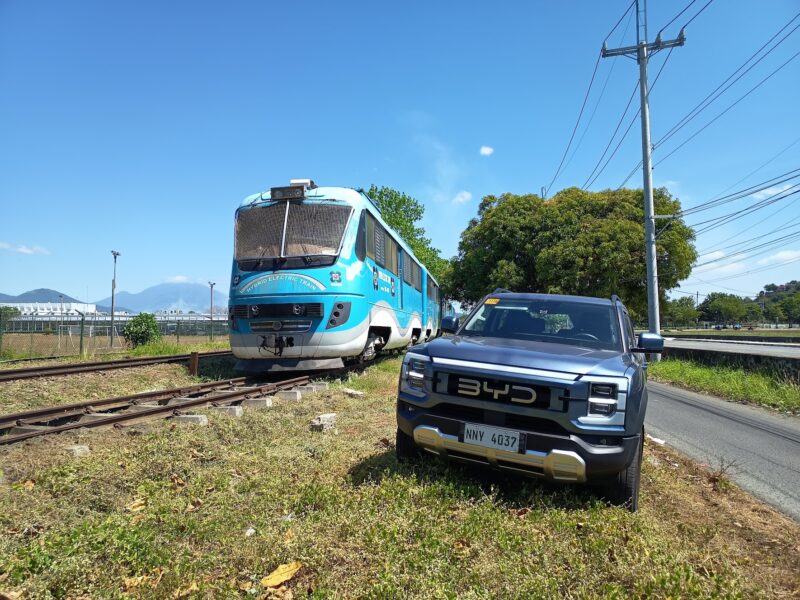
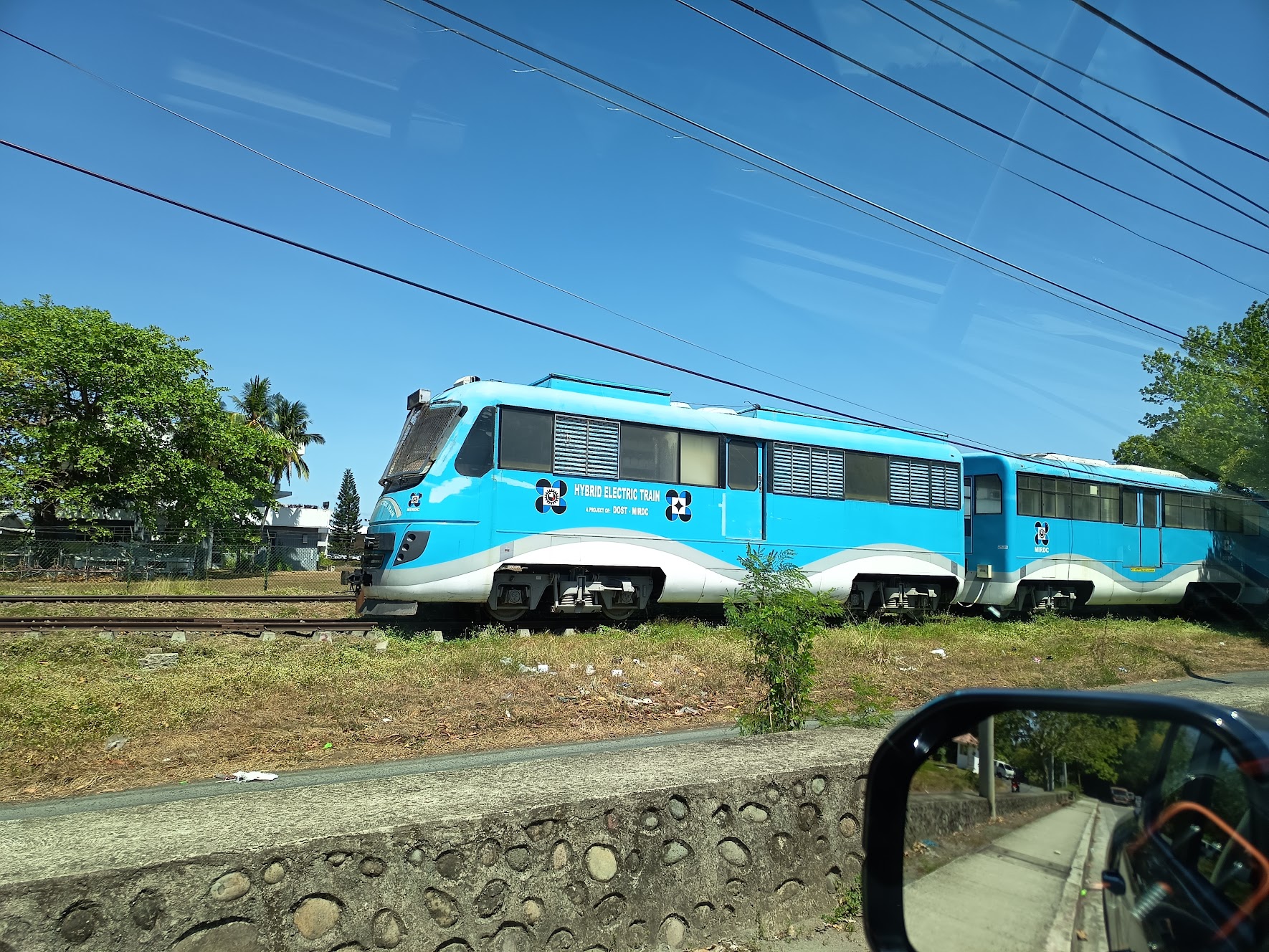
While putting the BYD Shark through its paces on the dusty backroads of Laguna, I found myself face-to-face with another hybrid machine — one that predates the Shark by nearly a decade and has barely moved since. It sits as a silent sentinel in front of the International Rice Research Institute (IRRI) where I covered a story on the greenhouse gases emitted by rice: the DOST Hybrid Electric Train, a Filipino-engineered prototype that proved a developing nation could build a train from scratch, even if the industry wasn’t quite ready to follow.
This is a tale of two hybrids separated not just by years, but by battery chemistry — and that gap tells you almost everything about where the clean transport revolution is, and where it still needs to go.
The Blue Hope: The DOST Hybrid Electric Train (HET)
The DOST Hybrid Electric Train is a massive five-car set, a product of the Metals Industry Research and Development Center (MIRDC) under the Philippine Department of Science and Technology (DOST). Unlike the streamlined EMUs you see in Tokyo or Berlin, the HET has a rugged, industrial aesthetic that says it was built for the PNR’s ageing infrastructure — because it was.
The technical architecture is genuinely interesting. The HET uses a series hybrid configuration: a diesel generator serves as the primary power source, but it does not drive the wheels directly. Instead, it runs at a constant, optimised RPM to charge a battery bank, which then powers electric traction motors. Because the engine isn’t coupled to wheel load, it consumes significantly less fuel than conventional diesel-mechanical locomotives. The train even features regenerative braking to recover kinetic energy on deceleration.
On paper, this is sound engineering. The problem is what’s storing that energy: 260 lead-acid batteries.
Lead-acid was a pragmatic choice for a first-generation prototype in 2016 — cheaper, locally serviceable, and well-understood by Philippine maintenance crews. But lead-acid cells deliver roughly 30–40 Wh/kg of energy density. That means the HET is hauling an enormous mass of electrochemical dead weight just to move itself. It is, as the Filipinos say, parang nagdadala ng mabigat na pasanin — like running a marathon with a backpack full of bricks.
The result: a 2016 vision of emissions-reduced rail, stranded at the IRRI halt, powered by 19th-century battery logic.
The BYD Shark
Parked a few meters from those rusting tracks, the BYD Shark feels like it arrived from a different timeline — because in battery terms, it essentially did. Here is my short review.
The Shark is built on BYD’s DMO (Dual Mode Off-road) platform, delivering a combined system output of 430 hp and 650 Nm of torque. Its 29.6 kWh Blade Battery uses lithium iron phosphate (LFP) chemistry — the same cathode material as the HET’s lead-acid replacement candidate — but at approximately 150 Wh/kg, it offers nearly four times the energy density of what’s sitting in that train. The Shark runs electric-first, with its 1.5-litre turbocharged engine acting primarily as a range extender and generator, not the primary driver. The result is 0–100 km/h in 5.7 seconds and roughly 100 kilometres of EV-only range from a vehicle that weighs over two tonnes and can ford a river.
The architectural parallel with the HET is striking: both machines use an internal combustion engine as a generator feeding electric motors. The difference is entirely in the battery — and that difference is everything.
What BYD could do for Philippine rail
The technical gap visible in my photograph is not merely a story about the years between two machines. It is a story about what becomes possible when battery chemistry advances — and a question about why that advancement hasn’t reached the machine that needs it most.
BYD is not just an automaker. It is one of the world’s largest integrated battery and rail technology companies. In March 2026, BYD officially launched its first overseas SkyRail project in São Paulo, Brazil (Line 17 – Gold). The system uses a 750V DC third-rail for primary power, but its defining feature is onboard LFP battery packs that allow the train to travel up to 8 kilometres autonomously during a grid failure — ensuring passengers are never stranded mid-route.
On the heavy-freight side, BYD’s battery subsidiary FinDreams has signed agreements with mining giant BHP to develop battery technology for heavy-haul locomotives operating in Australia’s Pilbara iron ore corridors. This is not a consumer pilot. This is BYD positioning its battery technology inside some of the most demanding rail applications on the planet.
Now look back at the HET. The series hybrid drivetrain is already there. The electric traction motors are already there. The engineering talent at DOST-MIRDC is demonstrably there. What is missing is the energy storage layer — and BYD already makes it in the exact form factor that could replace 260 lead-acid cells with a modular, temperature-managed LFP rack that weighs less, holds more, and lasts longer.
BYD already has a Philippine commercial footprint through AC Mobility. If they can deliver the Shark to Filipino driveways, the question worth asking — loudly, and in the direction of both DOST and BYD Philippines — is why the same Blade Battery technology cannot find its way into the HET’s battery bay. The infrastructure exists. The prototype exists. The chemistry exists. What is needed is the commercial and policy will to connect them.
What “Hybrid” really means here
Standing between the silent train and the idling Shark in the Los Baños heat, you realize that “hybrid” is doing double duty as a word.
In engineering, it describes a powertrain that bridges two energy sources. In the Philippine context, it describes something larger: a country in transition, caught between legacy infrastructure built for a different era and high-voltage technology already parked in its driveways. I will say again: the HET is not a failure. It is a proof of concept waiting for a second act. The Shark is not just a truck. It is a demonstration that the second act is technically possible.
All that remains is the will to perform on stage.
Sign up for CleanTechnica's Weekly Substack for Zach and Scott's in-depth analyses and high level summaries, sign up for our daily newsletter, and follow us on Google News!
Have a tip for CleanTechnica? Want to advertise? Want to suggest a guest for our CleanTech Talk podcast? Contact us here.
Sign up for our daily newsletter for 15 new cleantech stories a day. Or sign up for our weekly one on top stories of the week if daily is too frequent.


CleanTechnica uses affiliate links. See our policy here.
CleanTechnica's Comment Policy

