
The Effects Of Congestion Pricing — Pollution Reduction And So Much More
Support CleanTechnica's work through a Substack subscription or on Stripe.
New York City introduced congestion pricing in January 2025. The original goal, set in 2020 through a Cornell-City College of New York collaboration, calculated a range of different toll prices and aligned each pricing pricing level with anticipated congestion reductions, environmental gains, and health benefits. How well has the City met those goals?
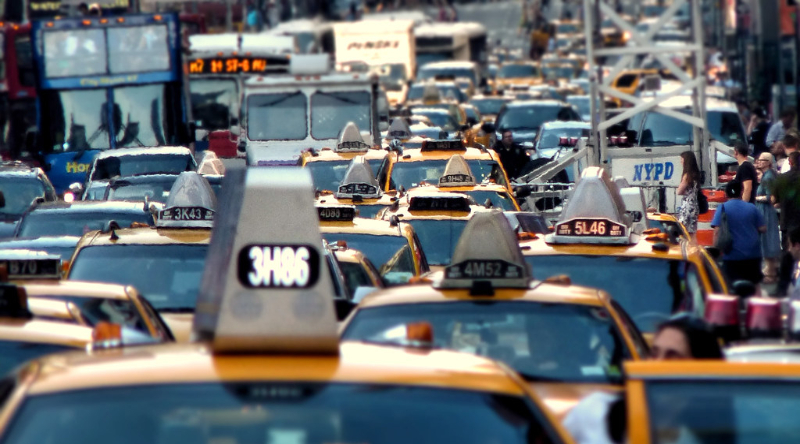
Initial studies indicate that there are reductions in traffic and rush hour delays in the Congestion Relief Zone (CRZ). With increased traffic flow, fewer crashes are occurring. Noise complaints are down in urban areas. Environmental benefits are clear. And, importantly at a time in which New York City is attempting to create new programs for working class citizens, toll revenue is projected to hit $500 million by the end of the year.
Taken together, these results suggest that congestion pricing produces increasingly strong returns within the tolled zone while producing time-limited co-benefits in adjacent areas. “Excitingly,” recent study authors write, “these effects were not static over time, but grew within the CRZ over time.”
Congestion has become a common phenomenon that threatens the sustainability of cities, and congestion pricing is one of the strategies aimed at curbing traffic demand and relieving traffic congestion. New York City has always been among the most congested traffic spots in the world. Manhattan’s daytime population (area of 22.96 square-mile) is approximately 3.94 million people and consists of approximately 41% daily commuters, 37% residents, 10% out-of-town visitors, 9% local day-trip visitors, and 3% hospital patients and students (those who are living in off-campus residences outside Manhattan). Traffic congestion in New York City (all five boroughs: Manhattan, The Bronx, Queens, Brooklyn, and the Staten Island) has long been a defining City feature, and New York City ranks as the second worst in the United States and the third-worst worldwide for traffic impacts.
In 2020, researchers created a baseline analysis that about 1 million tons of greenhouse gas (GHG) emissions – mostly carbon dioxide – that were being released from automobile and truck traffic in lower Manhattan annually. The researchers projected that congestion pricing would have numerous positive results:
- a decreasing trend in the total number of trips interacting with the central business district (CBD) as the price goes up, except for intrazonal trips;
- considerable growth in transit ridership (6%); and,
- single-occupant vehicles and taxis trips destined to the CBD would be reduced by 30% and 40%, respectively, under the $20 pricing scheme.
The subsequent 2025 study collected data between January and June 2025 to seek what, if anything, had changed. It considered data of air quality, traffic, neighborhood demographics, and meteorology. Daily information from 42 air quality monitors in the metropolitan area across 518 days, for a total of 17,758 observations, formed the dataset.
Congestion pricing has been used for years in global cities like London, Milan, and Singapore as a policy tool to reduce traffic demand and alleviate congestion. In New York City, reducing GHG emissions and ambient air pollution from on-road transportation sources like passenger cars and trucks did make a real difference.
Total daily vehicles: During the study period, when the toll for passenger and small commercial vehicles at peak hours was $9, the overall volume of vehicles entering the CRZ decreased by about 11%. Vehicle entries into the CRZ lessened for heavy-duty truck entries (approximately 18% decrease) and car entries (about 9%). Differing responses between trucks and passenger vehicles likely reflect their distinct decision-making dynamics, the authors conclude, where individual drivers adjust gradually through small, trip-level changes. Trucking companies, on the other hand, plan ahead to minimize operating costs, leading to larger, more coordinated adjustments such as rerouting or reducing cross-cordon entries.
CRZ particulate matter was a significant environmental benefit reduction as a result of congestion pricing. In the first six months of the program, air pollution – in the form of particulate matter 2.5 micrometers and smaller – dropped by 22% in the Congestion Relief Zone (CRZ), which encompasses all local streets and avenues at or below 60th Street in Manhattan. Average daily maximum PM2.5 concentrations in Manhattan’s CRZ declined by 3.05 micrograms per cubic meter – a reduction of 22% compared to a projected average of 13.8 micrograms per cubic meter had congestion pricing not been implemented.
Beyond the CRZ pollution: The team also reported drops across the City’s five boroughs and surrounding suburbs: average declines of 1.07 micrograms per cubic meter across the five boroughs and 0.70 micrograms per cubic meter in the broader geographic area. This result demonstrates that congestion pricing also positively affected adjacent areas instead of just repositioning air pollution off to the suburbs. The researchers surmised that commuters have been selecting cleaner transportation options such as public transportation or electric vehicles and rescheduling deliveries for off hours.
For comparison, the Environmental Protection Agency recommends an annual average exposure of no more than 9 micrograms per cubic meter, while the World Health Organization’s recommendation is even lower at 5 micrograms per cubic meter. The size of the decline was greater than what has been seen in other congestion pricing zones in Stockholm (5-15% between 2006 and 2010) and London (7% between 2019 and 2022).
Traffic speed and flow: The policy increased speeds on CBD roads by 11%. Speeds also increased on roads outside the CBD that are commonly traversed by drivers headed to/from the CBD. These spillovers lead to faster trips throughout the metro area, including for many unpriced trips.
“Our overall conclusion is that congestion pricing in New York City, like many other cities in the world that have implemented it, helped not only improve traffic, but also helped reduce air pollutant concentration, improve air quality, and should be good for public health,” senior study author, Oliver Gao, who is the director of Cornell’s Center for Transportation, Environment, and Community Health, told the Cornell Chronicle.
Final Thoughts about Congestion Pricing in New York City
The Regional Plan Association (RPA) published a separate study, “Congestion Pricing: Faster All Around,” which points to a similar set of benefits of the Central Business District Tolling Program (CBDTP) and their ripple effect to the boroughs and counties surrounding the CRZ as well. Key findings from the report include:
- Traffic delays in Manhattan are 25% lower than would be expected without the CBDTP.
- Traffic delays in the region outside of Manhattan are 9% lower than would be expected without the CBDTP.
- Manhattan’s post-holiday delay reductions (the congestion easing after November/December) would be ~21% without implementation of the CBDTP; with implementation, traffic delays in the new year and spring are actually 40% lower.
- Without the CBDTP, post-holiday delay reductions outside of Manhattan are expected to be 9%; with the program, they are instead 17%.
- Traffic delays in the Bronx are down 10% with CBDTP.
- Traffic delays in twelve municipalities in Bergen County are down 14% with CBDTP.
- Staten Island is largely unaffected, showing a modest delay decrease of 5%.
Resources
- “A first look into congestion pricing in the United States: PM2.5 impacts after six months of New York City cordon pricing.” Timothy Fraser, et al. npj | Clean Air. 2025.
- “Congestion pricing improved air quality in NYC and suburbs.” David Nutt. Cornell Chronicle. December 8, 2025.
- “Evaluating the traffic and emissions impacts of congestion pricing in New York City.” Amirhossein Baghestani, et al. Sustainability. 2020.
- “New congestion pricing research shows fewer traffic jams and delays across the city and region.” RPA. June 2025.
- “The short-run effects of congestion pricing in New York City.” Cody Cook, et al. National Bureau of Economic Research. January 2026.
Sign up for CleanTechnica's Weekly Substack for Zach and Scott's in-depth analyses and high level summaries, sign up for our daily newsletter, and follow us on Google News!
Have a tip for CleanTechnica? Want to advertise? Want to suggest a guest for our CleanTech Talk podcast? Contact us here.
Sign up for our daily newsletter for 15 new cleantech stories a day. Or sign up for our weekly one on top stories of the week if daily is too frequent.


CleanTechnica uses affiliate links. See our policy here.
CleanTechnica's Comment Policy

