

Volvo Brings The EX90 & ES90 To The Philippines — And It’s A Big Deal For Local EV Buyers
Support CleanTechnica's work through a Substack subscription, on Patreon, or on Stripe. Help us produce all of the high-quality, original content we publish week after week despite the challenges of content-scraping AI, antisocial media, inflation, and other hurdles.
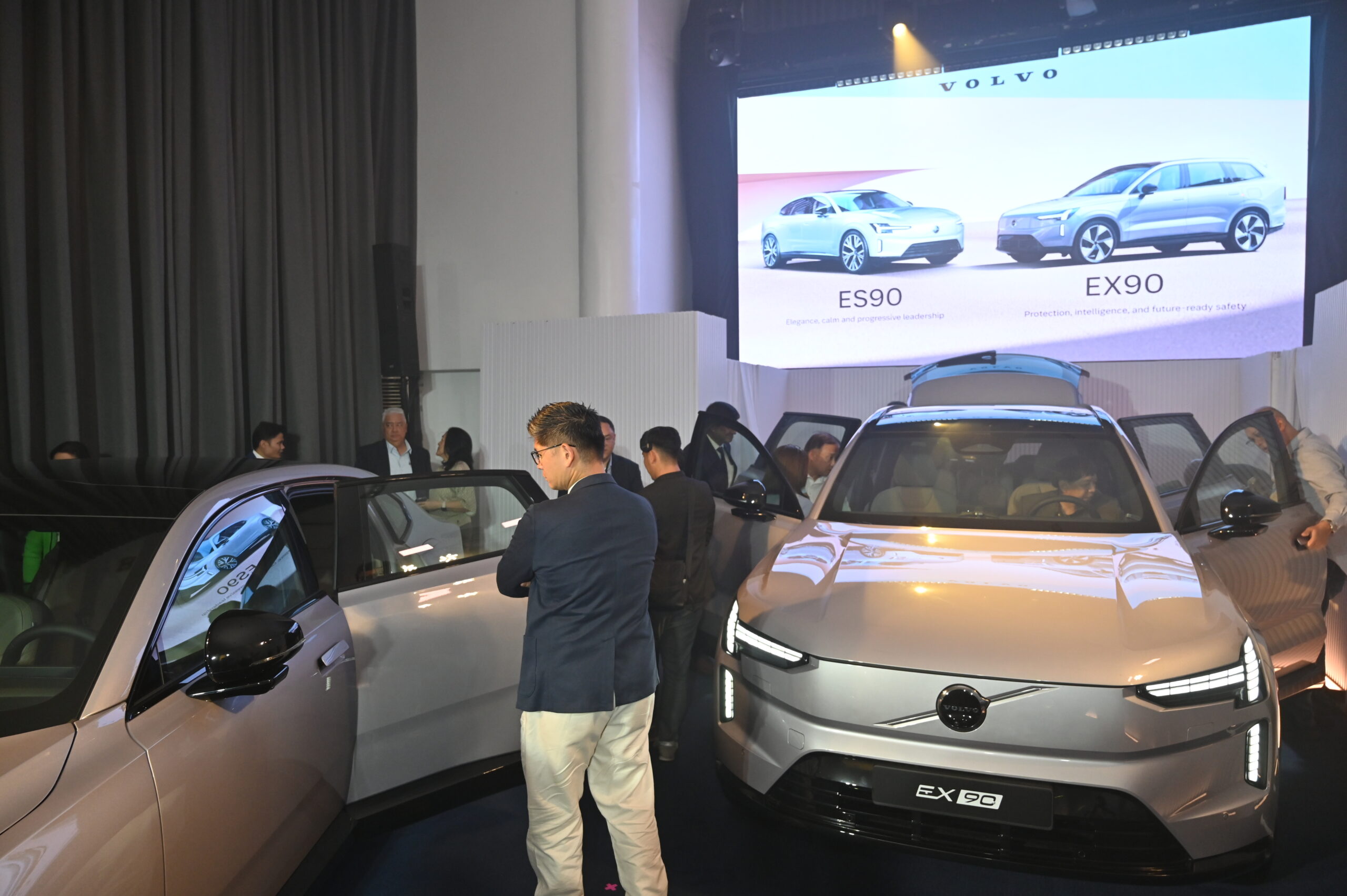
Before the end of February, Volvo Cars Philippines officially landed two of its most important electric vehicles in Manila — the EX90 and the ES90. Hariphil Asia Resources Inc. handled the local launch, and honestly, this is one of the more consequential premium EV introductions the Philippine market has seen in a while.
The EX90 Electric SUV Flagship
The EX90 is Volvo’s answer to what comes after the XC90. This is a serious machine. A dual-motor AWD setup puts out around 456 hp and 770 Nm of torque, fed by a 111-kWh battery that Volvo claims can push roughly 600 km on a single charge under WLTP conditions. Whether that holds up in Metro Manila stop-and-go traffic is another story, but the ceiling is impressively high.
DC fast charging is rated up to 350 kW, getting you from 10% to 80% in about 22 minutes. That’s competitive even by global standards. But what makes the EX90 genuinely interesting for enthusiasts is the roofline-integrated lidar — a sensor setup that works alongside cameras, radar, and ultrasonics. It’s not just a safety feature; it’s Volvo planting a flag on where its driver-assistance technology is heading.
The three-row, seven-seat cabin sits on a flat-floor EV platform, and the packaging shows. There’s real space here. Local pricing for the EX90 Ultra BEV starts at P5.99 million (~$101,400). It’s steep, but expected territory for a vehicle of this caliber.
The ES90: The Charged Successor
The ES90 doesn’t get talked about as much, but it might be the more technically interesting of the two. Built on an 800-volt architecture — a spec you’d normally expect from Porsche or Hyundai’s E-GMP vehicles — it’s engineered for faster charging and greater efficiency across the board.
Range is rated at up to 700 km under WLTP, which would make it one of the longer-range electric sedans on the market if it delivers close to that in real-world use. The fastback body achieves a drag coefficient of 0.25, and the traditional grille has been replaced entirely by a closed front fascia housing cameras and radar.
Inside, it’s clean to the point of being spare — large touchscreen, digital cluster, minimal physical controls. Polarizing for some, but consistent with where the premium segment is moving. The ES90 Ultra BEV enters the Philippine market at P5.265 million ($89,130), making it slightly more accessible than the EX90 despite arguably being the more technically forward vehicle.
Let’s be honest — EV adoption in the Philippines is still finding its footing. Charging infrastructure outside Metro Manila is patchy and the buyer pool for vehicles at this price range is always going to be limited. But flagship models like these tend to set the tone before the more accessible options follow. There are comparable Chinese models with a different product value and brand equity that sell for much less, but are often feature-loaded, like Honqi’s HS7 which range from P2.58 million to P3.50 million (~$42,500 to $59,250).
Volvo’s smaller EX30 is still in the pipeline for the region, and that’s likely where the volume story eventually gets written. For now, the EX90 and ES90 are proof that global EV ambitions are reaching Southeast Asia in earnest — and that Filipino car enthusiasts no longer have to wait as long to get their hands on what the rest of the world is already driving.
Sign up for CleanTechnica's Weekly Substack for Zach and Scott's in-depth analyses and high level summaries, sign up for our daily newsletter, and follow us on Google News!
Have a tip for CleanTechnica? Want to advertise? Want to suggest a guest for our CleanTech Talk podcast? Contact us here.
Sign up for our daily newsletter for 15 new cleantech stories a day. Or sign up for our weekly one on top stories of the week if daily is too frequent.


CleanTechnica uses affiliate links. See our policy here.
CleanTechnica's Comment Policy

