Investment

Heart’s Electric Airliner Still Needs Fuel

On August 12, Heart Aerospace flew its X1 demonstrator for 27 minutes from Plattsburgh International Airport in New York. The aircraft weighed more than 25,000 pounds, had a 106-foot wingspan and put more than a megawatt through its electric propulsion system while taxiing, taking off, climbing, maneuvering and landing. There … [continued]
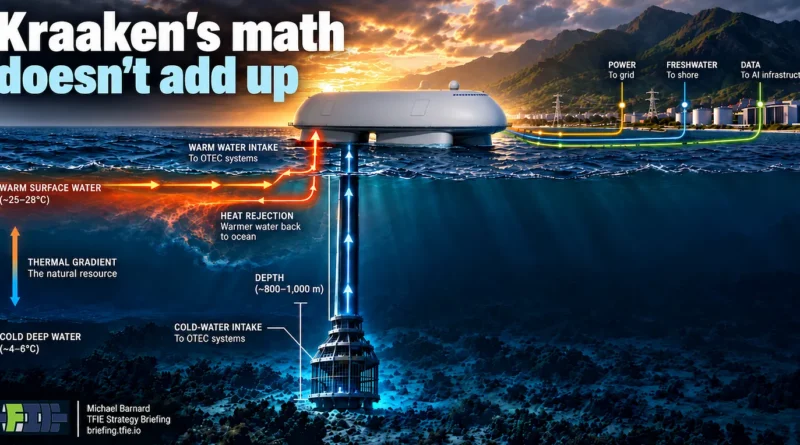
Kraaken’s Floating AI Platform Still Has To Close The OTEC Math

A floating data centre that generates its own electricity from the ocean, cools itself with seawater, produces drinking water for a coastal community and can sail away when a hurricane approaches is almost tailor-made for the current AI data center hype bubble. Optimal Transit’s Kraaken concept is ambitious even by … [continued]

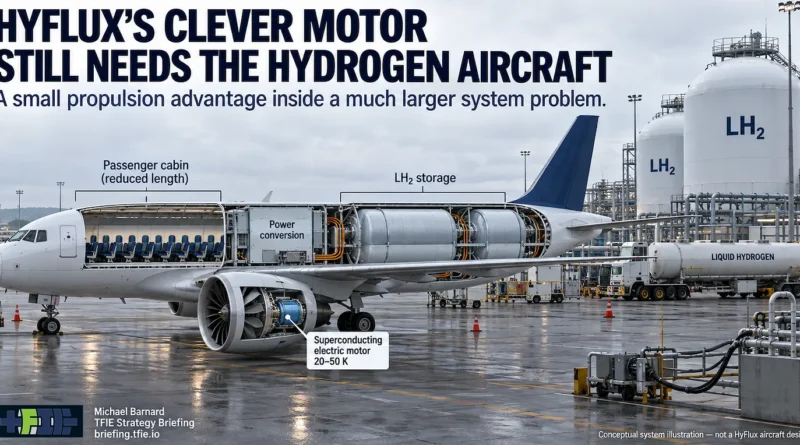
HyFlux’s Superconducting Motor Might Work. Hydrogen Aviation Is The Hard Part.

HyFlux has an unusually interesting hydrogen-aviation proposition because the technology at its centre appears somewhat credible, if incredibly difficult to engineer and maintain. The UK company wants to exploit the extreme cold of liquid hydrogen already carried aboard a future hydrogen aircraft to cool a fully superconducting electric motor. Superconductivity … [continued]

New Sierra Club Analysis Shows U.S. Public Pensions Hold Billions in Fossil Fuel Bonds

WASHINGTON, D.C. — Today, Sierra Club released a new analysis of public data published by Urgewald on fossil fuel bond holdings across 40 U.S. public pension funds, finding that fossil fuel debt remains embedded in public pension portfolios and available bondholding data are significantly incomplete. The analysis underscores that even if a public … [continued]

Ports Need More Capital As Their Bulk Cargo Base Shrinks

Ports are being asked to make infrastructure decisions that will last thirty, forty or fifty years while several of the assumptions that paid for their existing infrastructure are changing at the same time. Ships are getting larger, requiring deeper channels, larger cranes and more capable tug fleets. Climate disruption is … [continued]

OceanX Made Downwind Floating Wind Worth Another Look

OceanX gave me two immediate reasons to be skeptical. It puts two turbines on one floating platform, and it puts the rotors downwind of their supports rather than in front of them. I had looked at both ideas years ago and found good reasons why the wind industry had largely … [continued]

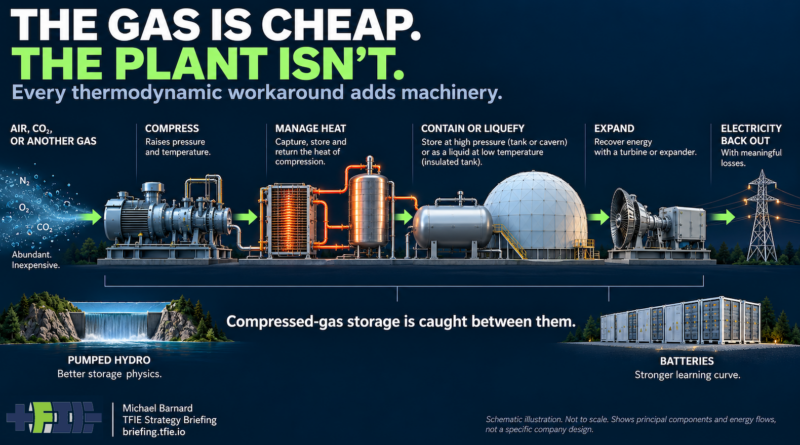
Compressed-Gas Storage Demonstrators Got Bigger. The Economics Didn’t Get Better.

Two years ago I called compressed-gas electricity-storage claims mostly hot air. Since then the sector has produced exactly the sort of evidence that should force a reassessment rather than a repetition of the old argument. China has commissioned the 600 MW / 2.4 GWh Huai’an compressed-air demonstration, Hydrostor has pushed … [continued]

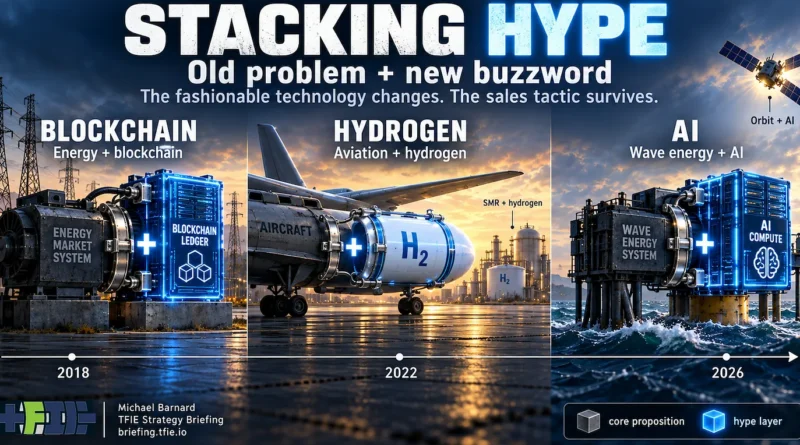
AI Is Climate Tech’s Newest Hype Layer — The Commercial Problems Are Older

Panthalassa raised $140 million this year to build autonomous ocean platforms that would generate electricity from waves and use it directly for AI inference computing at sea. The proposition removes one genuine problem for wave energy: instead of transmitting electricity back to shore through subsea cables and grid connections, put … [continued]