Marine Energy

Water Power Winners Emerge As Collegiate Competitions Surge

Top Teams Claim Prizes at 2026 Hydropower and Marine Energy Collegiate Competition Final Events, and DOE Welcomes a Record 45 Teams for the 2027 Season Two teams have snagged the top prizes in the 2026 Hydropower and Marine Energy Collegiate Competition finals, and 45 others have risen to the top … [continued]

HERO’s Mission: Building a Blueprint for Wave Energy Components

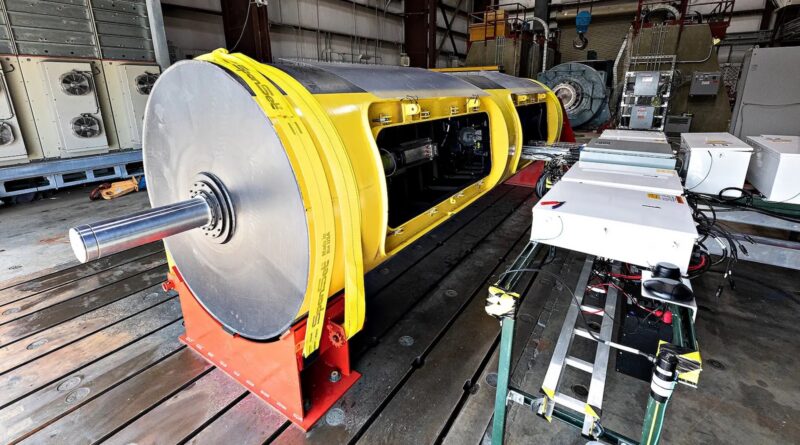
Latest HERO WEC Mission Status Update Examines How New Charge Controller Design Addresses Critical Challenge in Wave Energy Industry Since 2024, researchers at the National Laboratory of the Rockies (NLR) have been improving the overall design of NLR’s hydraulic and electric reverse osmosis wave energy converter—or HERO WEC. Their work aims … [continued]

Wave Energy’s Hardest Problem Is Not The Waves. It Is Maintenance.

After publishing on a wave energy proposal for offshore data centers, I received a useful challenge. A reader pointed to CorPower Ocean as a counterexample. That was worth taking seriously. CorPower is not a render-first startup selling a fantasy of floating artificial intelligence infrastructure in the deep Pacific. It has … [continued]

The Ocean Is Not A Server Rack: Panthalassa, Peter Thiel, And Wave-Powered AI Compute

I have been seeing LinkedIn posts about Panthalassa’s wave-powered AI data-center concept recently, and the reaction they’ve been getting is familiar. Big funding round. AI power bottleneck. Ocean energy. No grid connection. No land constraint. Autonomous machines. A new category. It had all the ingredients of a story built to … [continued]

Riding the Ocean’s Data

Modeling Advancements Could Help Developers Build More Robust, Seaworthy Devices Wave energy technologies can provide reliable, local power for autonomous underwater vehicles, and at-sea applications across U.S. coastal regions, especially where traditional energy supply is limited or costly. Although some wave energy devices have demonstrated promising performance, most are still … [continued]

Why the Future of Energy Storage is Spinning To Make a Comeback

Seven months ago, Tina Casey wrote about the comeback of kinetic energy storage systems, pointing to renewed investment and attention after years of being overshadowed by batteries. Her piece, “$200 Million For Renewables-Friendly Flywheel Energy Storage,” captures a shift that has been building quietly: flywheels are no longer a niche … [continued]

PH–China Energy Partnership Flagged As Key To Accelerating Renewable Transition

A newly released study by People of Asia for Climate Solutions (PACS) and New Energy Nexus (NEX) underscores the potential of deeper Philippines–China cooperation to speed up the country’s shift to renewable energy, while unlocking economic and technological gains for both sides. Titled “Bridging Opportunities: A Roadmap for China–Philippines Renewable … [continued]

Most Maritime Shipping Battery Propulsion Studies Are Already Obsolete

Most maritime battery studies are already obsolete. That is not a criticism of the researchers who wrote them. It is a recognition that their assumptions were grounded in the battery costs and energy densities available at the time. Several of the most detailed recent merchant shipping studies modeled battery system … [continued]

Will Water-Powered Microgrids Work in the Real World?

Webinar Series Will Highlight How Researchers Test and De-Risk Marine Energy Microgrid Technologies in the Lab In remote places where water flows freely but electricity often does not, the potential to harness the power of waves, currents, and tides is palpable. But is it possible? Although marine energy technologies like … [continued]