oahu

LNG Won’t Shield Hawaiʻi From the Next Energy Crisis

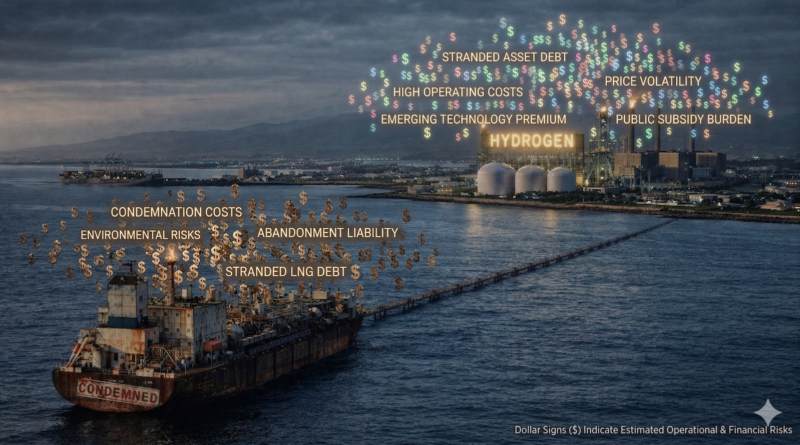
Hawaiʻi’s LNG turn was sold as a practical answer to a practical problem. The state has high electricity prices, aging oil-fired generation, isolated island grids, and political pressure to cut bills without creating reliability problems. HSEO’s January 2025 alternative fuels study was built around that frame. It was focused on … [continued]

Beyond Generation: The Grid Innovations Hawaiʻi Needs Next

Naturally, just when Hawaiʻi’s decarbonization pathway starts to look complete, another chapter occurs to me. After the generation mix, the island-by-island resource story, the transport implications, and the logic of electrification, what remains is the part of the energy transition that fossil systems used to provide almost by accident. Hawaiʻi … [continued]

Turning the Plan Into Action: Next Steps for Oʻahu’s Clean Energy System

This is the culminating article in a series exploring from the outside a decarbonization solution set and coarse roadmap for Hawaiʻi. It is a set of possible next actions that a Hawaiian agency, utility, authority, or coalition could undertake if the roadmap outlined in this series is worth exploring further. … [continued]

Oʻahu 2050: A Hard-Charging Roadmap to a Zero-Carbon Energy System

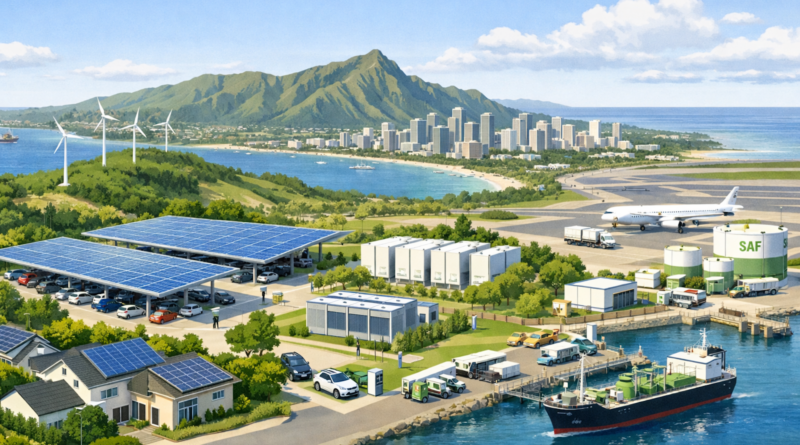
What follows is a draft roadmap for a decarbonized O’ahu. This roadmap does not appear out of nowhere. It follows a long chain of analysis that rebuilt Oʻahu’s energy system piece by piece. Earlier articles stripped away overseas aviation fuel, international maritime bunkering, and military demand to isolate the island’s … [continued]

Hawaiʻi’s Latest LNG Plan Rests On Assumptions That Do Not Survive Scrutiny

Hawaiʻi’s debate over importing liquefied natural gas has turned on a state study that was supposed to show whether LNG could lower electricity costs on Oʻahu while serving as a bridge to a cleaner system later. The scenario sold for the past year turned out to be based on a … [continued]

Solar at Home, Imported Biofuels for Crossing Oceans: Hawaiʻi’s Real Energy Strategy

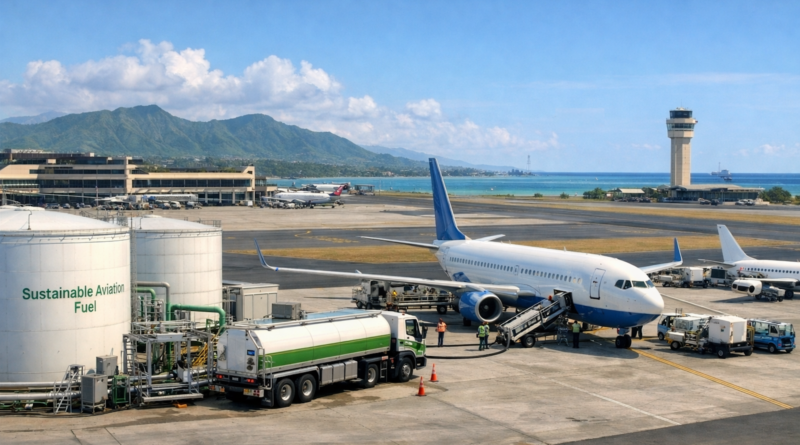
The final piece of Hawaiʻi’s decarbonization puzzle is not on Oʻahu’s domestic grid. That part of the work is already largely bounded. In the earlier articles in this series, I stripped out overseas aviation fuel, ocean-crossing ship bunkering, and military energy use, then electrified ground transportation, local marine transport, buildings, … [continued]

LNG Need Not Apply: The Math of Oʻahu’s Clean Energy Future

The debate over LNG in Hawaiʻi persists because it sounds like a practical answer to a familiar problem. Oʻahu still relies heavily on imported fuel for electricity, so a different imported fuel can appear to be a reasonable bridge. LNG is marketed as dispatchable, cleaner than oil, and compatible with … [continued]

Burning Plastic Isn’t Renewable: Rethinking Waste & Power In Hawaii

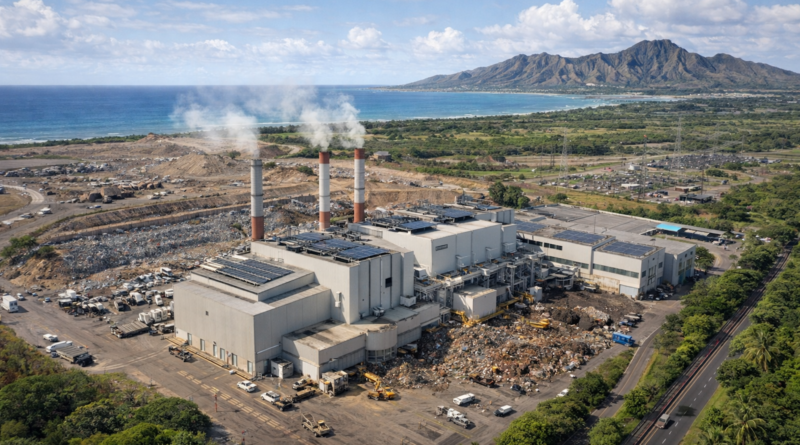
The starting point for evaluating Oʻahu’s waste-to-energy plant is the fully electrified energy system developed earlier in this series. Once overseas aviation fuel, international maritime bunkering, and military energy consumption are removed from the accounting, and once transportation, buildings, and industry are electrified, the island’s civilian electricity demand settles at … [continued]

Demand Shifting in Hawaiʻi: The Other Half of the Energy Transition

The series examining Oʻahu’s energy transition has followed a consistent structure. It began by defining the island’s fully electrified energy system and stripping away energy uses that do not serve the civilian economy. Aviation fuel for flights leaving Hawaiʻi, maritime bunkering for ships crossing the Pacific, and military energy consumption … [continued]

Biomethane for Oʻahu: A Small Reserve With a Big Reliability Role

The starting point for evaluating biomethane in Hawaiʻi is the fully electrified Oʻahu energy system that emerged from the earlier Sankey analysis. That work removed overseas aviation fuel, long-distance maritime bunkering, and military energy use from the island energy balance. It also electrified transportation, buildings, and industry while replacing combustion … [continued]