The Algae Phoenix Rises: Biofuel Down, Concrete Up
After stumbling on biofuel, algae finds its footing and steps up to help the concrete industry cut its carbon footprint, too.

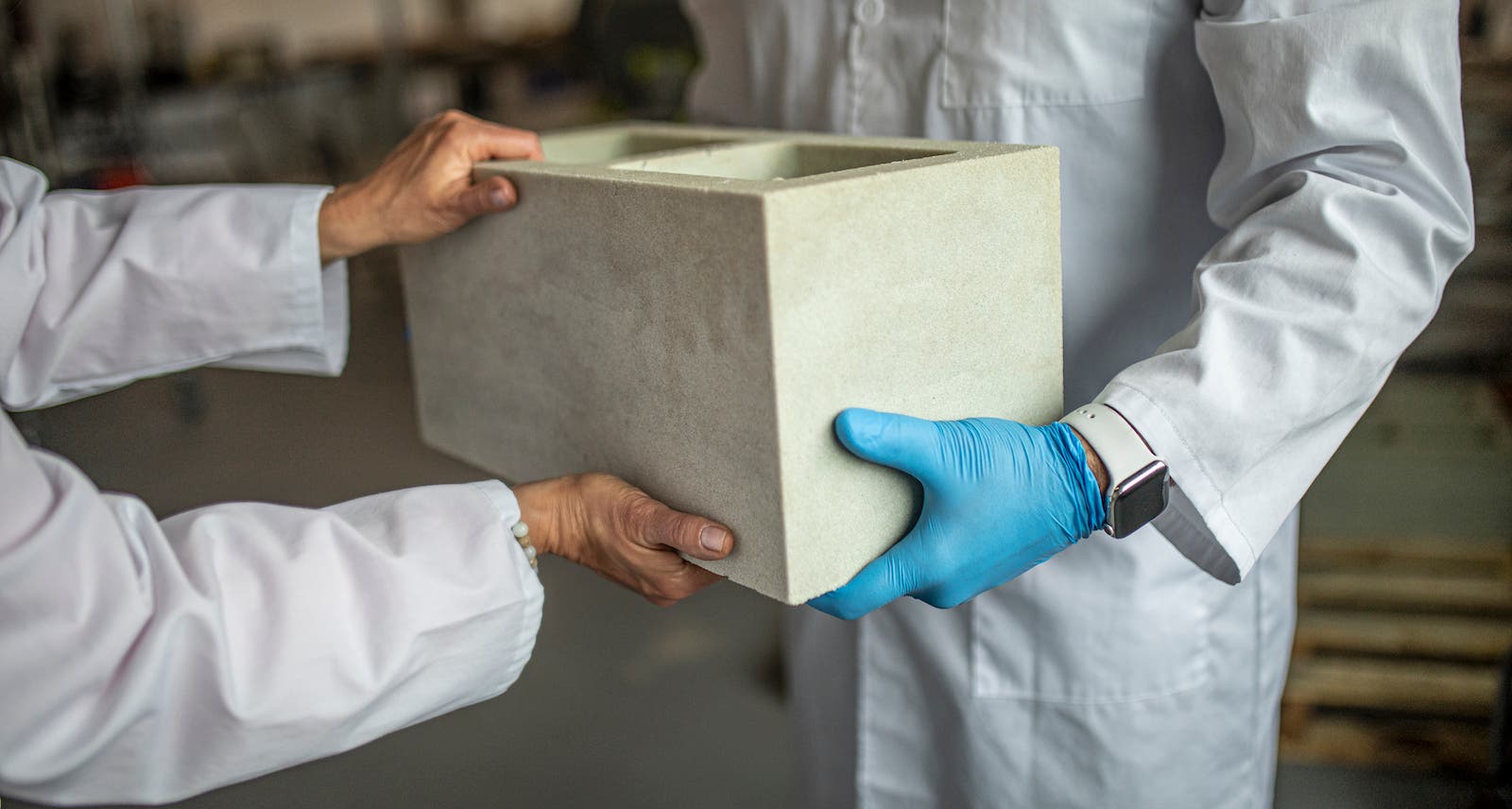 After stumbling on biofuel, algae steps up to save the concrete and cement industries from themselves (photo courtesy of Prometheus Materials).
After stumbling on biofuel, algae finds its footing and steps up to help the concrete industry cut its carbon footprint, too.
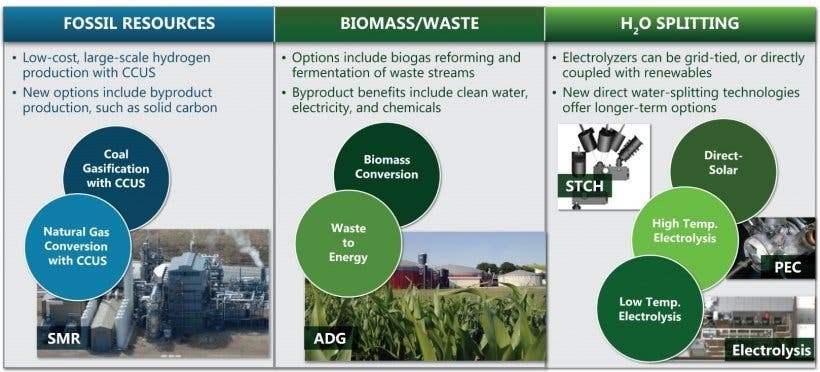 Shell continues its green hydrogen journey while ExxonMobil clings to natural gas with carbon capture (image courtesy of US Department of Energy).
Shell takes another step on its green hydrogen journey, while ExxonMobil doubles down on natural gas with carbon capture.
The National Renewable Energy Laboratory (NREL) has been selected to receive over $5.4 million from the U.S. Department of Energy Advanced Research Projects Agency-Energy (ARPA-E) for the development of technologies that can transform buildings into carbon storage structures. The funding is part of ARPA-E’s Harnessing Emissions into Structures Taking Inputs from … [continued]
A Q&A with Dr. Wil Srubar of the University of Colorado Boulder
BECCS, which is short for “bioenergy with carbon capture and storage,” entails growing plants that remove CO2 from the atmosphere, burning those plants to generate electricity, and then capturing the resulting carbon emissions before they escape into the atmosphere.
Microalgae are single-celled organisms that are normally found in freshwater systems. This versatile plant matter can be used to produce biofuels, medicine, vitamin supplements, cosmetics, and feed for livestock. Microalgae is also a natural decontaminator, removing toxins from wastewater and absorbing carbon dioxide and other greenhouse gases from the air. A new innovation at Grande Prairie Regional College (GPRC) in Alberta, Canada, cultivates microalgae using sunlight energy.
Texas is known for fossil fuel but it’s also a force to be reckoned with in the emerging algae biofuel field, as demonstrated by a new research milestone.
A breakthrough in microalgae oil production has been made by researchers at Solazyme. The new technology accelerates the ability of microalgae to produce a variety of different types of renewable oils in the same location; for use in fuels, food, personal-care products, or in the chemical industry. The improvements are … [continued]
An apartment building in an up and coming section of Hamburg, Germany will attempt to employ the use of millions of microalgae in order to generate some heat. The microalage do this when fed a mixture of liquid nutrients, CO2 and sunlight. The building will not get all of its … [continued]
OK, first of all, this CO2-absorbing street lamp looks super cool! Secondly, it absorbs CO2! Thirdly, 150-200 times more than a tree! OK, I’m calming down, and I realize it has a ways to go to get to actual widespread use in the real, physical, CO2-filled world. http://youtu.be/wuWDex5mh5Y French … [continued]
