Lawrence Berkeley National Laboratory

Transmission Value in 2023

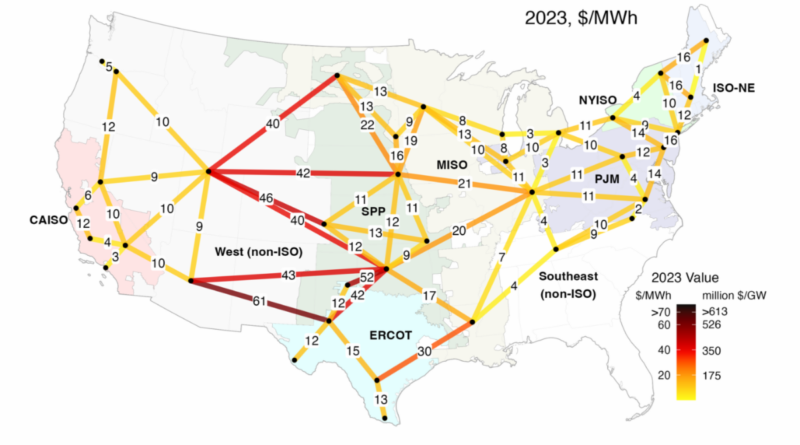
Market Data Shows the Value of Transmission Remained High in Certain Locations Despite Overall Low Wholesale Electricity Prices In 2023 additional electricity transmission would have provided the most value for links that crossed between grid interconnection regions in the United States or crossed between system operator regions within the same … [continued]

With Commercial Partners, DOE’s Building Technologies Office Readies Two Lab-Developed Innovations for Market Introduction with…

The U.S. Department of Energy’s (DOE) Building Technologies Office (BTO) released $1.7 million for two projects with funding from the recently announced FY24 Technology Commercialization Fund (TCF) Core Laboratory Infrastructure for Market Readiness (CLIMR) Lab Call. This lab call invited proposals from national laboratories to advance energy technologies and strengthen existing … [continued]

New Report Breaks Down State-Level Renewable Energy Siting Policies & Permitting Authorities Across the USA

State and/or local government involvement in renewable energy development varies widely across the United States. A new report funded by DOE, in collaboration with Lawrence Berkeley National Laboratory, the Regulatory Assistance Project, Clean Air Task Force, and others, inventories and simplifies the complex state-level policies of all 50 states, plus … [continued]

U.S. Invests $9.5 Million to Study the Social Dynamics of Large-Scale Solar Siting & Permitting

Research will identify innovative practices that benefit communities and facilitate solar deployment WASHINGTON D.C. — The U.S. Department of Energy (DOE) today invested $9.5 million in four new projects supporting social science research that examines the ways that siting practices can influence public attitudes toward and permitting of large-scale solar … [continued]

DuraMAT Forecasts How New Photovoltaic Module Technologies Might Perform Over 20, 30, Or 50 Years

As the Solar Industry Grows Rapidly, Materials, Designs, and Solar Panels Are Changing Quickly For the solar photovoltaics (PV) industry, rapid growth can produce rapid—and sometimes unpredictable—changes. As the industry continued to see a major period of growth in 2023, the Durable Module Materials (DuraMAT) Consortium seized the opportunity to … [continued]

Groundbreaking Microcapacitors Could Power Chips of the Future

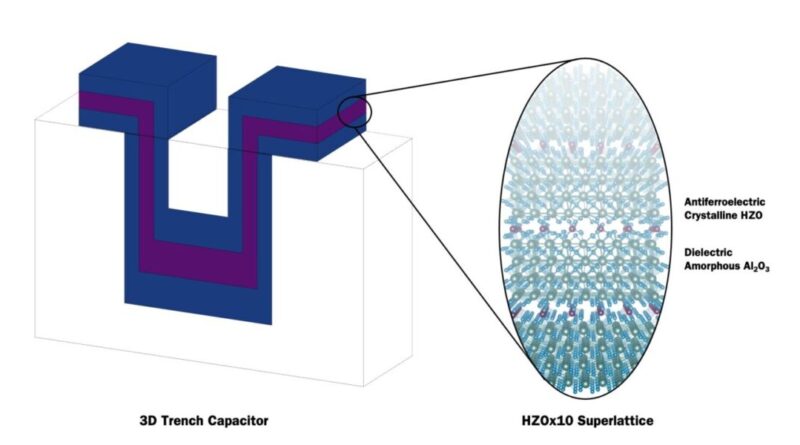
Scientists developed microcapacitors with ultrahigh energy and power density, paving the way for on-chip energy storage in electronic devices In the ongoing quest to make electronic devices ever smaller and more energy efficient, researchers want to bring energy storage directly onto microchips, reducing the losses incurred when power is transported … [continued]

U.S. DOE Releases 1st-Ever Roadmap to Accelerate Connecting More Clean Energy Projects to the Nation’s…

Report Details Recommendations to Streamline Interconnection with Near- to Long-Term Solutions to Add Clean Energy Resources to the Transmission Grid and Boost Our Clean Energy Economy WASHINGTON, D.C. — The U.S. Department of Energy (DOE) released a new roadmap outlining solutions to speed up the interconnection of clean energy onto the nation’s transmission grid and … [continued]

NAWI Awarded Funding To Continue To Accelerate Research & Development For A Secure Water Future

A research consortium led by Berkeley Lab, along with three other national labs, will continue to lead a DOE desalination hub to drive innovation for sustainable water security The National Alliance for Water Innovation (NAWI), which is led by the Department of Energy’s (DOE) Lawrence Berkeley National Laboratory (Berkeley Lab), has … [continued]

Local Priorities Drive Energy Transitions in Remote, Coastal, & Island Communities

Applications Open for Energy Transitions Initiative Partnership Project, Which Connects Decision Makers With Energy Insights Remote, coastal, and island communities across the country face similar energy resilience challenges—from high energy costs and aging infrastructure to outages from extreme weather events and climate change impacts—but each community’s values and priorities create … [continued]