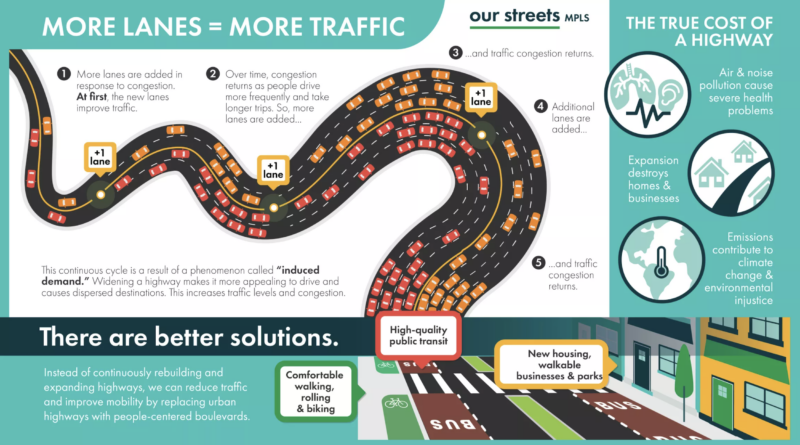
Americans Know Expanding Roads Doesn’t Fix Traffic
A new survey shows that most Americans know that expanding roads doesn’t fix traffic. Why do states keep pursuing these harmful projects?

A new survey shows that most Americans know that expanding roads doesn’t fix traffic. Why do states keep pursuing these harmful projects?
Over the last decade, we have often been promised a better, cleaner, greener mobility future. New ride-hailing services (e.g., Uber founded in 2009; Lyft in 2012), public micromobility systems such as scooters and bikeshares, electrification, shared automated vehicles: all came with the promise of “faster, smarter, greener” cities that would … [continued]
New York City has a lot of concrete, and it’s not located in the desert. As a result, it’s got a problem with flooding, and the problem is only growing. One obvious solution to this problem is to get more soil and greenery in the Big Apple. But where? This … [continued]
Many cities are questioning the wisdom of minimum parking regulations that deprive them of valuable land for development.
Mobility Energy Productivity Tool Is Helping Decision-Makers Visualize Equity Gaps in Transportation and Find Solutions How long does it take you to get to work or school? The answer varies widely for many Americans, depending on factors like where they live and whether they own a car. Even in densely … [continued]
Electric vehicles are great, but there is no better transportation option than a bicycle. Bicycles provide much needed exercise (also saving emissions from a trip to the gym), are more energy efficient than any other vehicle (even an electric car), are enjoyable to ride (fun is permitted), and can save … [continued]
The latest IPCC report cannot emphasize enough that what cities do in the next decade matters.
The 2021–2022 WRI Ross Center Prize for Cities launched on World Cities Day, October 31, 2021. Submissions are open until February 15, 2022. Find out more at prizeforcities.org. Originally published on WRI’s Resource Institute. By Anne Maassen and Rogier van den Berg Infectious disease outbreaks can have enduring influence on urban design, and several … [continued]
By Zachary Shahan and Johnna Crider There’s an interesting article published recently in The Atlantic, but one reading of it could also come across as disturbing. On the surface, it may seem as though the author is supporting the idea that drivers shouldn’t be held accountable or responsible for their … [continued]
Originally published by Union of Concerned Scientists, The Equation. By David Reichmuth and Leslie Aguayo, a Climate Equity Program Manager from The Greenlining Institute Zero-emission vehicle technologies, like battery electric and fuel cell vehicles, are critical to reducing air pollution and climate-changing emissions from transportation. State and federal policies that require and … [continued]
