Climate Change

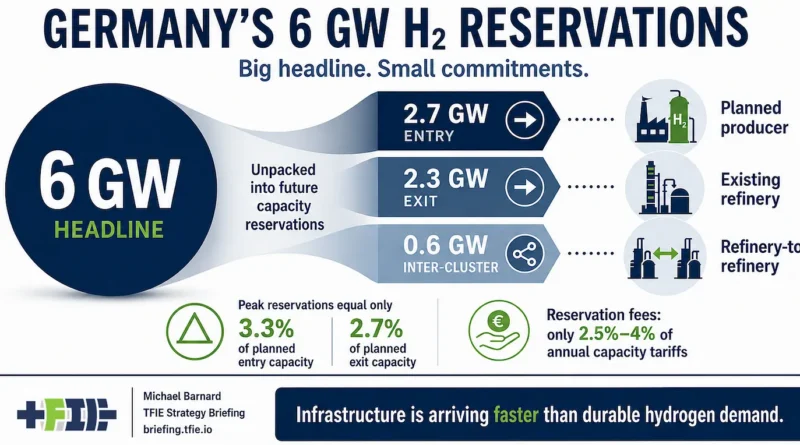
Germany’s Hydrogen Industry Is Overselling Its 6 GW Reservation Headline

Germany’s hydrogen industry finally has a demand number it can put in a headline: nearly 6 GW of paid reservations on the country’s emerging hydrogen core network. FNB Gas presented the reservations and customers’ willingness to pay as a strong indication that the hydrogen economy is gathering momentum. Six gigawatts … [continued]

AI Data Centers Are A Regional US Grid Issue, Not A Global Power Crisis

AI has changed the data-center electricity story. Demand is rising much faster than it did through much of the 2000s and 2010s, hyperscale facilities are being proposed and built at extraordinary scale, and utilities in several US regions are confronting loads large enough to affect generation planning, substations, transformers and … [continued]

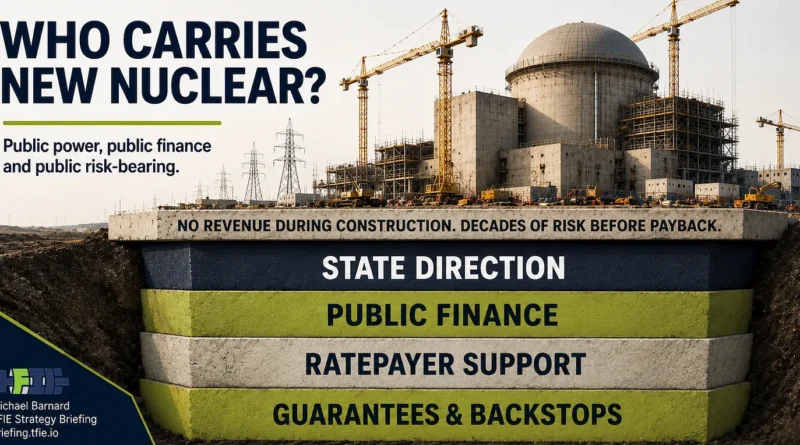
New Nuclear Gets Built When Governments Run Development & Taxpayers Take The Risk

Nuclear power works. It produces low-carbon electricity, avoids the health burden of fossil-fuel combustion, provides firm generation and can operate for many decades. My skepticism about building large new nuclear fleets has never depended on pretending otherwise. The more interesting question is why countries that have built nuclear successfully have … [continued]

Power Systems Have More Flexibility Plans Than Flexible Grids

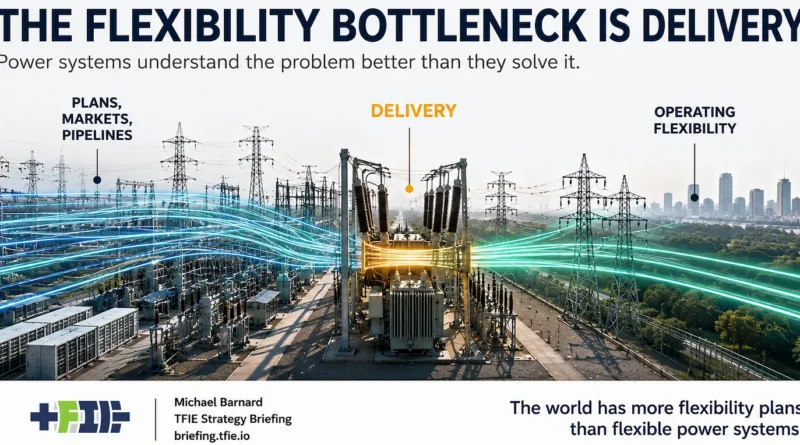
Grid flexibility is easy to mistake for a technology market. One jurisdiction announces several gigawatt-hours of batteries, another creates a new ancillary-service product, and a third launches a capacity auction, pumped-hydro program or demand-response target. Those are meaningful signs of activity, but they do not answer the harder question: can … [continued]

Supercritical CO₂ Is Useful. The System Claims Are The Problem.

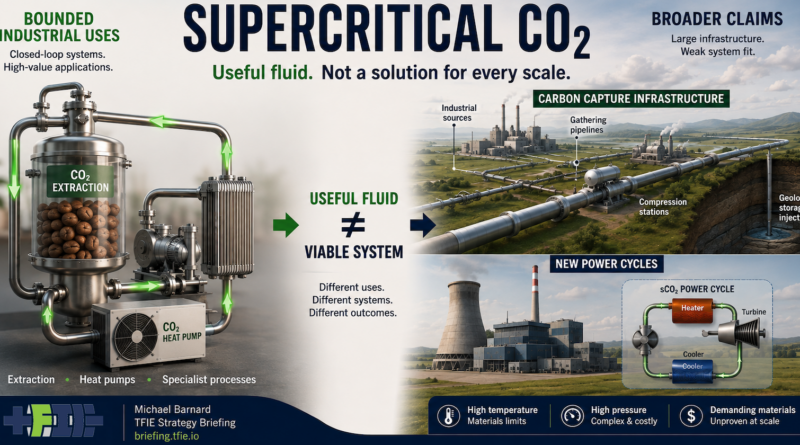
Supercritical carbon dioxide is genuinely useful stuff. Above roughly 31° Celsius and 73.8 bar, CO₂ enters a state that combines gas-like flow behavior with densities that can become much closer to liquids. Engineers have found good uses for that combination. It can extract caffeine from coffee, separate valuable compounds from … [continued]

Climate Change Is Rewriting Europe’s Nuclear Cooling Assumptions

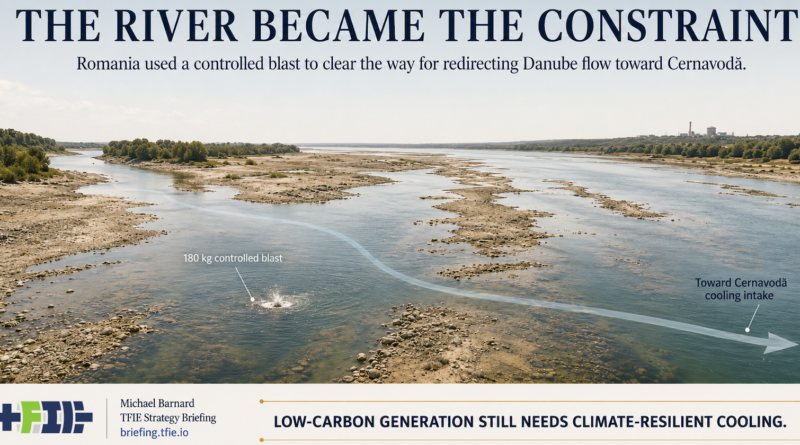
Romania gave Europe the kind of energy-transition image that should make planners uncomfortable. On August 3, Romanian naval engineers used 180 kilograms of explosives to remove a rock outcrop in the Bala Canal, a branch of the Danube. The controlled blast cleared the way for a temporary dam intended to … [continued]

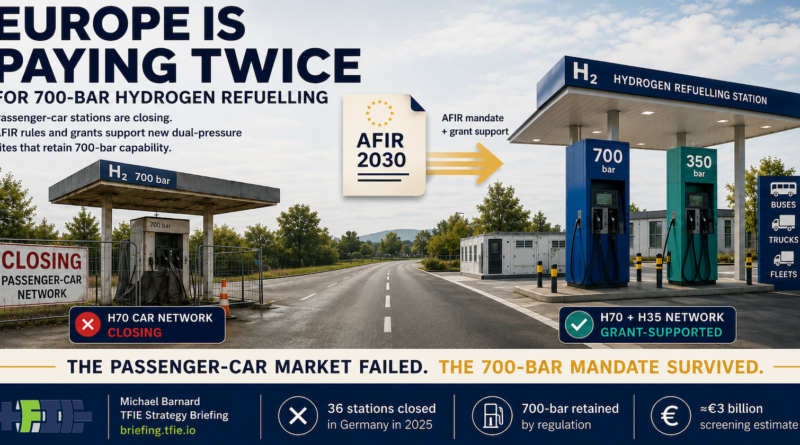
Europe’s 700-Bar Hydrogen Network Is Closing And Reappearing

Europe’s public hydrogen refuelling network is not growing, but shrinking slightly. It is, however, changing shape. The part built for passenger cars is shrinking, while a new generation of dual-pressure stations is carrying 700-bar capability forward into the bus and truck layer. Germany closed 36 first-generation hydrogen refuelling stations during … [continued]