Boats

Powering Ports: Electrifying Harbor Craft & Ferries For Lower Costs & Emissions

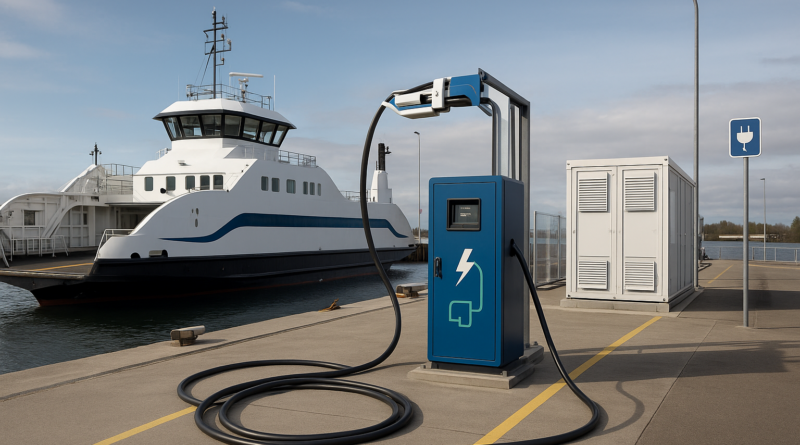
The path toward decarbonization in the maritime industry requires practical, phased strategies that deliver clear operational, environmental, and economic benefits. In this third installment of our detailed exploration into achieving zero-emission port operations, we shift our focus from electrifying ground equipment to the critical next phase—electrifying port vessels such as … [continued]
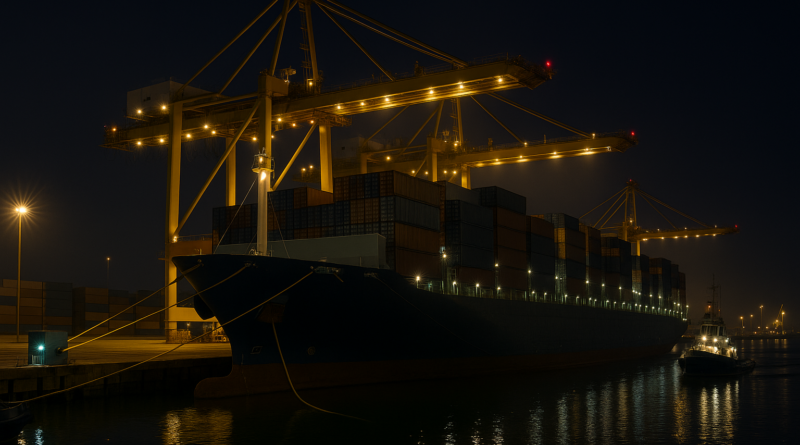
Powering the Future: A 30-Year Roadmap to Zero-Emission Port Operations

European ports face an increasingly urgent mandate to reduce carbon emissions across their landside and waterside operations, driven not only by climate policies but also by local air quality concerns. The scale of the challenge is enormous yet manageable, provided clear strategies and timelines are established. My perspective is straightforward. … [continued]

Global Ferry Electrification Accelerates: 70% Of New Orders Go Electric

Seventy percent of ferries currently on order globally now feature electric drivetrains, a remarkable shift underscoring just how rapidly maritime transportation is decarbonizing. Norway has about 70 electric ferries running already, and there are likely north of 200 globally. There are about 15,400 ferries in operation around the world, new … [continued]

China Zorrilla: How The World’s Largest Electric Ferry Changes Maritime Electrification

The launch of the all-electric ferry China Zorrilla, expected to be operating between Argentina and Uruguay, represents a landmark event in global maritime electrification. Commissioned by Buquebus, a major regional ferry operator connecting Buenos Aires and Montevideo, this vessel is—for now—the largest battery-electric passenger and vehicle ferry in the world. … [continued]

Ports, Fuels, & Emissions: How Trump’s Tariffs Are Reshaping Maritime Trade

Trump’s aggressive economic policies in Q1 2025 have triggered immediate ripples throughout global maritime logistics, reshaping shipping routes, port activity, fuel consumption, and emissions trajectories. I’ve been seeing statistics on container volumes and hearing from industry insiders that they are bracing for empty US ports in coming weeks. It’s time … [continued]

Fuel For The Edges: Five Biofuel Companies Built To Last In The Energy Transition

I’ve been rebalancing my portfolio lately. It’s something I do every couple of years—trim what’s run ahead, add where conviction has deepened, and adjust based on what I now believe to be real, durable value. I’m not a trader. I buy and hold for years, sometimes decades, and while my … [continued]

Net-Zero by 2050: The IMO’s Victory—and the Case for Less Fuel, Not More

In April 2025, the International Maritime Organization did something rare for a UN body: it passed a binding climate policy. Not advisory, not aspirational, but actual mandatory rules. The agreement commits international shipping to net-zero greenhouse gas emissions “by or around 2050,” and despite the ambiguity of that phrasing, the … [continued]

CO₂ By Sea: The Risky Bet Beneath Europe’s Biggest Carbon Storage Project

Northern Lights is Europe’s most ambitious carbon capture and storage project, and possibly the most operationally serious one in the world. It deserves credit for getting past the pilot stage, for designing an end-to-end storage system with real injection capacity, and for contracting with emitters in four different countries. But … [continued]

Debunking The Myth: Hydrogen Will Not Dominate The Transportation Sector

The belief that hydrogen will dominate the transportation sector is rooted in optimism rather than evidence. It appeals to the imagination but collapses under scrutiny. In practice, hydrogen is being decisively outpaced by two more efficient and cost-effective alternatives: battery electric vehicles and advanced biofuels. The appeal of hydrogen may … [continued]