

The Human Cost Of Data Center Pollution
Support CleanTechnica's work through a Substack subscription, on Patreon, or on Stripe. Help us produce all of the high-quality, original content we publish week after week despite the challenges of content-scraping AI, antisocial media, inflation, and other hurdles.
In 2012, the World Health Organization classified the exhaust from diesel engines as a carcinogen. That decision infuriated the German auto manufacturers, primarily Volkswagen, Mercedes, and BMW. They had all profited handsomely from selling diesel powered automobiles following the OPEC oil embargoes in the 1970s. Diesel cars can travel further on a gallon of fuel then gasoline cars, which led European nations to lower their taxes on diesel fuel.
Adam Smith’s unseen hand did the rest. With diesel cheaper that gasoline, demand for diesel cars in Europe soared and remained high for decades. Visitors to the Continent were serenaded by the gentle clatter of diesel engines in every city they visited.
According to the New York Times, in 2007 Volkswagen planned a major marketing campaign to bring its diesel cars to the US by touting their fuel economy advantage. Some readers may recall the brilliant Volkswagen commercial that featured two English speaking young men who embark on a road trip in a Volkswagen Passat diesel, only to find the sole cassette in the car is a tutorial on how to speak Spanish. By the time they have to stop for fuel 13 hours later, they speak Spanish like they were born in Madrid.
I confess I was so affected by that ad, my dream became to own a Volkswagen Jetta TDI wagon with a six speed manual transmission so I could enjoy the benefits of 50 mpg road trips. Then Dieselgate happened and my dream came to an abrupt end.
Ten Monkeys
So distraught were the German manufacturers by the WHO determination that diesel exhaust was a carcinogen, they formed an organization called the European Research Group on Environment and Health in the Transport Sector (EUGT) to fight back. EUGT, in turn, hired the Lovelace Respiratory Research Institute in Albuquerque, New Mexico to conduct experiments designed to prove that breathing diesel fumes was not harmful.
Lovelace sequestered ten macaque monkeys in airtight chambers, where they breathed the exhaust from a Volkswagen Beetle with a diesel engine for four hours while watching cartoons. What the researchers at Lovelace didn’t know was that the pollution control system in the test vehicle had been manipulated to give results that were far different than those experienced in actual driving.
When the deception was revealed, top executives at all three companies expressed their horror and immediately fired a bunch of low level flunkies to atone for their sins, They shredded their garments in dismay and promptly shut down EUGT. They promised to never ever do anything like that again.
That was the high water mark for diesel powered automobiles. Ten years ago, they dominated new car sales in Europe. Today, they are about 7 percent of new car sales there. My, how the mighty have fallen!
The Health Impact Of Date Center Emissions
In the mad rush to build more data centers to accommodate the AI industry, many developers are turning to methane fired portable generators. Elon Musk, who used to be a climate hero, has now gone over to the dark side by using dozens of them to power his Colossus data centers in Memphis and northern Mississippi. In fact, he loves the idea so much, he bought the company that makes them so he can market them to others. The federal government is helping out by mandating that aged coal fired generating stations stay in operation long past their intended retirement date, because those data centers need every electron they can get.
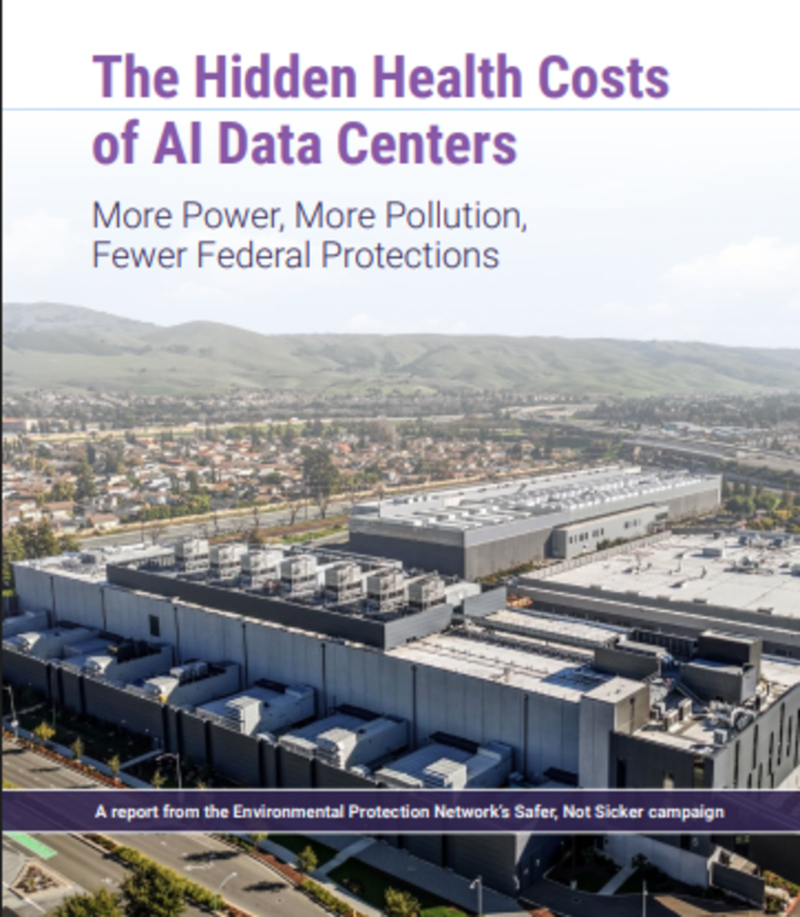
But research suggests those data centers are putting a load of pollution into the atmosphere that will have significant health impacts on those who breathe it in. Last week, the Environmental Protection Network, which is composed of many former EA officials, released a report claiming “AI data center pollution can make people sick. Instead of protecting Americans’ health, the EPA is making the health risks worse.” It lists 30 federal actions taken by the current administration it says will increase pollution-related health risks as more data centers are built across the country.
Air pollution from data centers could contribute to roughly 600,000 asthma symptom cases, 1,300 premature deaths, and more than $20 billion in annual public health costs by 2028. The report notes that those estimates do not account for the rollback of environmental regulations by the current administration, which could further increase emissions and health risks. Today, the administration announced it was rolling back automobile exhaust emissions so manufacturers will be able to sell cars and light trucks that spew more junk out of their tailpipes, something even the industry didn’t ask for.
“What concerns me now is the role EPA and other government agencies are playing and proudly touting — weakening the very safeguards designed to protect people from the pollution in the name of helping tech and power companies accelerate these data center build outs,” Dr. Lynn Goldman, a pediatrician and former EPA assistant administrator, told the New York Times. “These are decisions that can affect what Americans breathe, what gets into our water and, ultimately, what can make its way into our soil and food supply.”
Cleanview, a market intelligence company that tracks US power infrastructure and data center development, reports there are now about 1,300 data centers operating in the US, with 2,000 more planned. The Environmental Protection Network points out that the deep cuts in staffing at the EPA will make it impossible for the agency to monitor emissions from all those data centers effectively.
While the administration is hellbent on getting all those data centers into operation, the EPN argues that protecting the health of US citizens should be equally as important.
Closing The Circle
You see where this is going, don’t you? “We the people” are now just like those macaque monkeys in Arizona, locked inside a planetary ecosystem that is being polluted with higher and higher concentrations of stuff that is harmful to human health — things like fine particulates that are now found in human placentas and breast milk.
Our children are being infused with fossil fuel pollution in the womb and it appears people are perfectly OK with that, because the wind doesn’t always blow and the sun doesn’t always shine. God forbid there are not enough data centers to monitor our every thought and movement. What a horrible fate that would be!
We are signing our own death warrant and people are cheering! What a country. What a world.
Sign up for CleanTechnica's Weekly Substack for Zach and Scott's in-depth analyses and high level summaries, sign up for our daily newsletter, and follow us on Google News!
Have a tip for CleanTechnica? Want to advertise? Want to suggest a guest for our CleanTech Talk podcast? Contact us here.
Sign up for our daily newsletter for 10–15 new cleantech stories a day. Or sign up for our weekly one on top stories of the week if daily is too frequent.


CleanTechnica uses affiliate links. See our policy here.
CleanTechnica's Comment Policy

