
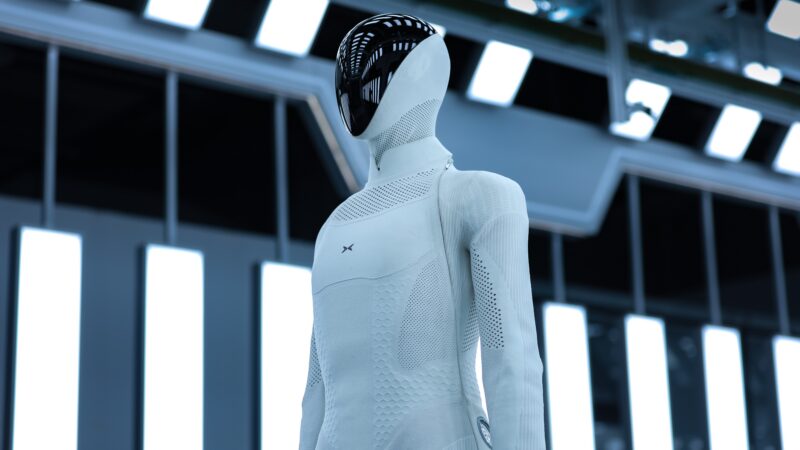
XPENG IRON Autonomously Walks Off Production Line
Support CleanTechnica's work through a Substack subscription, on Patreon, or on Stripe. Help us produce all of the high-quality, original content we publish week after week despite the challenges of content-scraping AI, antisocial media, inflation, and other hurdles.
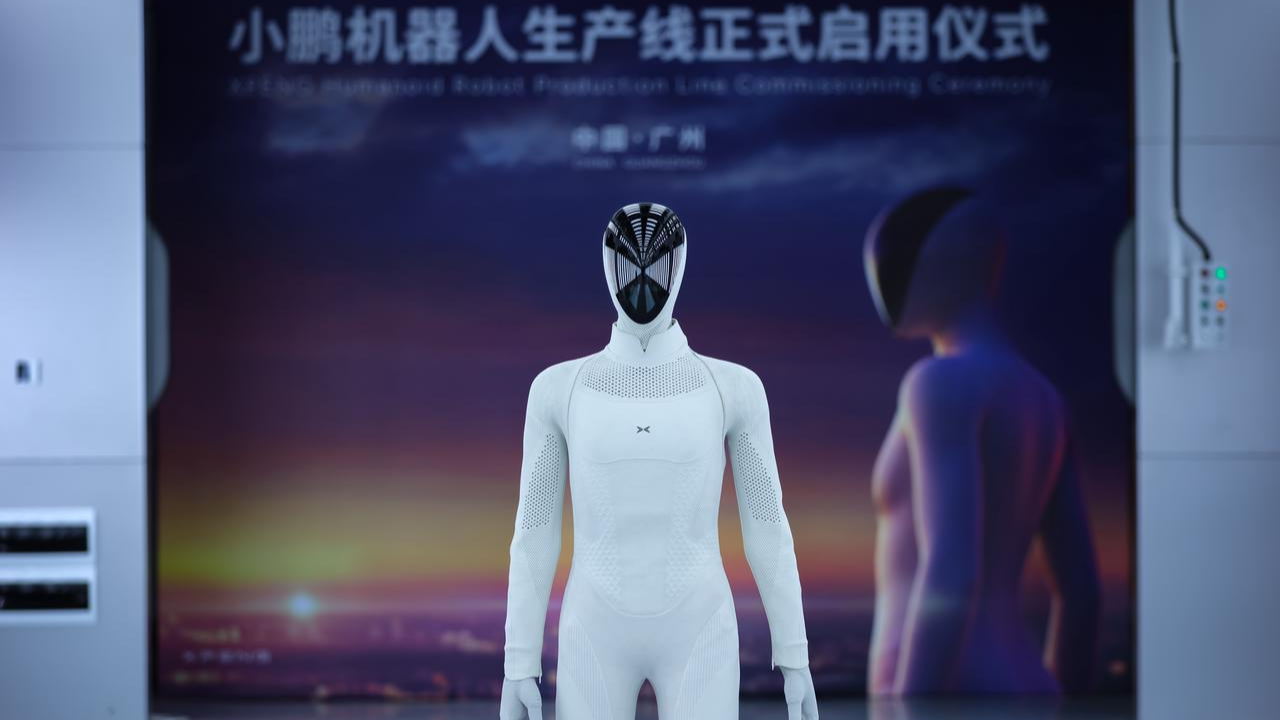
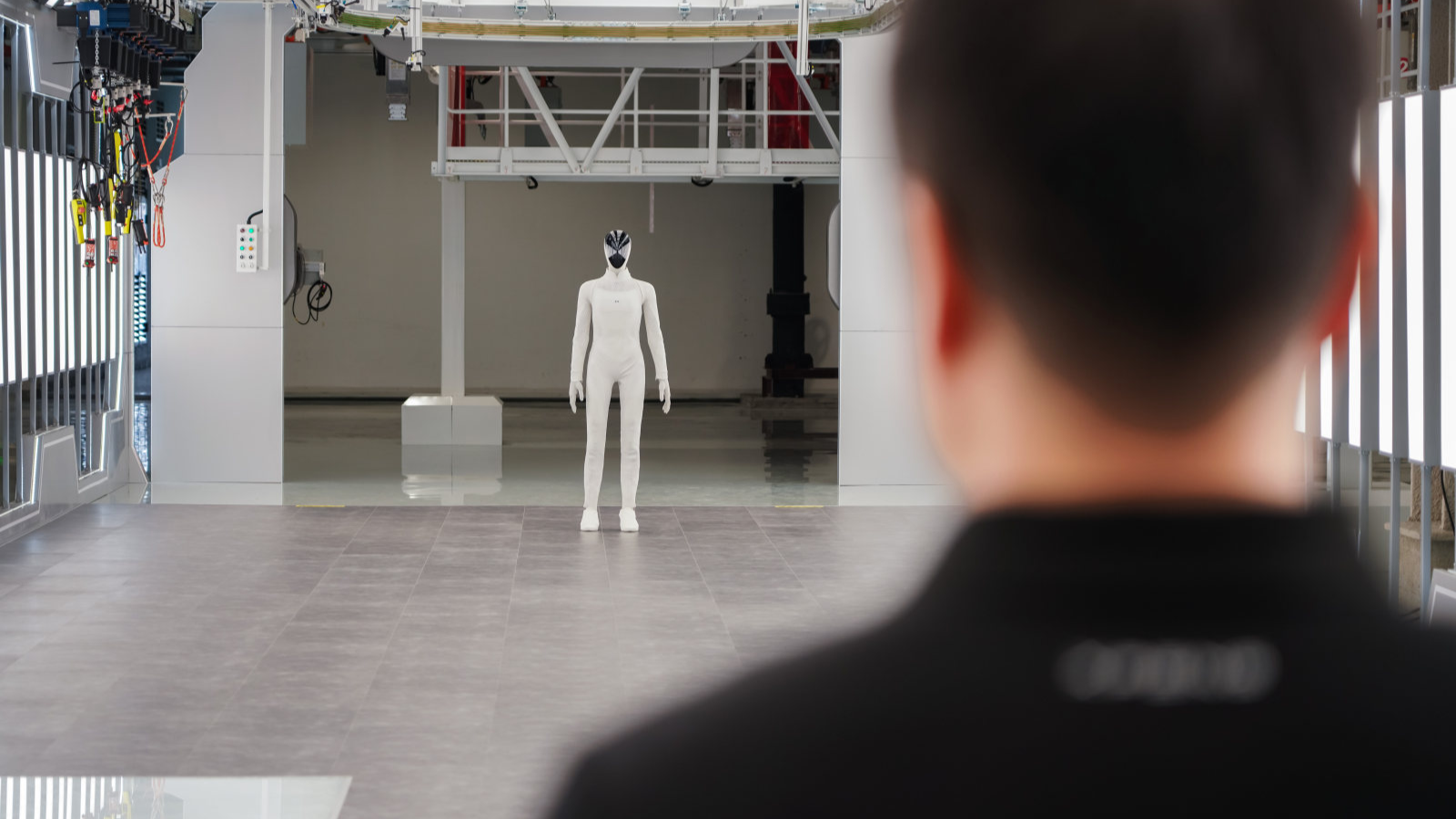
On the morning of September 8th in Guangzhou, China, XPENG’s IRON humanoid robot autonomously walked off the production line. While much of America is getting ready to return to work from the Labor Day holiday, the result of years of hard work is coming to fruition at XPENG. The initial steps signify a leap forward from R&D prototyping to line manufacturing on the way to industrial-scale production.
XPENG claims this is the “world’s first high-level, general-purpose humanoid robot to be manufactured on a production line and walk off it autonomously, without human assistance or remote control.”
While we have seen many robot demonstrations before, including recently at IFA Berlin, they have tended to rely on a level of remote control or pre-programed motion. From the moment it walks off the production line, IRON operates autonomously.
This isn’t just a pre-production prototype. It uses mass production automotive-grade quality control and precision robotics manufacturing, with automation exceeding 80%. In addition, IRON’s supply chain is mature, with over 85% shared with XPENG’s EV business. Synergies help to control costs and ensure quality. The high-precision, highly flexible intelligent manufacturing system lays the foundation for scaled production and rapidly expanding capacity.
According to He Xiaopeng, Chairman & CEO of XPENG:
The robot production lines were created from scratch with no precedent to follow. Today’s step is small, but XPENG is building the production lines for an entirely new product category. Looking ahead, XPENG will continue to explore faster production rhythms and greater scale in robot manufacturing, charting a new path toward a leading robot manufacturing industry in China and globally.
XPENG also claims that they are the only robotics company in China with a fully in-house, end-to-end technology stack covering the AI model, data infrastructure, computing power, robot body and manufacturing system. According to He Xiaopeng,“Only by going deep across every layer can we build something truly different.”
IRON builds upon XPENG’s Physical AI foundation model, shared with its intelligent driving cars and flying cars. The robot represents a different body using the same core. Three of XPENG’s in-house developed Turing AI chips provide 2250 TOPS of combined computing power, like their Ultra trim vehicles with the most advanced version of VLA 2.0 intelligent driving. This onboard computing power enables on-device deployment of the physical-world foundation model with low latency inference and improved data security. Fully autonomous task execution eliminates the need for remote operation. As the third chip is used for voice interaction in their cars with Master Agent, I would assume that a similar architecture will be used for human voice interaction in their robots.
IRON is equipped with XPENG’s multi-modal LLM model. This supports long-term memory, as well as recognition and permanent memory of human faces. The robot supports Chinese and English bilingual interaction, with smooth conversational switching between languages.
IRON uses AI-driven intelligence to meet high safety standards. It supports full-process autonomous obstacle avoidance. This lets it receive instructions, plan routes and navigate intelligently, while avoiding obstacles autonomously to maintain safe operation in complex environments. It will also continuously improve through self-reinforcement in the real world. However, if it were to contact an obstacle, a soft mesh under its fabric skin helps to prevent damage, while also feeling more human-like.
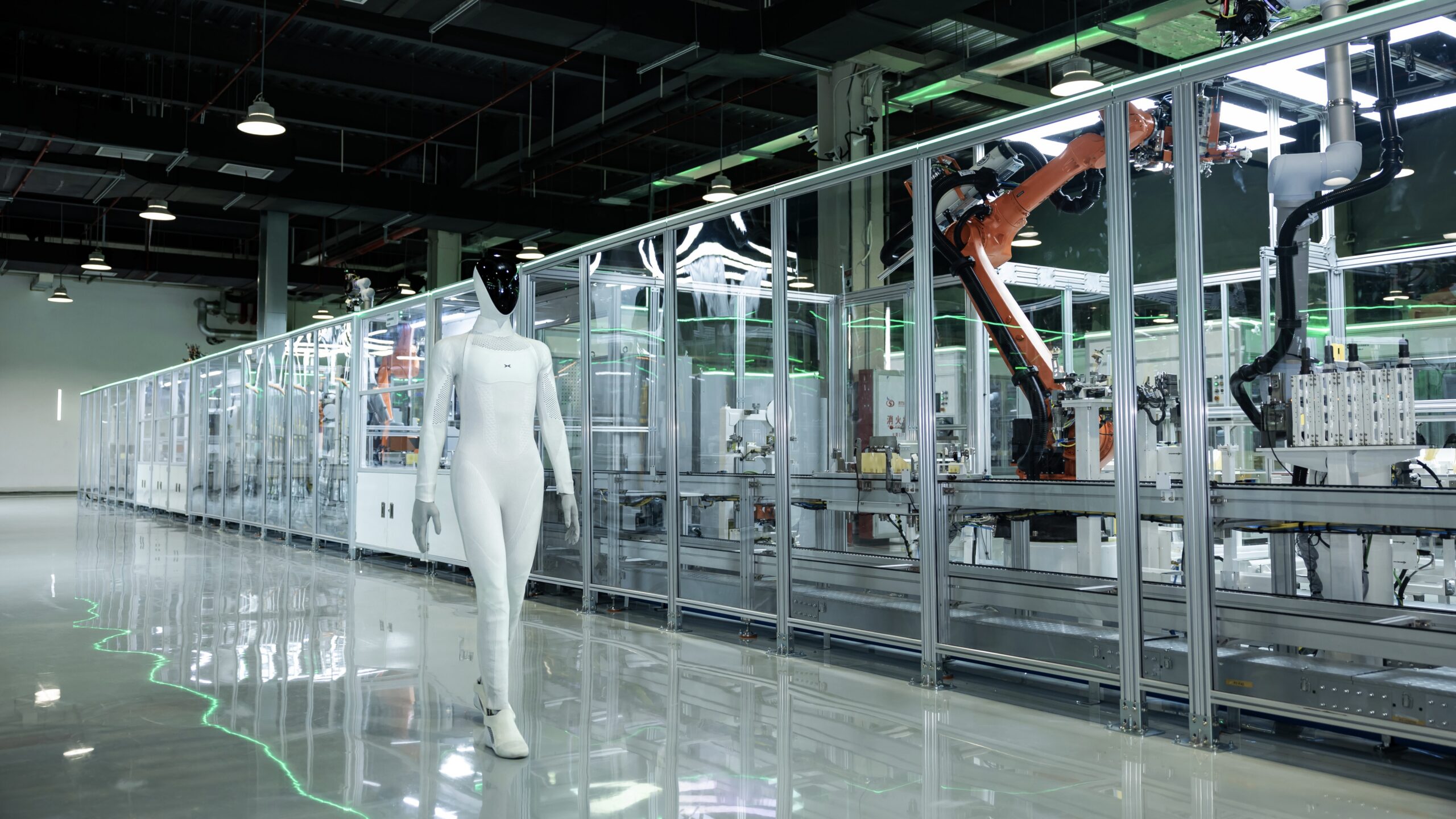
IRON overall has a very human-like form and design. It stands at 173 cm tall (5’8”) and weighs 65 kg (143 lbs.). IRON also has high degrees of freedom (DOF) and a bio-inspired spinal structure in the waist that gives the robot human-like movement. Overall, IRON features 76 degrees of freedom across its body, with 21 degrees of freedom in each hand.
IRON also supports autonomous charging. It will plug and unplug connectors, locate charging locations, and maintain stable operation, even if a minor equipment fault happens. This ensures safe, reliable charging can happen independently.

IRON Takes The Lead
I am not a financial planner, and this shouldn’t be taken as investment advice. However, I believe the only way that Tesla’s inflated valuation could make sense is if they were the primary beneficiary of every technology they touch. Tesla made big promises but did not live up to them. Instead of the 20 million EVs that Tesla projected they would sell per year by 2030, it looks like they may not meet 20 million sales cumulative total by the end of the decade. Tesla had first mover advantage on EVs. However, anyone who visits China will quickly realize that they are behind on EV technology and rapidly falling farther behind. Tesla’s intelligent driving system also seems to be relinquishing the lead it previously claimed. Even though Tesla made promises about Optimus in 2022, they are now behind on humanoid robots.
Meanwhile, XPENG is taking first mover advantage on humanoid robots. A couple of weeks ago, XPENG announced that its robotics business raised over $900 million USD, at a post-money valuation of over $6.3 billion, which is the largest single-round private financing ever recorded in China’s embodied AI industry. The purpose was to ramp up production for commercialization. In an industry where promises are often broken, some questioned the valuation. Some said that it sounded nice but wondered if it would ever happen. It just started happening.
XPENG is delivering on schedule and ahead of what many expected. Now that the production line is live, IRON will initially be deployed in XPENG showrooms and campuses to support sales and offer tours. The human-like form, movement and interaction make it particularly well suited to interact with people. Based on the data from initial deployment, additional in-house scenarios will be deployed and verified in 4Q 2026. From there, initial external customer deliveries in China and overseas markets will start in 2027, with a focus on retail and service industries. IRON will then evolve into commercial, industrial, and home environments.
XPENG succeeded in generating a 20.7% gross margin last quarter, well ahead of Tesla at 16.8%. However, they have been putting that margin into R&D and global expansion. With new products starting to hit the market, we are just getting a glimpse of the next phase in XPENG’s development. It will take a few quarters to know what impact the emerging business lines will have on revenues and margins, but XPENG expects gross margins to be higher for their humanoid robots than for their EVs as production scales and commercialization accelerates.
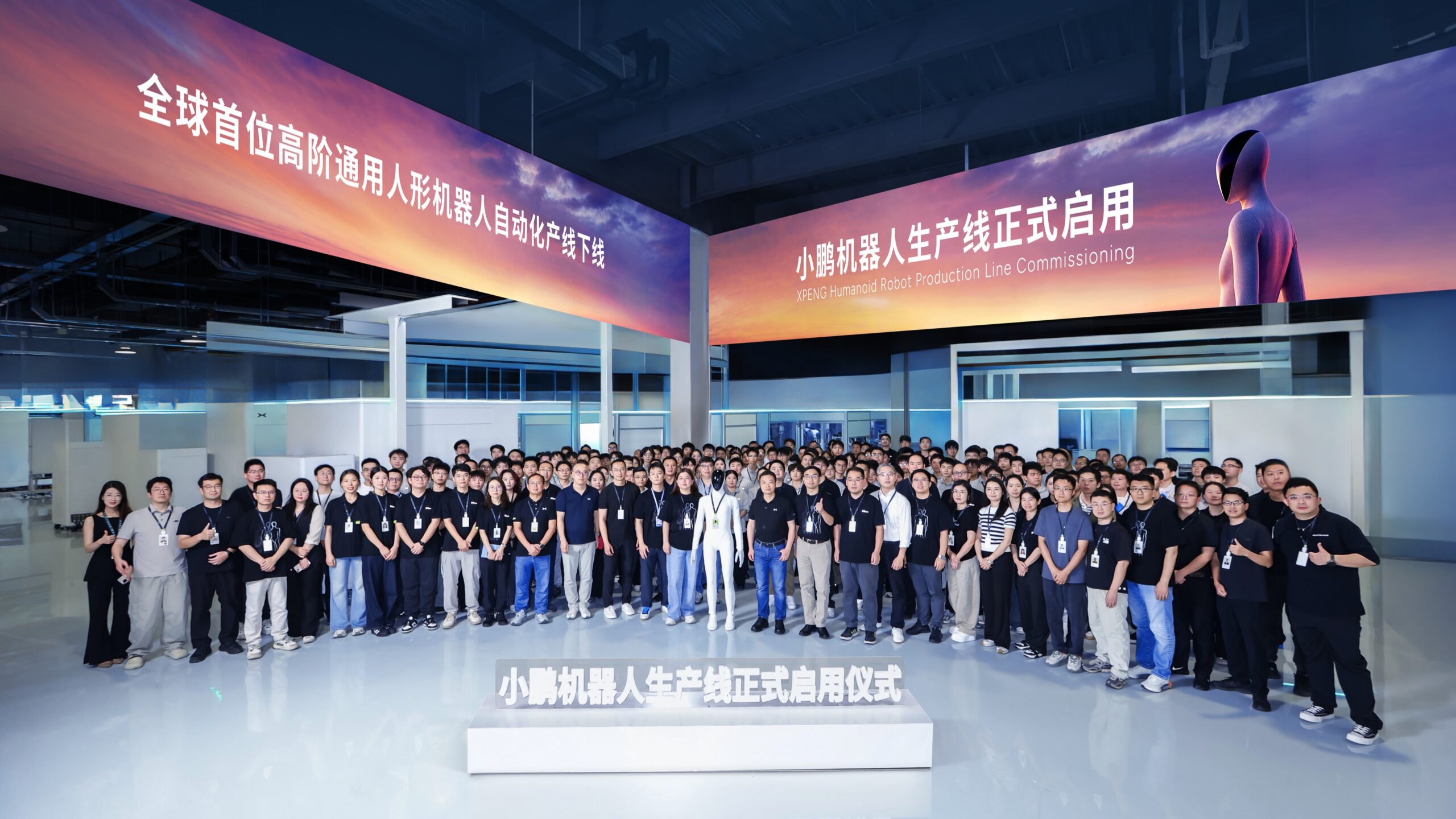
However, as much as we focus on the numbers or the human-like aspects of IRON, this is also a story about the human beings that make it possible. I have met some of them, and have reported on the human side of XPENG before. This accomplishment is fundamentally about people dedicated to creating something new and better. Innovative people who are enthusiastic about new ideas. People who faced the difficult problems first. People who stuck to their commitments and delivered.
We may not yet know the true significance of this event until we see where the technology ends up. Other companies are also pursuing humanoid robots and want to compete, but they face technical barriers. However, with the rollout of the “first advanced general-purpose humanoid robot” and activated of production lines, XPENG is now claiming the lead in humanoid robots, as a component of their global physical AI strategy. Robots that are surprisingly human in their function and interaction. That could lead not only to the next evolution of XPENG, but also to the next evolution of how we interact with technology at work, at home and in all aspects of our lives.
UPDATE: A new video posted by XPENG this morning provides additional context.
Sign up for CleanTechnica's Weekly Substack for Zach and Scott's in-depth analyses and high level summaries, sign up for our daily newsletter, and follow us on Google News!
Have a tip for CleanTechnica? Want to advertise? Want to suggest a guest for our CleanTech Talk podcast? Contact us here.
Sign up for our daily newsletter for 10–15 new cleantech stories a day. Or sign up for our weekly one on top stories of the week if daily is too frequent.


CleanTechnica uses affiliate links. See our policy here.
CleanTechnica's Comment Policy

