
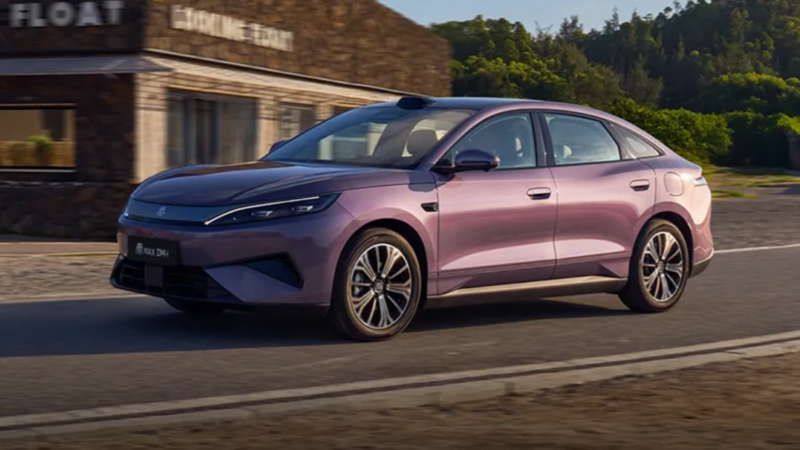
New BYD Seal 06 & Qin MAX Part 2: Affordability & Value
Support CleanTechnica's work through a Substack subscription, on Patreon, or on Stripe. Help us produce all of the high-quality, original content we publish week after week despite the challenges of content-scraping AI, antisocial media, inflation, and other hurdles.
Earlier this week, BYD launched the new Seal 06 and Qin Max. In Part 1, I focused on the changes to the vehicles and their positioning. However, where these vehicles stand out is in their affordability and value. Capability has been upgraded, including the fastest charging in this class, without increasing prices.
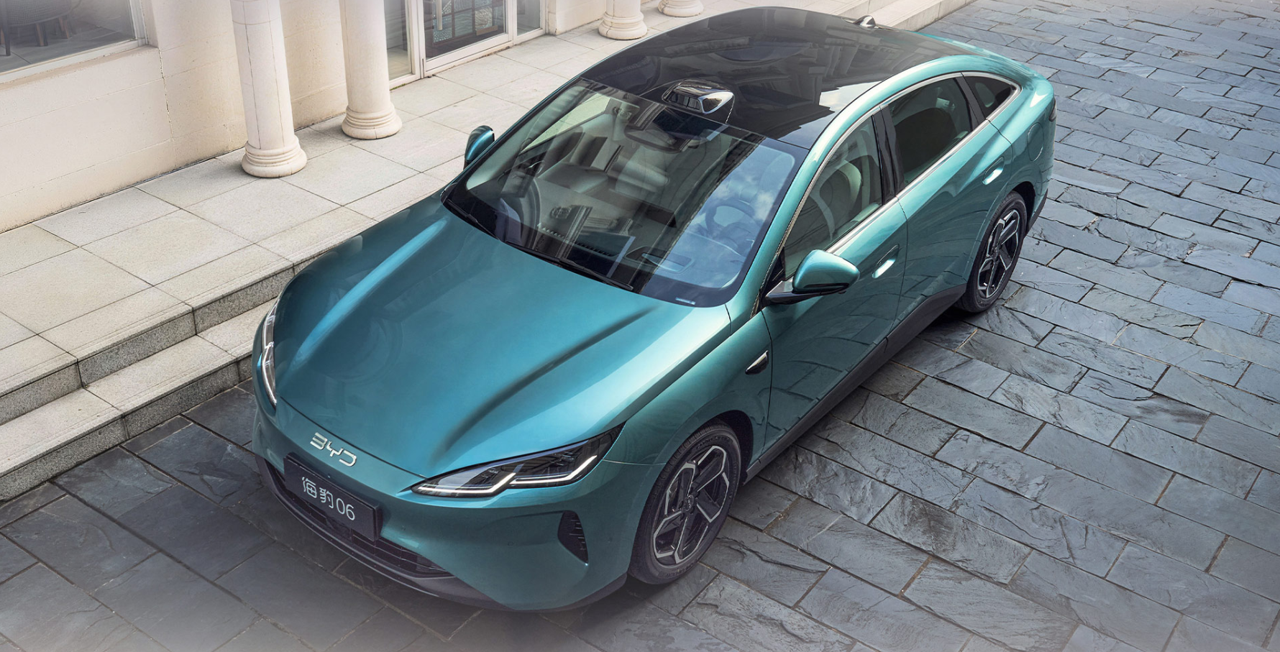
Affordable Pricing
In terms of price, the biggest difference between the two models is that the Qin MAX offers God’s Eye B as a 12,000 RMB ($1780) option, and the Seal 06 bundles it into a Flagship trim level. Otherwise, the prices for the different models reflect each other. Comfort, Smart and Premium trim levels on the Seal 06 become Leading, Superior and Excellent trim levels on the Qin MAX. To quote Bon Jovi, “It’s all the same, only the names have changed…”
Using the Seal 06 as the example to reduce redundancy, the 109,900 RMB ($16,293) entry level Comfort trim with the base 530 km powertrain seems pretty basic. It lacks BYD’s God’s Eye intelligent driving system but comes with a 12.8” infotainment screen. It has a steel roof and 17” alloy wheels. Only the driver has a power seat. While some may be looking for the most basic EV possible at this size, I have a feeling that this trim level is intended mostly for fleets.
For 10,000 RMB ($1483 USD) more, the Smart trim includes BYD’s God’s Eye C intelligent driving system, electric folding mirrors and powered front seats with heating and ventilation. At 119,900 RMB ($17,781), this is likely the base model for the consumer market.
One more step in equipment takes customers to Premium trim at 129,900 RMB ($19,258 USD) with DiSus-C active dampers on 18” wheels. The center screen increases to 15.6” and adds a 12” W-HUD, as well as a couple of additional speakers, ambient lighting and wireless phone charging. A panoramic sunroof with electric sunshade is also included. BYD’s LiDAR-based God’s Eye intelligent driving system becomes an option on this level.
For the Smart and Premium trim levels, the step up to 630 km of range and 240 kW (322 hp) power adds 13,000 RMB ($1927 USD). This puts the 630 km Smart Trim at 132,900 RMB ($19,709) and Premium trim at 142,900 RMB ($21,185 USD), which also adds a refrigerator.
At the top of the Seal 06EV lineup is the Flagship model at 155,900 RMB ($23,112 USD), only offered with the top powertrain. This model includes BYD’s LiDAR-based God’s Eye B with BYD taking responsibility for city driving as well as parking. It also includes multi-point massaging seats. Infotainment moves up to the more advanced DiLink 150 system. On the Qin MAX, those features are offered as options.
The DM-i models have a similar price structure, but cost 10,000 RMB less to 14,000 RMB less than the comparable EVs, depending on the model. That puts the entry level DM-i with 230 km of battery range at 99,900 RMB ($14,815) and the top Flagship DM-i with 320 km of range and God’s Eye B at 141,900 RMB ($21,041).
Overall, despite the new Seal 06 and Qin Max being significantly upgraded across the board, the price is not increasing over the Qin L and previous generation Seal 06 that they replace. The lineup has expanded to add more advanced models at the top of the range, but overall prices are not going up. I have a feeling this might stimulate sales of the new vehicles and make it harder to clear out the previous generation models.
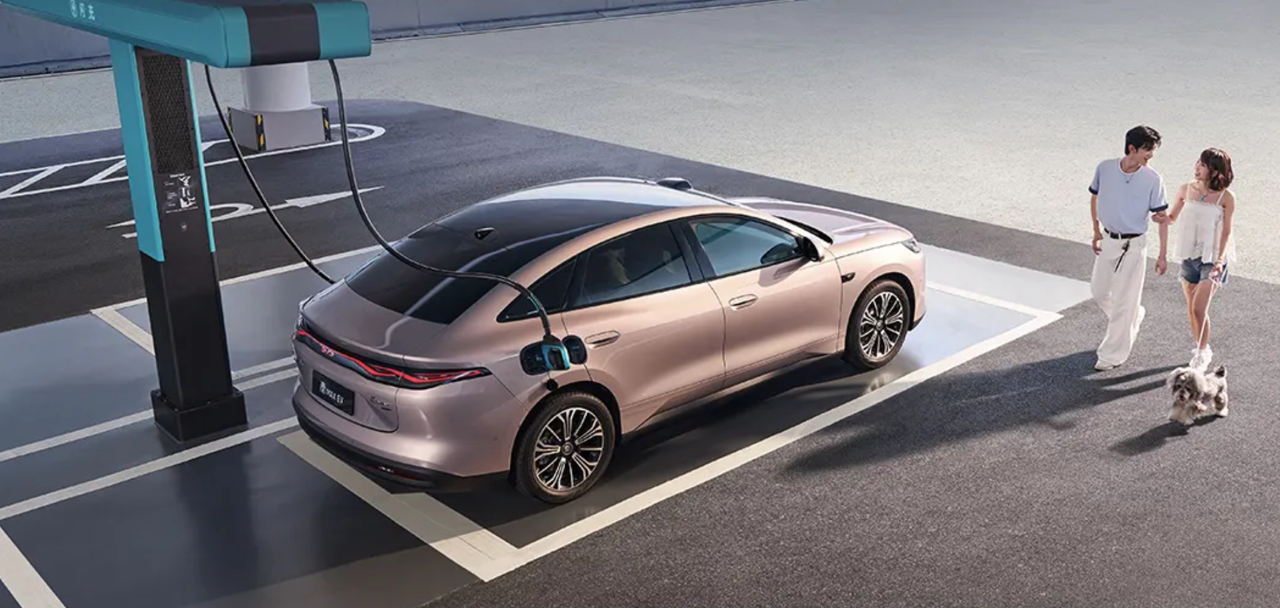
The new Seal 06 and Qin Max EVs are currently the least expensive flash charging vehicles in BYD’s lineup and easily the fastest charging vehicles in this price range. In addition, the EVs add the value of one year of flash charging and additional days of flash charging for every day that delivery is delayed. As BYD has been supply constrained lately, those days might add up.
Overall, the pricing structure is close enough that customers are likely to come into a dealership for the advertised base model and pay a little bit more for significantly better equipment. However, even the top trim is less than the least expensive sedan in the US and many competitors, while offering a significantly better car for the money.

Value Comparison
For the default EV comparison, the now smaller RWD Tesla Model 3 starts at 235,500 RMB ($34,913) in China. Of note, this is based on current exchange rates with the USD decline in relative value closing much of the recent price gap. However, including current promotions, that price in China increases to 259,500 RMB ($38,471 USD) with “Enhanced driver assistance” and to 291,500 RMB ($43,215 USD) with “Advanced Driver Assist.” They can’t legally call it “FSD” in China. The trim most comparable to the Model 3 with “Enhanced driver assistance” would be the 142,900 RMB ($21,185) Seal 06EV Premium 630, which has 4 fewer km of range, but accelerates faster and includes active dampers that are only available on the far more expensive Performance version of the Model 3. The flagship Seal 06 at 155,900 RMB ($23,112 USD) would be the closest to the RWD Model 3 with “Advanced Driver Assist,” although the Seal 06 comes better equipped, despite being over 135,600 RMB ($20,109) less expensive. However, the BYD has a fully functioning intelligent driving system compliant with the recently released Intelligent Driving standards in China. Meanwhile, Tesla was still waiting for approval for full functionality under the previous standard, which is seeming increasingly unlikely to happen any time soon under the new, stricter standards.
For the default legacy sedan comparison, we can look at the Toyota Camry, made locally in a JV with GAC. The least expensive model starts at 171,800 RMB ($25,478) for the 2.0l gasoline, 179,800 ($26,664) for the least expensive non-plug hybrid and 259,800 RMB ($38,528) for the top spec 2.5l hybrid. Even the most powerful hybrid model with a total system output of 169 kW falls short of the DM-i motor at 175 kW and far short of the 240 kW BEV models. Meanwhile, the BYDs are far more technologically advanced.
Camry fuel economy ratings come in at 5.81l/100 km for the gasoline motor, 4.2 l/100 km for the most efficient 2.0 l hybrid and 4.55 l/100 km for the 2.5 l hybrid. Those ratings are WLTP. However, even if you take the largest 1.3X conversion multiplier, the Seal 06/Qin MAX at 2.59 l/100km NEDC would come to 3.37 l/100 km WLTP, which makes it easily more efficient. And the Seal 06 can plug in with more battery range than many early BEVs, letting it easily drive on electricity for daily commuting.
The least expensive new sedan in the US of any powertrain is the Nissan Sentra at $24,845 including shipping and handling fees (which are included by law in Chinese prices). That makes it more expensive than the top-of-the-line Flagship Seal 06 EV. The Nissan is a smaller car and has 149 hp (111 kW), less power than the least powerful Seal 06. However, even if you go to the top-of-the-line model at over $30,000, it still pales in comparison to what is available on the Seal 06 at roughly half the price. While the Seal 06 makes noticeable compromises within the Chinese market to reach its price point, it is dramatically more advanced than relatively affordable cars in the US. And it can run on electricity.
Meanwhile, the least expensive EV in America is the Chevy Bolt at $28,995. Once again, this is significantly more money for significantly less car. To get close to the new BYD models, you are looking at the base Tesla Model 3 again at a much higher price for less equipment and intelligent driving as a subscription. Then, due to the cancellation several of mainstream EV sedans like the Hyundai IONIQ 6, to get a comparable sedan, you have to move to premium brands at even higher prices. There just is not enough EV sedan volume to support multiple mainstream midsized competitors in the largely closed US market.

Inevitable Compromises
Recently, Chinese EV launches have tended to focus on no-compromise vehicles, like the XPENG G9L and Denza Z9S in the 200,000 to 300,000 RMB range (roughly $30,000-45,000 USD). These vehicles offer supercar performance, premium materials, expansive interior space, impressive efficiency, the latest technology and a level of amenities that challenge the imagination. Range reaches the point where it becomes almost irrelevant. Customers can drive farther without stopping than their bodily functions will allow and can charge rapidly, if not charging at home. All while costing less than the average new car in the US.
However, as you get down to price points below the least expensive car in America, some compromises are inevitable. You can’t expect a world-beating car at these price points. The entry level power of the Seal 06/Qin MAX is adequate, but not compelling. The base models give up so much in technology and equipment for a relatively small amount of money that they likely don’t make sense for many private buyers. The upper trim levels are easily beyond what you would expect from a mid-tier car in the US, but they are not challenging six-figure cars from Mercedes and Porsche.
EV range is OK, good by US standards, but not the 1000 km+ ranges found in BYD’s premium sedans. However, when combined with flash charging and a growing charging network, the range will not have much impact on long trips. And routine charging can easily be covered at home or locally.
However, these are perfectly functional cars. They offer more range than some gasoline cars and charge as fast as gasoline cars can refill. They include more amenities and technology than many of us would expect at multiple times the price.
Which gets to the question: Do people really need a large car that can turn sharper than a subcompact, accelerate faster than many supercars, set records for handling, offer more amenities than a Bentley, and have more range as an EV than any pure gasoline car… even if the price is reasonable? Will customers choose to pay less for a good enough car and spend their money elsewhere? Or will they be tempted to spend their full budget on an outstanding vehicle? With the speed of progress, I could see many people choosing a new car in the same price range as a used car, even if the used car was priced higher when new. They wouldn’t be downgrading vehicle capabilities to get a new model.
Of course, these questions are good problems to have. At least for customers. Many of us in the US wish we could afford any sufficient new car, much less an EV that exceeds our needs. However, China might offer a preview of a potential future if our market ever opens up. A potential future where mainstream cars are becoming excessive. Where an EV becomes the obvious choice. Where the choice between new and used becomes more difficult for value-focused customers. A future where people can afford more but might choose to spend less on a car and spend their money elsewhere.
Sign up for CleanTechnica's Weekly Substack for Zach and Scott's in-depth analyses and high level summaries, sign up for our daily newsletter, and follow us on Google News!
Have a tip for CleanTechnica? Want to advertise? Want to suggest a guest for our CleanTech Talk podcast? Contact us here.
Sign up for our daily newsletter for 15 new cleantech stories a day. Or sign up for our weekly one on top stories of the week if daily is too frequent.


CleanTechnica uses affiliate links. See our policy here.
CleanTechnica's Comment Policy

