The Battle For Offshore Wind Has Just Begun (Spoiler Alert: Trump Loses)
Support CleanTechnica's work through a Substack subscription, on Patreon, or on Stripe. Help us produce all of the high-quality, original content we publish week after week despite the challenges of content-scraping AI, antisocial media, inflation, and other hurdles.
US President Donald Trump has achieved what no-one else thought possible, squandering billions in taxpayer dollars and flushing thousands of good-paying, working class jobs into the toilet while shrinking the once-promising domestic offshore wind industry down to a shell of its former self. However, his ultimate failure is already written in the wind, so to speak as coastal states begin prepping for the wind industry of the future.
Where’s The Fire?
Considering the state of “energy emergency” Trump himself declared upon taking office last year (further reinforced by Energy Secretary Chris Wright, and continuing into this year), his war on offshore wind is practically an act of sabotage. After all, what do you call it when, in the midst of an energy emergency, a US President deliberately cuts entire states off from significant energy resources right on their doorsteps.
Be that as it may, the damage was relatively limited last year, when Trump imposed specious re-reviews on several offshore projects in the pipeline. He also summarily ordered a halt to five offshore projects where construction was already in progress. However, in December a federal judge ruled that the re-reviews were unwarranted, and earlier this year a series of judges ruled that work could continue on the five interrupted projects (see more wind war background here).
Although some projects are trickling through for now, in last December’s ruling the same judge agreed that Trump acted within his authority when he refused to issue new leases. Adding to the dark clouds hovering over the future of the offshore wind industry, this year Trump began paying (some say bribing) lease holders to walk away from their leases.
What was the hurry? Some or all of those particular lease areas (12 in all, so far, at a cost of $3.9 billion in taxpayer dollars) were likely to remain dormant indefinitely, payoff or not. For starters, the shenanigans Trump pulled last year were enough to convince lease holders that moving forward with pre-development planning would be a worthless endeavor while he remains in the White House.
More to the point, industry observers note that at least some of the leases were lying dormant because they proved to be uneconomical in the post-COVID environment of supply chain interruptions and high interest rates, among other structural considerations in the US market that predate Trump’s second term in office.
“The buyouts did not stop projects since the projects were not in the money or poised for development anytime soon,” observes James Sallee, who holds the post of Faculty Research Fellow of the National Bureau of Economic Research along with other positions.
Coastal States Fight Back
Coastal states are not taking all this nonsense sitting down, of course. In addition to Congressional investigations and lawsuits challenging Trump’s authority to buy out existing leases, remedial legislation is now on the table, with a side of punishment for lease holders that accepted the buyouts.
The buyouts potentially give leaseholders the opportunity to return and compete for the same leases at auction after Trump leaves office, but US Senator Alex Padilla (D-California) is among the lawmakers aiming to cut them off at the pass.
On August 11, Sen. Padilla and US Senator Angus King (I-Maine) announced new legislation that would place the bought-out leases on a fast track for development as wind energy sites — but not by any of the original lease holders.
Instead, the legislation gives adjacent lease holders first dibs on the abandoned areas. To speed up the development process, the legislation calls for the leases to be offered at the original auction price per acre, without any further intervention by the Bureau of Ocean Energy Management (BOEM is the Interior Department office that administers the lease program).
That thing about the original per-acre price could dampen interest among adjacent lease holders, who may be expecting to catch a break. However, that remains to be seen. If they take a pass, the legislation calls for BOEM to offer the same terms to other developers, while still excluding the original lease holders from consideration.
Of course, legislation like this is all but dead in the water as long as Trump is in office and Republicans hold the majority of seats in both Houses of Congress. However, it does remind lease holders that elections have consequences, and Election Day 2028 is just around the corner.
What’s Up With Maine?
Sen. Padilla’s interest in the topic is a no-brainer, considering California’s vast shoreline and its ambitious 25-gigawatt plans for offshore wind. The state has persisted with plans for a new seaport to support the offshore industry, despite efforts by Transportation Secretary Sean Duffy to claw back Biden-era funds that were earmarked for the project.
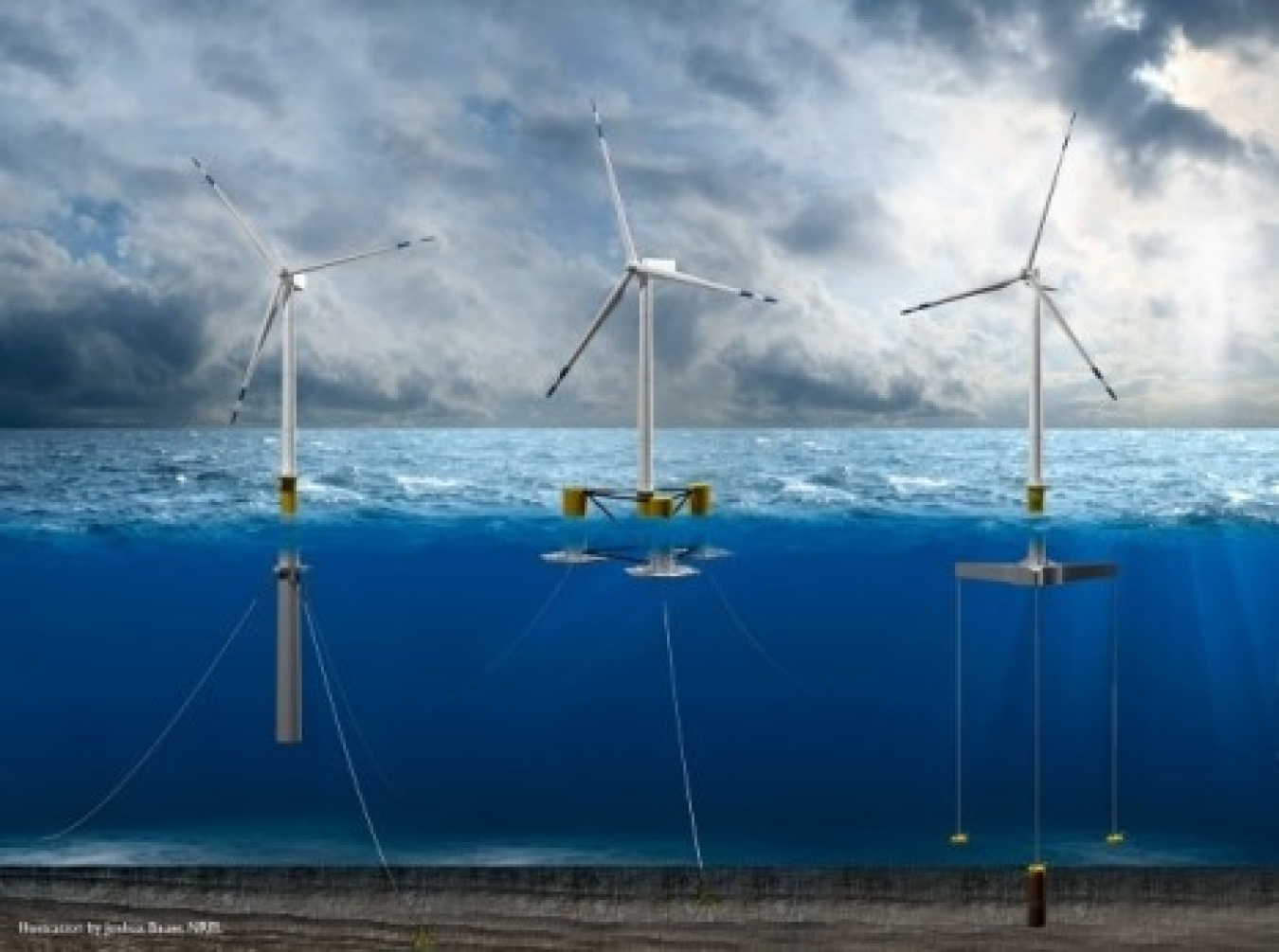
Maine, though, is a bit of a head-scratcher, until you consider that Maine, like California, is ripe territory for floating wind turbines. Unlike conventional turbine foundations that are sunk into the seabed like fence posts, floating turbines can be moored out in deep waters. In 2024, the Bureau of Ocean Energy Management assessed Maine’s floating offshore wind potential at 15 gigawatts.
BOEM also auctioned off three lease areas in the Gulf of Maine in 2024, with two going to Avangrid Renewables and two going to Invenergy. “Together, the leased areas have the potential to power more than 2.3 million homes with clean energy,” BOEM noted.
Or not, as the case may be. At least, not yet. In the latest update, BOEM notes that the Trump administration has paid off both companies, canceling all four leases.
Ouch! While some Mainers have opposed offshore wind development, the organization Natural Resources Council of Maine makes the economic case, citing savings on electricity costs compared to fossil fuels as well as support for the state’s 400-year history in maritime industries. NRCM also draws attention to the wind industry’s support for new state legislation barring offshore turbines in certain fishing grounds.
“That’s why support for a new offshore wind industry spans from the Maine State Chamber of Commerce to Maine’s labor unions,” the organization states, taking note of the potential for the offshore wind industry to create 6,000 construction jobs in Maine.
With the leases canceled, Maine can kiss those jobs goodbye, which brings up an interesting point. Election Day 2026 is less than 100 days away, and in Maine the race for US Senate has come down to the Republican incumbent Susan Collins and her Democratic challenger Troy Jackson, a former Maine State Senate President and professional logger from a logging family.
As the polling stands now, Jackson doesn’t necessarily need to underscore his support for the state’s offshore industry while a state senator. It’s a tight race, but Jackson is polling ahead of Collins, and offshore wind is a hot button issue that could cut both ways. Last year, for example, New Jersey gubernatorial candidate Mikie Sherrill ran a successful campaign as an advocate for renewable energy without taking a position on the state’s beleaguered offshore wind industry.
On the other hand, the influential union AFL-CIO came out in support of Jackson during primary season last spring, citing his strong support for offshore wind legislation that included fisheries protection measures. So, it wouldn’t be surprising to see Jackson supporters bring up Trump’s responsibility for costing the state 6,000 offshore wind jobs, even if his campaign skirts around the issue.
AFL-CIO and other unions may also deploy the cancellation of the four leases to hammer on Susan Collins, who has remained silent on the topic of Trump’s war against wind despite her past support for the state’s offshore wind industry.
Mainers, what do you think? Drop a note in the discussion thread…
Photo: Regardless of Trump’s war on wind power, lawmakers in Maine and California are already prepping for an offshore wind industry comeback, featuring wind turbines that float on the surface (cropped, courtesy of US Department of Energy).
Sign up for CleanTechnica's Weekly Substack for Zach and Scott's in-depth analyses and high level summaries, sign up for our daily newsletter, and follow us on Google News!
Have a tip for CleanTechnica? Want to advertise? Want to suggest a guest for our CleanTech Talk podcast? Contact us here.
Sign up for our daily newsletter for 15 new cleantech stories a day. Or sign up for our weekly one on top stories of the week if daily is too frequent.


CleanTechnica uses affiliate links. See our policy here.
CleanTechnica's Comment Policy