
Hybrid Sales Rise While Battery Electric Sales Remain Lower After Tax Credit Expiration
Support CleanTechnica's work through a Substack subscription, on Patreon, or on Stripe. Help us produce all of the high-quality, original content we publish week after week despite the challenges of content-scraping AI, antisocial media, inflation, and other hurdles.
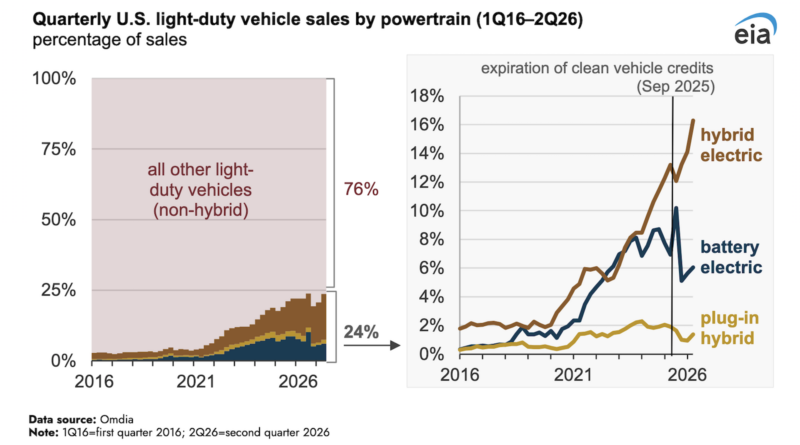
In the second quarter of 2026 (2Q26), 24% of new light-duty vehicles sold in the United States were hybrid electric, battery electric, or plug-in hybrid electric vehicles, up from 22% in 2Q25. Between 2Q25 and 2Q26, hybrid electric vehicles continued to gain market share, reaching a record 16% of light-duty vehicle sales. The market shares of battery electric and plug-in hybrid electric vehicles decreased, according to estimates from Omdia. In 2Q26, battery electric vehicle sales were 6% of new light-duty vehicles sold, down from 7% in 2Q25; plug-in hybrid electric vehicle sales fell from 1.9% to 1.4% over the same period.
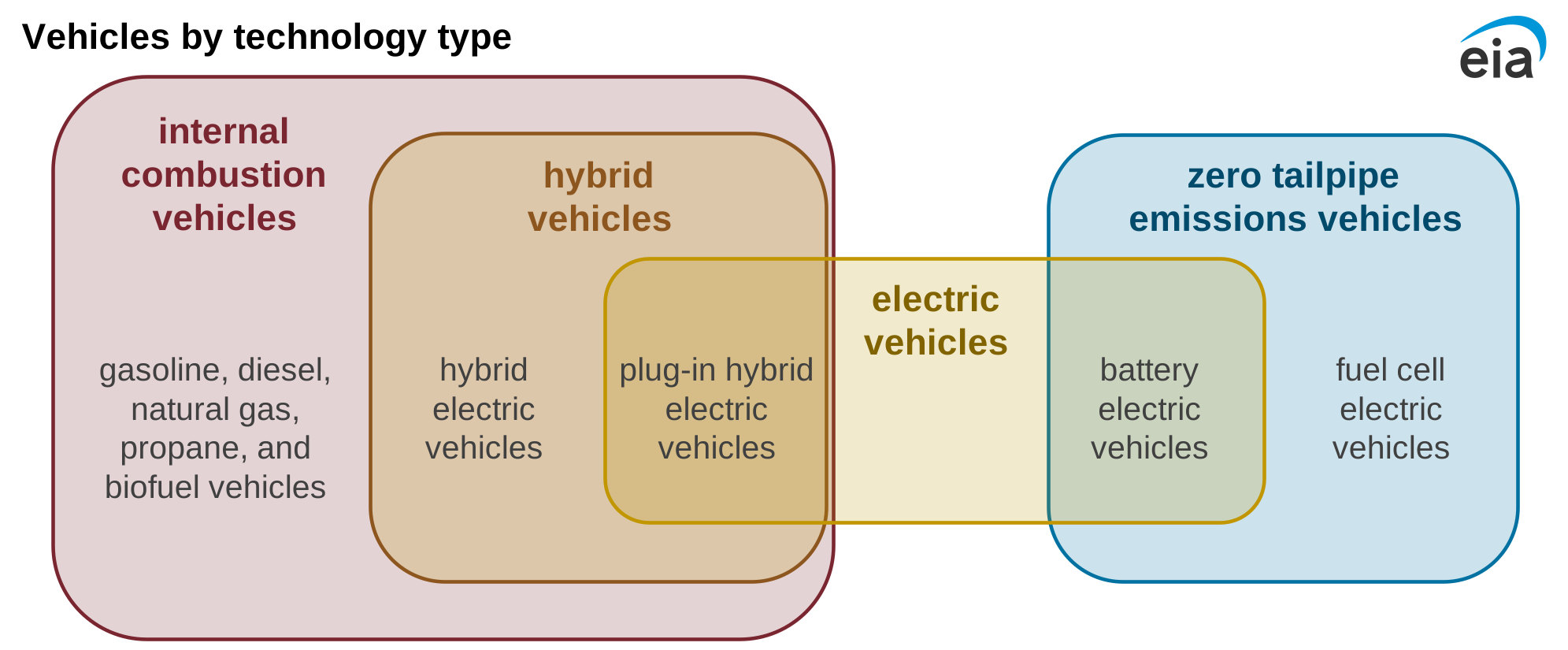
These different vehicle types affect the broader energy sector in different ways. Battery electric and plug-in hybrid electric vehicles can consume electricity from the grid, which affects electricity demand. By comparison, hybrid electric vehicles consume liquid fuels and do not connect to the grid. Hybrid vehicles were not eligible for any of the federal tax credits that expired in September 2025.
Two tax credits for purchasing or leasing new electric vehicles both expired on September 30, 2025: the New Clean Vehicle Credit and the Qualified Commercial Clean Vehicle Credit. Battery electric vehicles made up a record 12% of light-duty vehicle sales in September 2025, immediately before the credits expired. However, 2025 marked the first year where annual sales and market share of battery electric vehicles declined, a trend that has continued in 2026. Battery electric vehicle sales fell to 6% of new vehicle sales in the first six months of 2026, down from 7% over the same period last year.
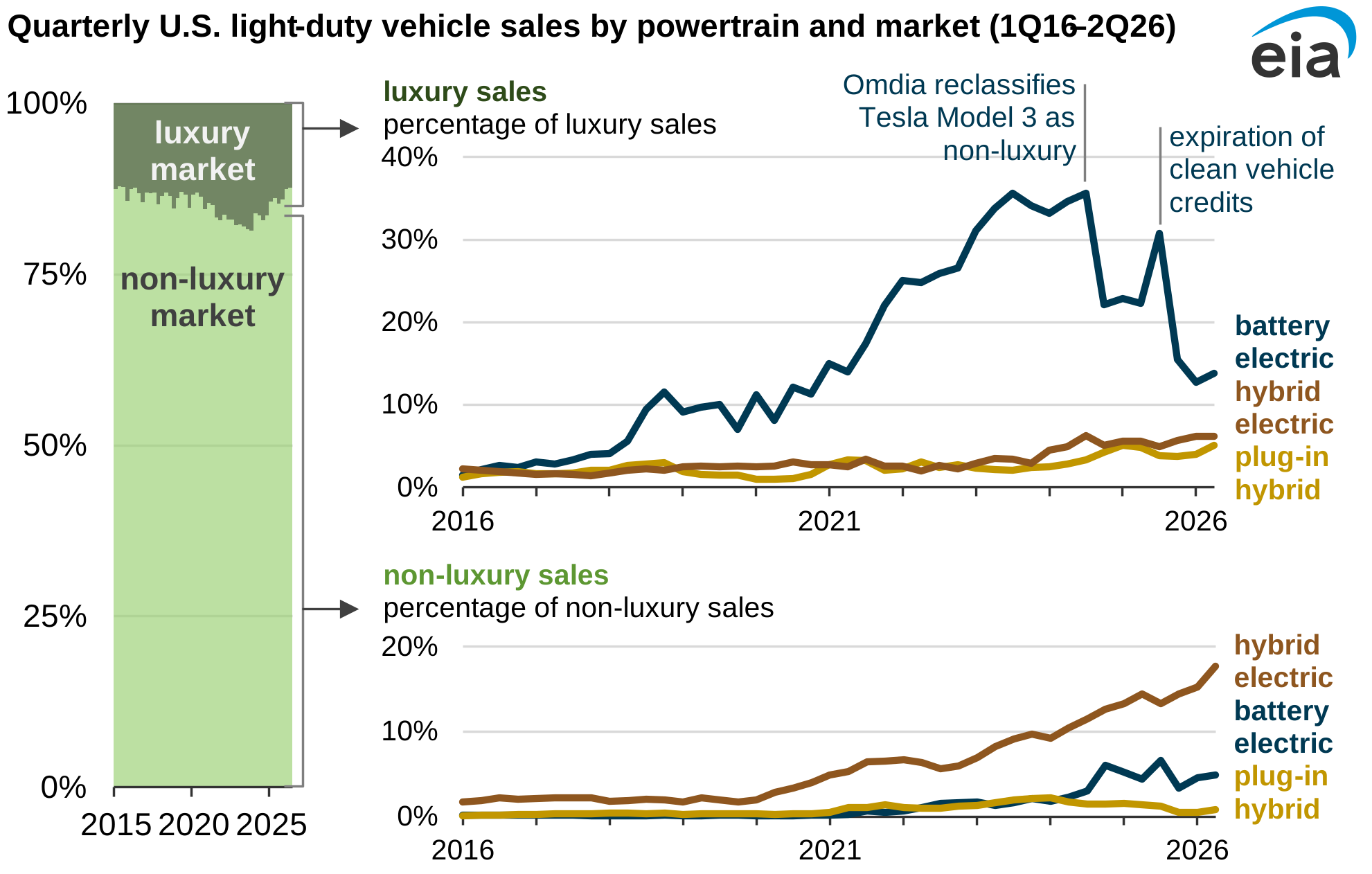
Battery electric vehicles have historically been more popular in the U.S. luxury vehicle market, which accounted for 12% of the total U.S. light-duty vehicle sales in 2Q26. However, battery electric vehicle sales are also decreasing in this market segment. In 2Q26, battery electric vehicles accounted for 14% of luxury light-duty vehicle sales, down from 22% in 2Q25.
Because sales figures in any year are relatively small compared with the total number of vehicles on the road, electric vehicles’ share of the light-duty vehicle fleet is much less than the recent total 7% sales share in 2Q26. In 2024, the most recent year for which we have fleet-wide data available in our Monthly Energy Review, electric vehicles accounted for 2% of all registered light-duty vehicles in the United States.
Article from Today in Energy. Principal contributors: Matthew Skelton, Michael Dwyer
Sign up for CleanTechnica's Weekly Substack for Zach and Scott's in-depth analyses and high level summaries, sign up for our daily newsletter, and follow us on Google News!
Have a tip for CleanTechnica? Want to advertise? Want to suggest a guest for our CleanTech Talk podcast? Contact us here.
Sign up for our daily newsletter for 15 new cleantech stories a day. Or sign up for our weekly one on top stories of the week if daily is too frequent.


CleanTechnica uses affiliate links. See our policy here.
CleanTechnica's Comment Policy

