
The Tesla Cybercab Has A Serious Challenge For Personal Vehicle Sales
Support CleanTechnica's work through a Substack subscription, on Patreon, or on Stripe. Help us produce all of the high-quality, original content we publish week after week despite the challenges of content-scraping AI, antisocial media, inflation, and other hurdles.
We’ve written a few stories lately on why robotaxis may not do much more than replace human-driven taxis. There’s a lot of hype or hope around the idea that many people will switch from car ownership to using robotaxis, but is that really what’s likely to happen? Even beyond that, there’s hype among Tesla fans that people will be able to buy cars that they then deploy as robotaxis when not in use … but there are various issues with this idea as well.
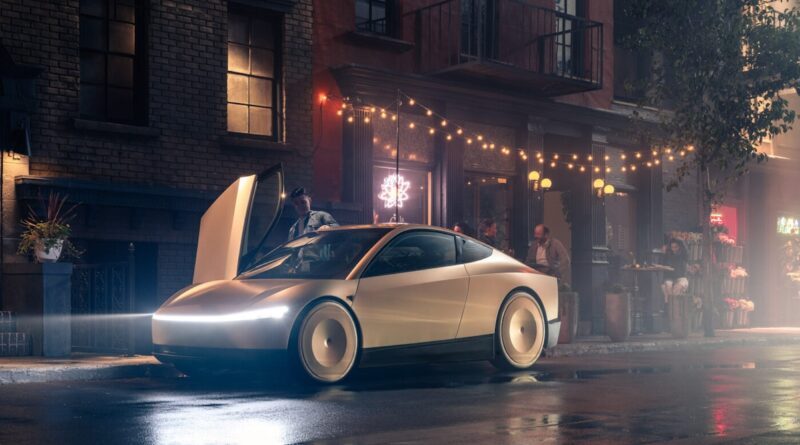
When it comes to the Tesla Cybercab, there’s one serious problem with this latter idea. Tesla thinks the Cybercab is designed perfectly for robotaxi usage, but that includes making it a two-seat vehicle. This is not the first company that has looked at the average number of people in a car (barely more than one) and decided that the market would love a two-seat vehicle that costs less, is more efficient, and doesn’t include all of those extra seats. The problem is … the market never seems to soak up those vehicles, especially in the US.
In fact, as I wrote recently, a friend of ours just bought a Hyundai Santa Fe instead of a Hyundai IONIQ 5 because they were enticed by the extra space and extra row of seats — despite being just a family of four and having another vehicle. Across the US and also Europe, cars just keep getting bigger and bigger and bigger and bigger. Is this because people really need extra space? No. It’s a trend that defies needs. So, when Tesla decides to build a two-seat vehicle because most cars have only one person in them, it may think that’s logical, but good luck finding buyers. I can probably count on one hand the number of people who will be fine giving up a 5-seat or 7-seat vehicle for a two-seater.
Maybe the idea is just that people will buy bunches of Cybercabs to operate as robotaxis. However, if these are going on sale soon, where can private owners deploy them as robotaxis? At the moment, nowhere. And Tesla has shown that, like other companies, it has to deploy robotaxi service city by city slowly.
Even if the Cybercabs could immediately be deployed as robotaxis, the private owner would have to handle insurance (hmm, how is that going to work?), maintenance, cleaning the vehicles, monitoring them, dealing with any early bugs and bump-bumps, and charging.
Tesla is apparently working on getting these into mass production, but are there buyers? When it comes down to buying the vehicle, how many people are going to choose a two-seater over a large variety of similarly priced five-seaters? Even if they don’t have kids and don’t need more than two seats, what’s the appeal of a Cybercab over other car and non-car options? If they want to buy a Cybercab just to try to make money on it as a robotaxi, where can it do that? And how does a vehicle that limits the number of passengers it can transport beat a similarly priced or slightly more expensive vehicle that can transport several more?
Well, it’s 2026, so we should find out soon how much demand there actually is for the Cybercab, right?
Sign up for CleanTechnica's Weekly Substack for Zach and Scott's in-depth analyses and high level summaries, sign up for our daily newsletter, and follow us on Google News!
Have a tip for CleanTechnica? Want to advertise? Want to suggest a guest for our CleanTech Talk podcast? Contact us here.
Sign up for our daily newsletter for 15 new cleantech stories a day. Or sign up for our weekly one on top stories of the week if daily is too frequent.


CleanTechnica uses affiliate links. See our policy here.
CleanTechnica's Comment Policy

