
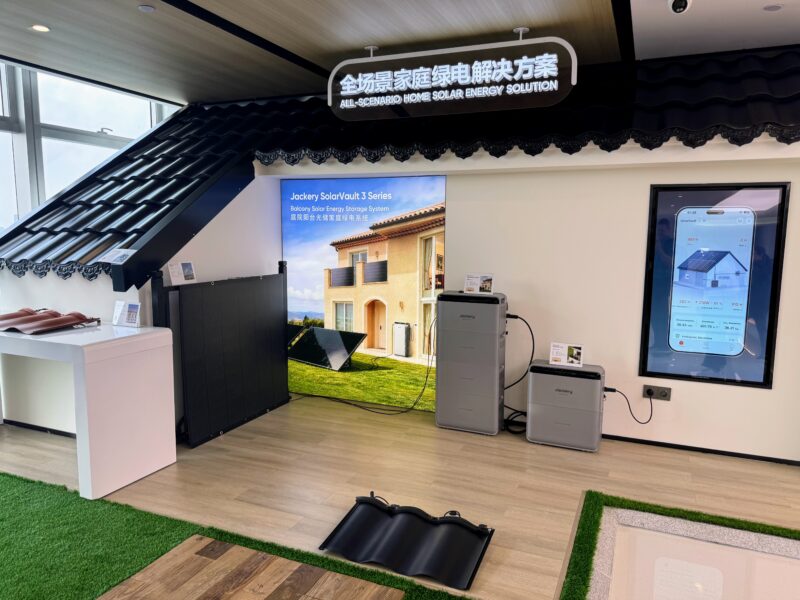
Jackery Solar Roof & SolarVault 3 Home Energy Storage System — CleanTechnica Field Trip
Support CleanTechnica's work through a Substack subscription, on Patreon, or on Stripe. Help us produce all of the high-quality, original content we publish week after week despite the challenges of content-scraping AI, antisocial media, inflation, and other hurdles.
Jackery was one of the early pioneers in portable power stations and has continued to push the envelope in the space. It recently hosted CleanTechnica on a dedicated media tour at its headquarters in Shenzhen, China, where the company gave us an early look at its new solar roof system and integrated home energy storage solution.
The Jackery Solar Roof
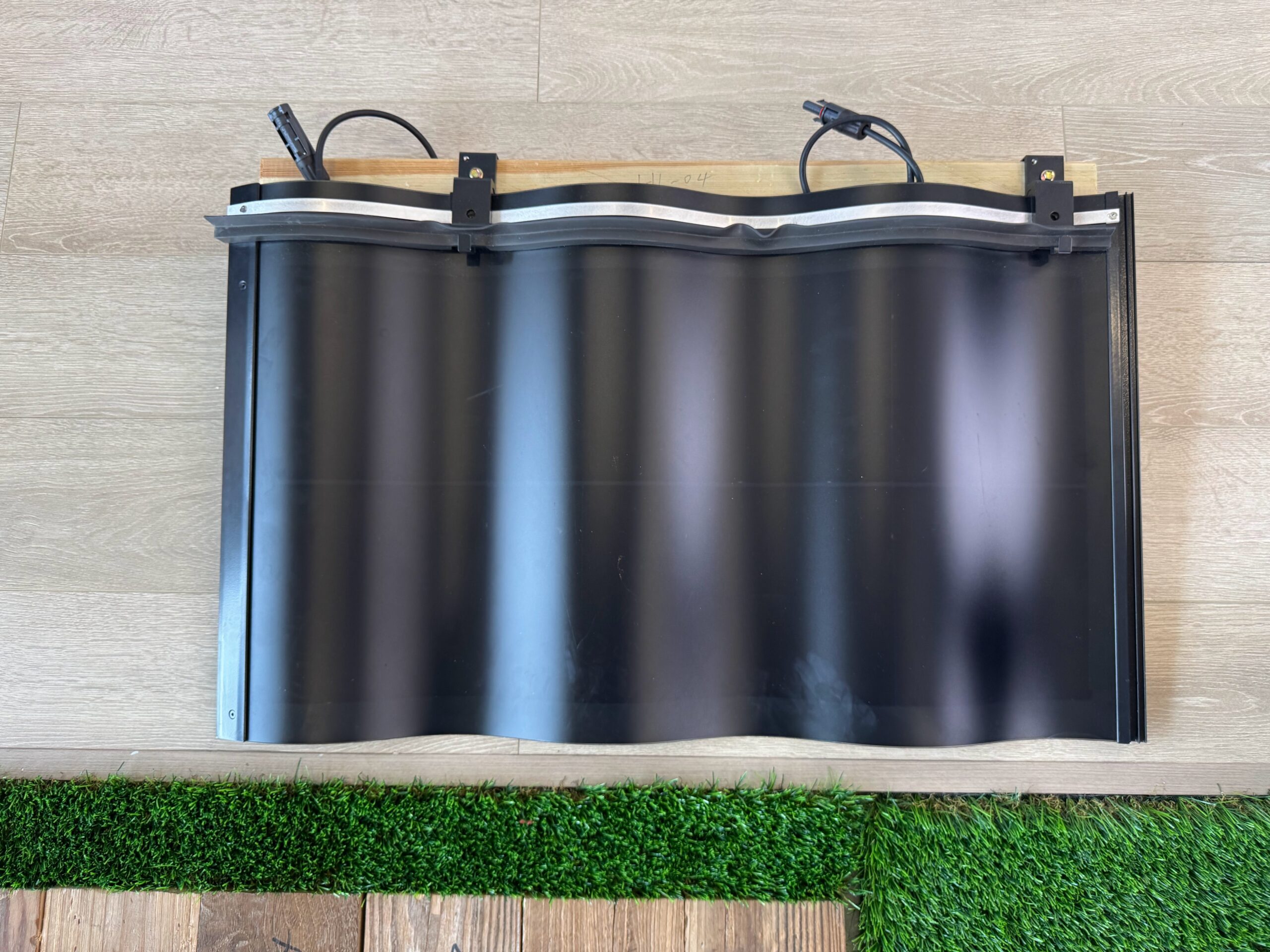
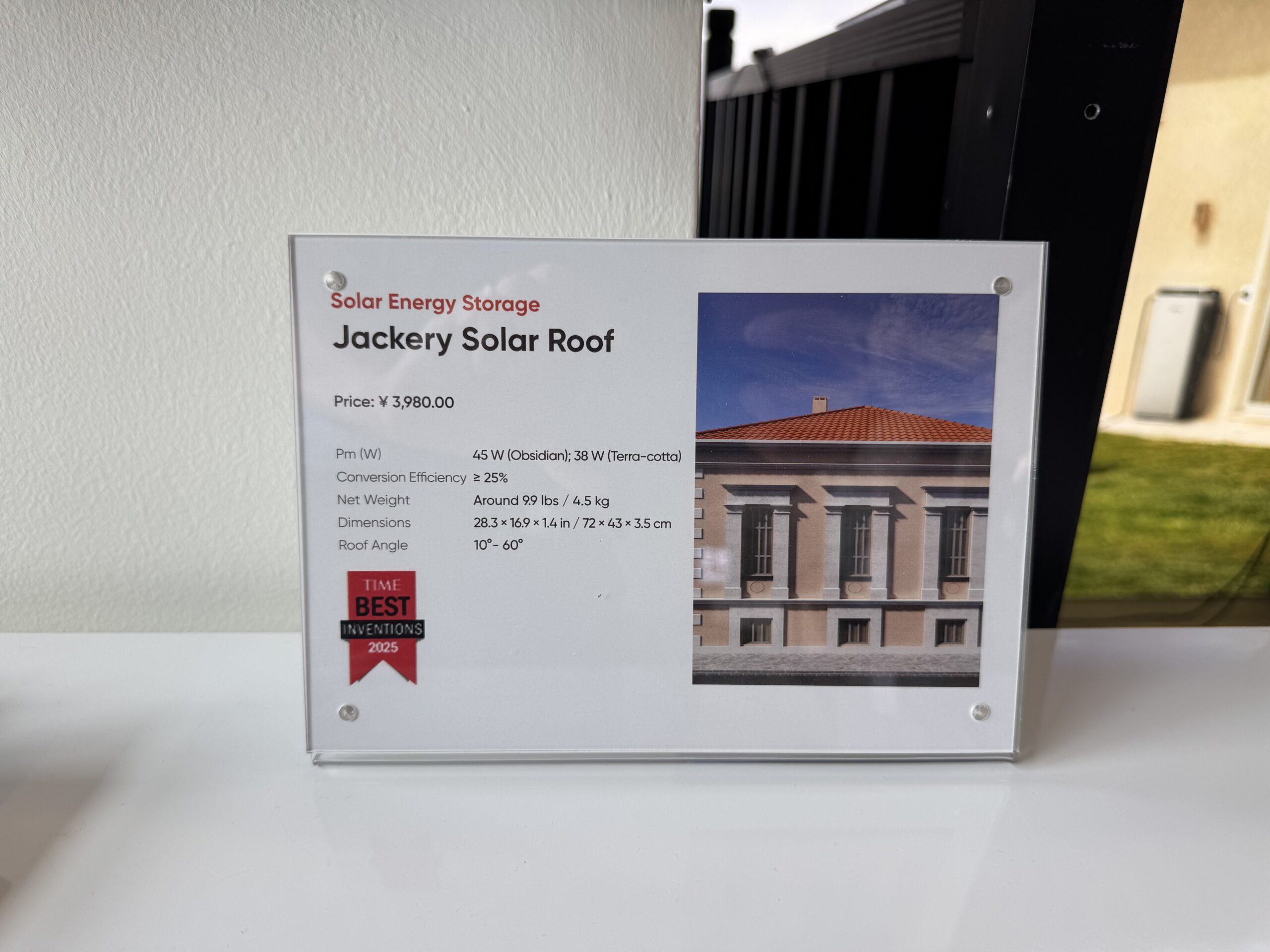
Jackery’s Solar Roof tiles were modeled after traditional terracotta roof tiles and come in black and a more traditional orange colorway. Each black solar roof tile produces 45 watts of power, with the orange tiles generating slightly less at 38 watts each. Actual production from the tiles will be slightly less efficient due to the curves of the roof tiles always translating to a suboptimal angle to the sun for part of the panel.
Solar roof tiles have to pull double duty, producing power and protecting the building underneath. Jackery designers and engineers designed their tiles to be extremely durable, so we put them to the test. I’m no lightweight, and after confirming with their team several times, I not only stood on one of their roof tiles, I jumped up and down on one of them with no issues.
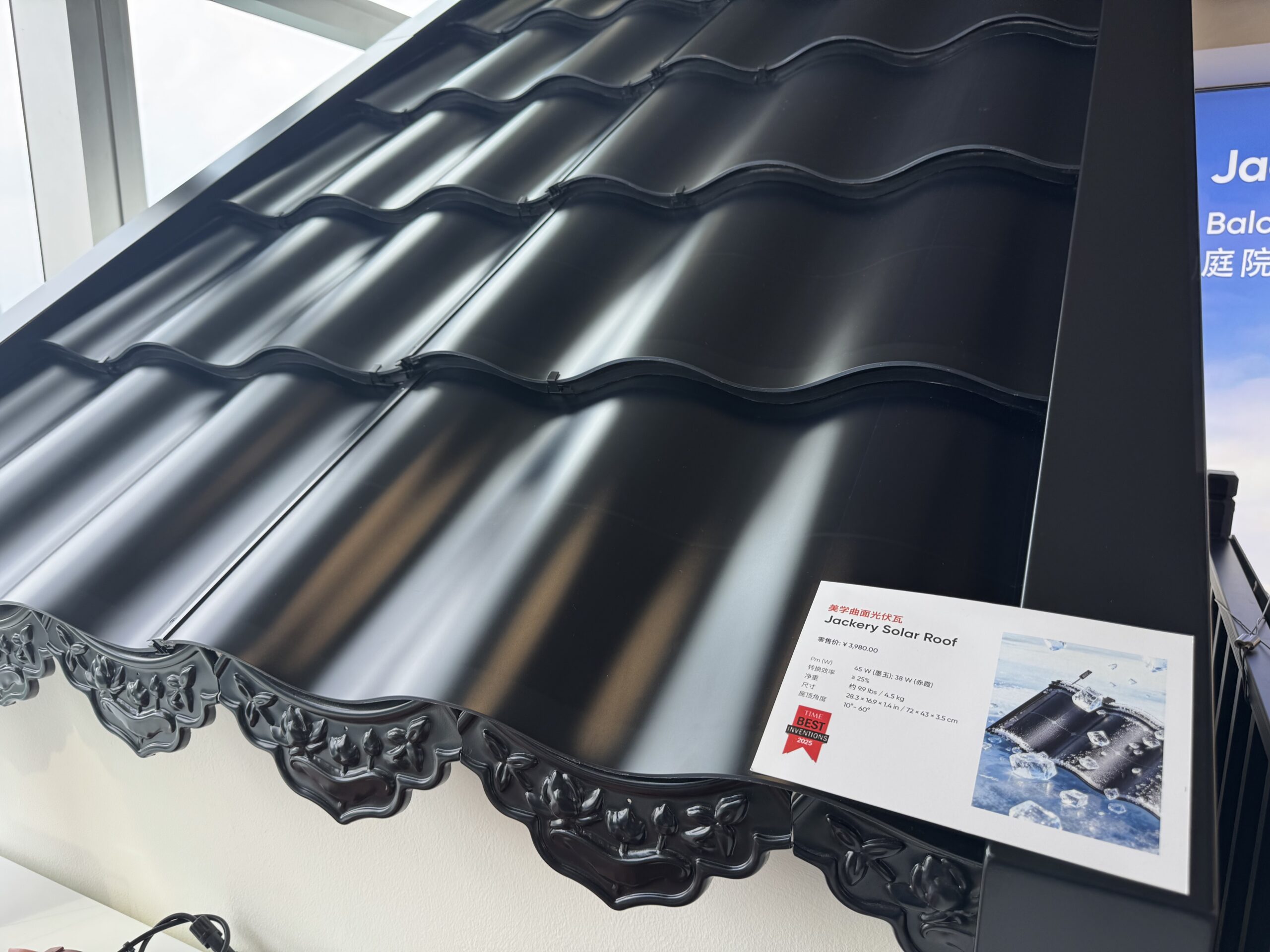
That’s impressive, with the black roof tile only flexing slightly as my admittedly oversized American feet and body bounced up and down on them. That’s much stronger than any of the other glass-based solar roof tiles I’ve seen, including the Tesla solar roof tiles I have installed on my own roof back in California.
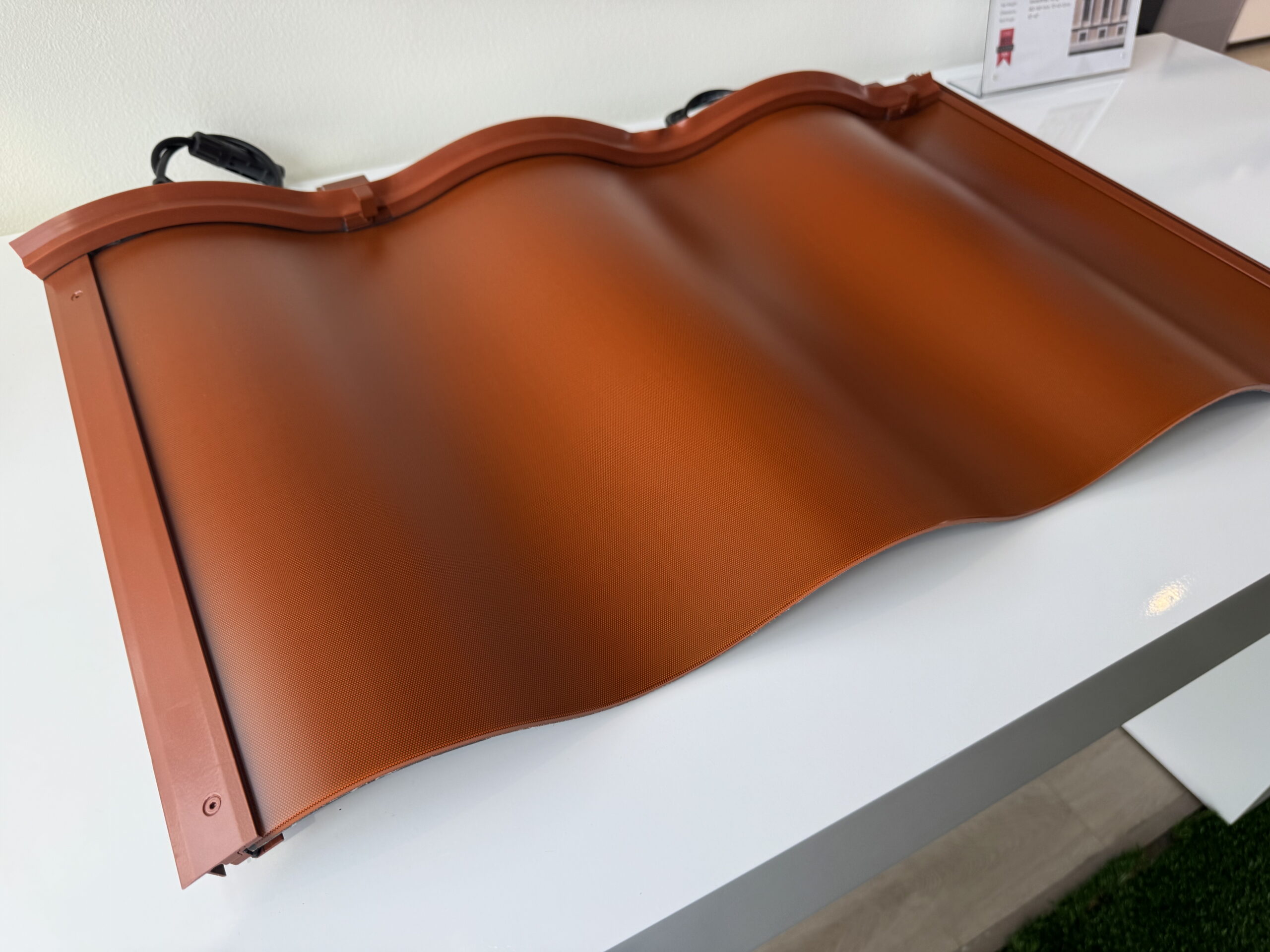
The solar roof display in Jackery’s lobby showcased their black tiles with beautiful metal accents that elevated the finish. This is a very traditional look on many older buildings in China and would also fit right into many European landscapes. It’s probably a bit too refined for American customers with the metal trim pieces installed, though they could easily be skipped for a more tract house feel.
Pricing
Cool products are a great start, but they will never make an impact at scale if they’re not affordable. Jackery quotes the price for the Solar Roof at 3,980 RMB, or $600, per square meter. At their rated 25% efficiency, and 0.31 square meters per panel, that translates to ~145 watts per square meter or around $4.14/watt of installed solar. It’s not as cheap as traditional solar, but you’re getting a durable and stylish roof with this deal as well, so you wouldn’t expect them to be.
One of the big downsides of installing a solar roof rather than traditional solar panels is that their wavy form factor inevitably reduces their energy production potential. You’re also locked in by the shape and directional orientation of the roof. For example, our roof largely faces north–south, with the edges facing east and west. That means many of the roof tiles won’t be facing the optimal orientation or angle for solar production, translating to lower output. It’s not the end of the world, and in many ways echoes the challenges of roof-mounted solar panels, but with even less flexibility because the solar roof tiles have no flexibility when it comes to angle of installation. For new builds, it’s best to design the orientation of the home and the angle of the roof for optimal solar production if that’s a key deliverable.
The Jackery SolarVault
In April, Jackery unveiled the SolarVault 3 modular home energy storage system. It is intended to be directly wired into the home and serves as energy storage with direct integrations to rooftop or ground-mounted solar.
The SolarVault 3 uses LiFePO4 battery technology, which is the most thermally stable and long lasting mainstream battery technology available today. It’s a modular system that starts with a 2.5 kWh battery and can be expanded up to 15 kWh depending on how much storage you need. In the image, you can see each of the horizontal building blocks that act like LEGO building blocks together. Adding more storage modules simply adds more of the stackable units to the system.
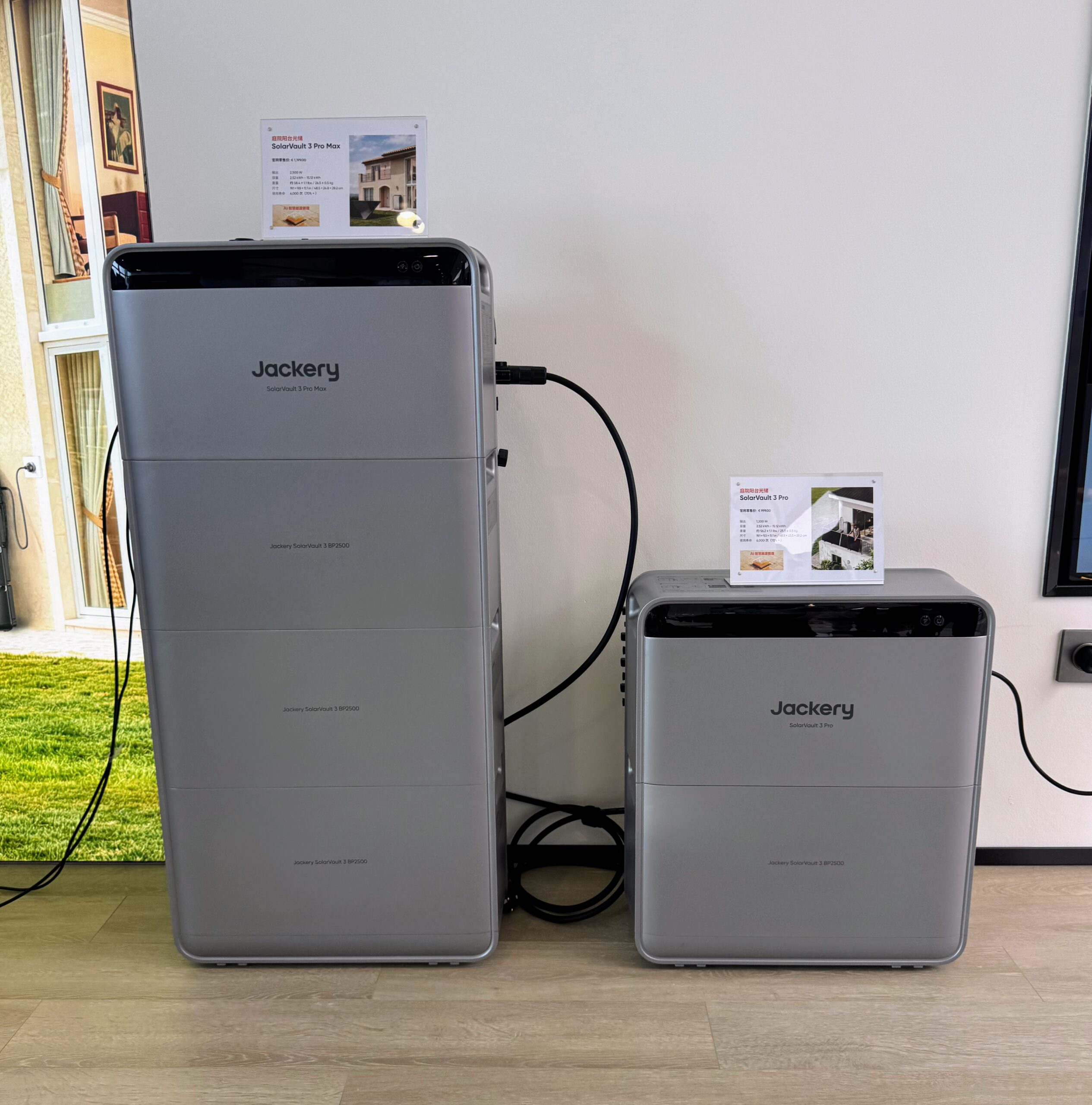
It comes in three configurations: SolarVault 3 Pro, SolarVault 3 Pro Max, and SolarVault 3 Pro Max AC. The Pro version lets you push out up to 1,200 W of grid output, while the Pro Max can handle up to 2,500 W of grid output for higher demand installations. The AC variant is designed as a retrofit unit that can be added to homes that already have solar installed. It doesn’t have built-in MPPT trackers and only pushes and pulls AC power at up to 2,500 watts.
The Pro and Pro Max both feature an integrated bypass function that lets your higher power appliances pull directly from the grid when it’s up so that you’re not going to be constrained by the output of the system. In the event of an outage, the system intelligently switches to backup mode in milliseconds, at which point you will be constrained by the output of the system. That’s typical for just about any home energy storage system, though the output ratings for each varies.
Jackery says the SolarVault 3 Pro costs 999 EUR, or $1,145 USD, and the SolarVault 3 Pro Max costs 1,199 EUR, or $1,375 USD.
Overall
Making it easy and attractive to add solar to a home is a huge win that will surely encourage more homeowners to install solar. Aesthetics were definitely a big consideration when we were deciding between traditional solar and a solar roof for our home. Eliminating the need to poke holes in a roof is also a win, but the need to install a new roof is somewhat limiting if your home already has a roof that’s in good shape.
It’s exciting to see Jackery continuing to push into new applications of solar and energy storage in the home with its Solar Roof and SolarVault product lines. The solar roof tiles are the best I’ve seen in terms of durability and aesthetics, which is saying a lot.
These clearly command a premium when it comes to price compared to traditional solar, but that’s to be expected when they also have to provide a roof.
For more information about the Jackery Solar Roof and SolarVault, head over to their website.
Sign up for CleanTechnica's Weekly Substack for Zach and Scott's in-depth analyses and high level summaries, sign up for our daily newsletter, and follow us on Google News!
Have a tip for CleanTechnica? Want to advertise? Want to suggest a guest for our CleanTech Talk podcast? Contact us here.
Sign up for our daily newsletter for 15 new cleantech stories a day. Or sign up for our weekly one on top stories of the week if daily is too frequent.


CleanTechnica uses affiliate links. See our policy here.
CleanTechnica's Comment Policy

