
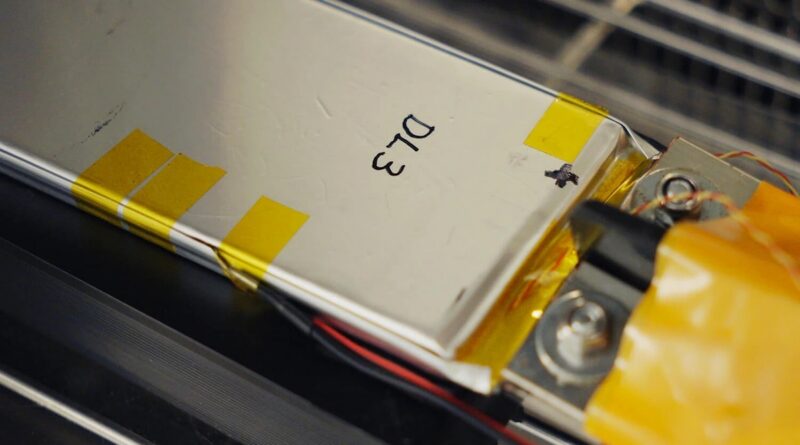
Donut Lab’s Manufacturing Is Different
Support CleanTechnica's work through a Substack subscription, on Patreon, or on Stripe. Help us produce all of the high-quality, original content we publish week after week despite the challenges of content-scraping AI, antisocial media, inflation, and other hurdles.
Donut Lab’s latest video reveals a novel manufacturing method. Speculation has swirled around the methods and sources of Donut Lab’s batteries since their introduction. We now have word from them supporting some of the sleuthing that has revealed a different manufacturing method — but first, we need to take a look at what standard battery manufacturing is like today.
Lithium-Ion Manufacturing Process
Modern lithium-ion battery manufacturing processes grew from Sony’s first lithium-cobalt batteries intended for mobile electronics. Sony had a background in magnetic tape manufacturing, a process that used acetate tape and coated magnetic particles on it using binders. This process involved assembly lines that used fine magnetic powders, often in slurries, combined with binders that stuck the powders to the tape. The tape coating thickness is controlled by blades that thin the slurry, wiping it down to a thin coating. Then the sheets are cut into strips. Sony adapted its manufacturing technology to lithium-ion batteries by using similar equipment to apply a slurry of metal oxides to metal film to construct a cathode. They used the same technique to coat an anode with graphite. Metal oxide cathodes are sensitive to water. In the assembly line, powder is mixed in slurries use volatile and toxic solvents in a gigantic sealed manufacturing room. The solvent is constantly filtered, removed, and recycled to keep emissions down.
A cathode sheet, separator, and anode sheet are layered, and then packaged in various forms — cylindrical, pouch, or prismatic. Cylindrical packaging winds the layers in a spiral, pouch stacks them, and prismatic combines both methods, folding layers like a newspaper. The entire manufacturing process must be protected from moisture, and at the same time prevent solvents from escaping while maintaining a clean room environment. To remove moisture and solvents, processes are operated under vacuum.
Then the packaged assemblies are injected with liquid organic electrolyte and are subject to a process called formation and aging over a period of weeks. Formation charges the cells and discharges them, changing the internal chemistry and forming an SEI (solid electrolyte interface) layer internally. This process takes time and uses large amounts of electricity and manufacturing space. These steps are the reason lithium battery manufacturing is done at huge scale and at high capital cost and must be near large sources of electrical power. Housing the entire manufacturing line in a sealed chamber to prevent escape of solvents creates high capital cost manufacturing. Lithium-ion battery CAM (cathode active materials) and AAM (anode active materials) are manufactured separately in their own facilities. CAM manufacturing uses calcination (high temperature processing) to create powders. Lithium carbonate is used to make the cathodes and is also used in electrolytes. The entire process is complex, requires moisture-free processing, and relies on global supply chains to produce products. This video shows some of the process steps.
The New Process
Donut Lab’s process is different. It does not rely on low-moisture processing using organic solvents. The entire process can be done in a standard environment, rather than an enclosed, controlled chamber. Manufacturing capital cost is at least an order of magnitude lower than traditional lithium-ion manufacturing. In addition, backend processing does not require filling with electrolyte and formation, another costly, time- and space-consuming process. Elimination of charging during formation also eliminates a large charging energy requirement. The manufacturing equipment can be set up in standard industrial buildings and warehouses or a former grocery store.
Donut Lab’s video did not reveal all the details, but the internet has been buzzing with speculation about CT-Coating AG, a German company that may have links to Donut Lab. This story is interesting, and revealing. It may explain why Donut Lab has been so secretive. CT-Coating’s website shows little information, and further information is only obtainable through NDA. This explains why Donut Lab has been so secretive. If they are a licensee of the process under NDA, they cannot reveal their methods and sources. Just the same, the video fits. The story goes that CT-Coating invented a process using specific materials (nanopaste) to create films on substrates using a process like printing — in this case, something like silk screening or screen printing. Note that various forms of printing are often involved with solid-state batteries. Screen printing uses a mesh to transfer ink to a substrate. A blade or squeegee is used to spread ink onto the screen in one stroke and press the mesh to the substrate on the reverse stroke momentarily along a line of contact. Layers of different colored inks may be added. The process can be automated.
While it still existed online, a web archive revealed what is going on. The manufacturing technology is based around nanopastes and screen printing. Target functions are solid-state batteries, solar modules, and lighting systems. It uses photo curing. There are no flammable electrolytes, toxic gases, hazardous waste streams, or water contamination, or significant dependency on critical raw materials.
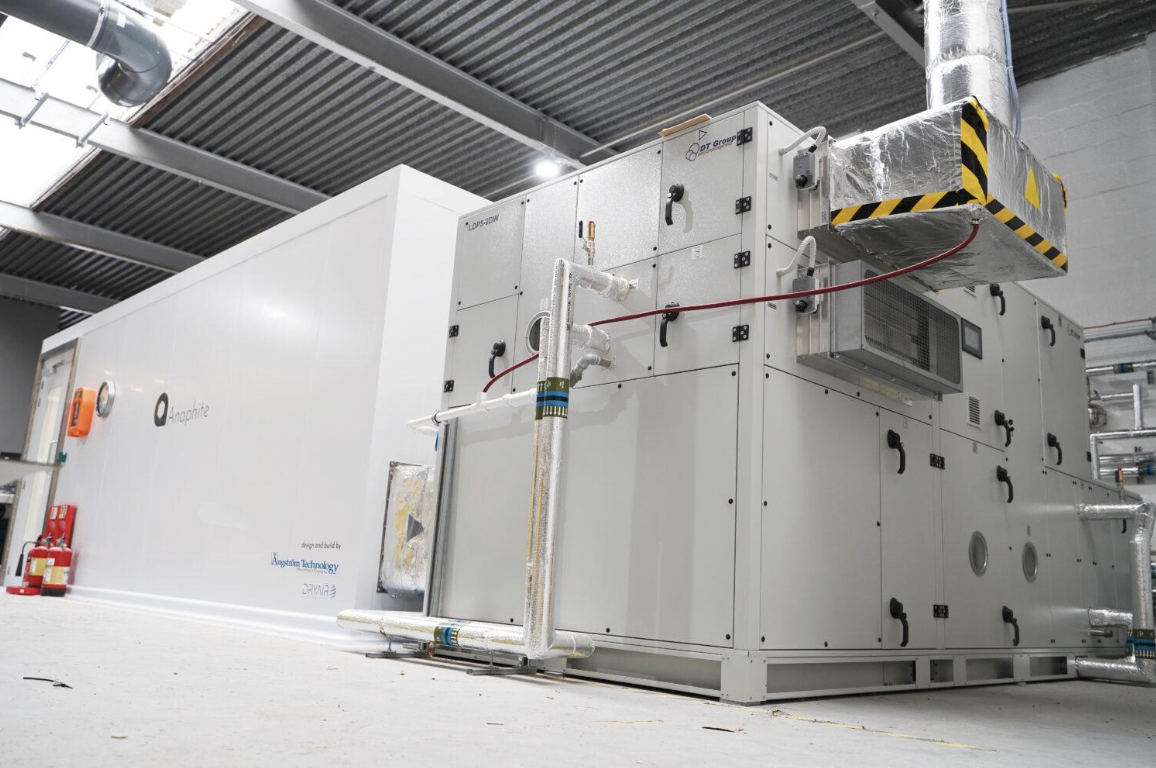
Several companies may have licensed CT-Coating’s technology, among them Donut Lab, Sana, and Holyvolt. In addition, Lambotec may make printers compatible with CT-Coating’s materials. Lambotec’s UV printing may be compatible with CT-Coating nanopaste photo curing. A picture of Lambotec’s printer contrasts the size of that printer compared to the size of a standard lithium-ion manufacturing line. Multiple printers could be used in a single building. You can get a peek at the size of the cell formation and charging racks here. The Lambotec printer takes the place of mixing, drying, rolling, and other functions. The cutting, slitting, and packaging is required for both. Between eliminating the clean rooms, mixing, slurry, and drying, space and cost are greatly reduced.


Implications
The pieces of the puzzle are starting to fit together. Donut Lab did not come up with a radical, new manufacturing method and coating materials on its own. CT-Coating AG has been around for many years developing its technology for diverse applications, including solar cells. It is a unique coating technology that dispenses with critical and toxic materials and significantly lowers cost and complexity. The approach and claims match Donut Lab’s claims of material availability and low toxicity. The much reduced space requirements and capital cost explains why no one can find the gigafactory they are looking for. This process does not require a gigafactory to create a GWh of energy storage. A normal gigafactory would be impossible to hide.
The evidence increasingly points to the validity of information that points to CT-Coating’s licensing to a number of manufacturers, including HolyVolt, Sana, and Donut Lab, all under NDA to CT-Coating AG, the primary intellectual property owner of the manufacturing process. In addition, CT-Coating AG provides the nanopaste materials used to create products. It creates a unique situation different from standard lithium-ion battery processing and one unfamiliar to those in that business. The process is definitely based on solid-state materials, which can be jells that form a clay-like substance. The process is fast and flexible and capable of multi-layering. All this explains both the secrecy and lack of transparency and patents. A large amount of the intellectual property and development sits outside of the end product developers.
The existing performance results are impressive, but full validation of some claims is not yet available, in particular energy density, life cycles, and low-temperature energy retention and performance. Nonetheless, if this process technology can be implemented, it can significantly reduce capital cost, improve scaling, and improve other factors. In my opinion, the latest video revelation is far more significant than the others. It paints a picture of how manufacturing scaling could work, and why skeptics were unable to find a manufacturing source.
Conclusion
Internet sleuths have discovered the connections between Donut Lab, Holyvolt, and Sana Energy and CT-Coatings AG and Lambotec. Holyvolt and Sana make claims similar to Donut Lab, supporting the idea that the technology and manufacturing originates from CT-Coating AG. Now that Donut Lab has revealed the manufacturing characteristics match other companies associated, the fog of mystery surrounding manufacturing is starting to lift. The implications for legacy battery manufacturers is significant. If this manufacturing method works, the vastly lower capital costs and development efforts will profoundly affect legacy manufacturing. It is beginning to look like the manufacturing innovations may be equally as significant as the energy storage innovations.
Sign up for CleanTechnica's Weekly Substack for Zach and Scott's in-depth analyses and high level summaries, sign up for our daily newsletter, and follow us on Google News!
Have a tip for CleanTechnica? Want to advertise? Want to suggest a guest for our CleanTech Talk podcast? Contact us here.
Sign up for our daily newsletter for 15 new cleantech stories a day. Or sign up for our weekly one on top stories of the week if daily is too frequent.


CleanTechnica uses affiliate links. See our policy here.
CleanTechnica's Comment Policy

