
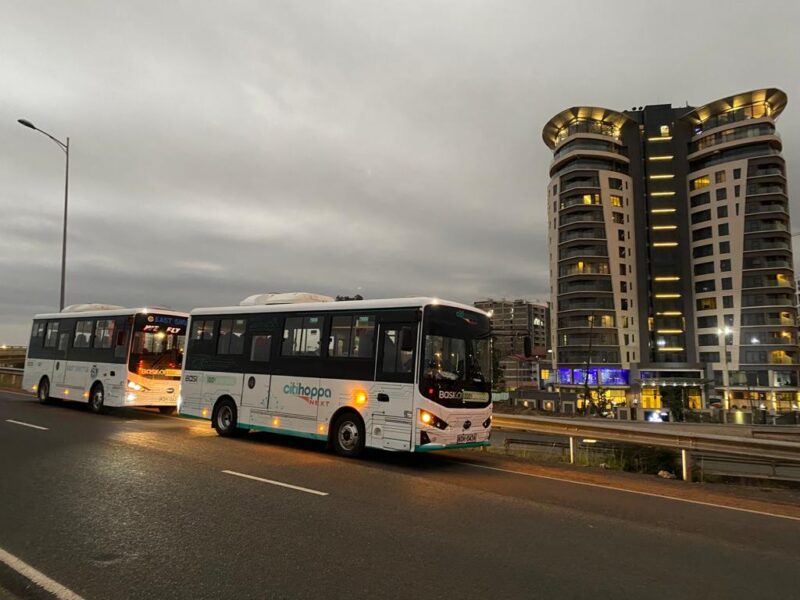
When Oil Shocks Hit Home: Why Africa’s Buses Must Go Electric
Support CleanTechnica's work through a Substack subscription, on Patreon, or on Stripe. Help us produce all of the high-quality, original content we publish week after week despite the challenges of content-scraping AI, antisocial media, inflation, and other hurdles.
 By Wanjiru Kamotho-Mureithi
The recent instability in the Gulf region has reminded African countries and the world of a familiar yet painful vulnerability; oil-dependent economies face recurring crises they cannot control.
Kenya offers a clear illustration of this dynamic. Nearly all the country’s fuel is imported, with the nation spending approximately $5 billion annually, making it one of the largest uses of the country’s foreign exchange reserves. This dependence creates sustained pressure on the shilling and leaves the economy highly exposed to global oil price volatility.
When geopolitical tensions disrupt shipping routes, fuel prices spike within days. In Nairobi, where buses are the primary mode of transport, and millions rely on them daily, fares increase, the cost of living goes up, and household budgets come under pressure.
What makes this moment different from previous years is that African cities now have a viable alternative. While the continent gained political independence decades ago, it remains economically dependent. The transition to electric mobility, therefore, is not just a technological shift; it strengthens economic resilience and security. With the technology available, and the economics increasingly proven, the question is no longer whether this transition is possible, but how quickly it can be achieved.
Public transport, and buses in particular, sit at the heart of urban mobility. Roughly 40% of urban journeys in African cities are made by buses, powered almost entirely by diesel.
This ties global markets to everyday life. When fuel prices rise sharply, as they have, bus operators face an impossible choice: absorb the cost and erode already thin margins, or raise fares.
In practice, fares almost always rise. Across East Africa, diesel prices have increased by as much as 80% in recent years. For operators, absorbing these shocks would run down their businesses. However, passing them on pushes transport further out of reach for many commuters.
For governments, the pressure is equally severe. Fuel imports drain foreign exchange reserves. The cost of everything that relies on transport — food, medicine, and manufacturing inputs — rises as well. This is not a temporary disruption. It points to a deeper structural vulnerability, rooted in overreliance on imports.
Kenya illustrates that the transition to e-mobility is achievable. Over 90% of the country’s electricity comes from renewable sources, including geothermal, hydropower, and wind. The country produces more than 800 GWh of surplus geothermal energy, much of which goes underutilized during off-peak periods when system demand is low. Electric mobility presents a practical opportunity to absorb this excess clean energy to productive economic use.
Electric buses are becoming critical to operating stable businesses. Models such as Pay-As-You-Drive replace large upfront investment with predictable, usage-based costs that match daily operations. Even before recent price hikes, electric buses were becoming increasingly competitive. Fuel volatility has further highlighted the value of transport systems less exposed to external shocks.
Currently, electric buses make up less than 1% of Nairobi’s fleet, limiting their impact. At 20–30% of the fleet, however, they would fundamentally change how operators respond to fuel shocks, reducing the need to pass costs on to the commuters.
Beyond economics, electric buses address a critical environmental and climate issue. The transport industry in Africa is a significant contributor to air pollution, accelerating the climate change crisis. Electric buses, on the other hand, produce zero tailpipe emissions, offering a direct path to reducing carbon emissions. This makes electric buses a practical option to eliminate carbon emissions from urban transport.
While Africa’s energy debate has focused on increasing power generation capacity, the more urgent question now is how to use that power to drive economic independence. Transport is one of the continent’s largest consumers of energy and among the most exposed to external shocks. Electrifying it unlocks multiple benefits.
The most reliable path to energy security for Africa does not lie in finding new fuel sources but in reducing dependence on it altogether. As long as transport relies on imported fuel, exposure to global shocks will remain. Africa cannot control global oil prices, but it can control how it powers transport systems and better shield its people from volatility.
Sign up for CleanTechnica's Weekly Substack for Zach and Scott's in-depth analyses and high level summaries, sign up for our daily newsletter, and follow us on Google News!
Have a tip for CleanTechnica? Want to advertise? Want to suggest a guest for our CleanTech Talk podcast? Contact us here.
Sign up for our daily newsletter for 15 new cleantech stories a day. Or sign up for our weekly one on top stories of the week if daily is too frequent.


CleanTechnica uses affiliate links. See our policy here.
CleanTechnica's Comment Policy

