
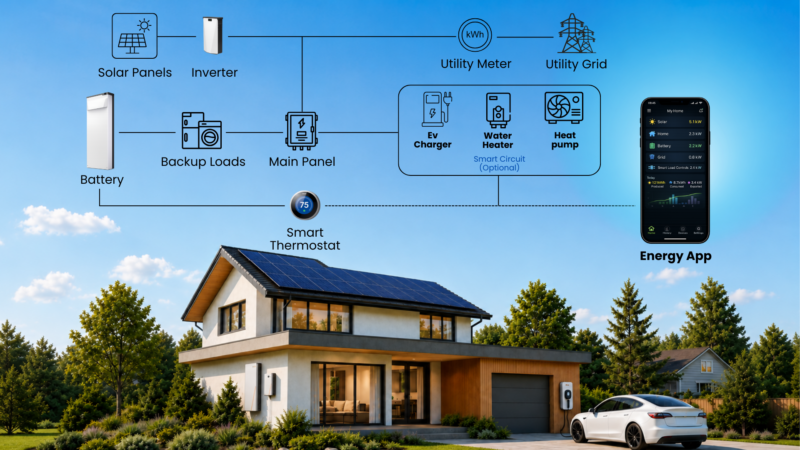
The Future of Home Energy Is an Intelligent Ecosystem
Support CleanTechnica's work through a Substack subscription, on Patreon, or on Stripe. Help us produce all of the high-quality, original content we publish week after week despite the challenges of content-scraping AI, antisocial media, inflation, and other hurdles.
Home energy is moving beyond individual upgrades toward one intelligent, connected system.
Homes are using more electricity than they did a decade ago. EVs charge in the driveway. Heat pumps are replacing traditional heating and cooling systems. Induction ranges, home offices, smart thermostats, connected appliances, solar panels, batteries, and energy apps are reshaping how electricity is used at home.
That coordination is what turns separate upgrades into a real home energy strategy. Solar generates power, batteries store it, and smart controls decide which loads get priority. The value is not in the equipment alone. It comes from planning the system around the home, the homeowner’s priorities, and the way electricity is managed.
For homeowners, the opportunity is tangible. A well-designed energy ecosystem can use more solar power on-site, protect the circuits that matter most, extend battery runtime, manage large electric loads, and prepare for a future where rates and grid conditions keep changing. The best place to begin is not with a product list, but with the question of what the home needs to do.
The Building Blocks of a Home Energy Ecosystem
For some, the priority is lowering monthly bills. For others, it is keeping the refrigerator, internet, lights, heat, medical equipment, or a well pump running during an outage. Some households want to store solar for evening use or prepare for time-of-use rates, EV charging, and future electrification. Solar-plus-storage can help homes use power beyond the hours when the sun is shining, but the design still has to start with the home’s actual priorities.
Once the goals are clear, the building blocks fall into place. Solar generates power. The battery stores it. Smart controls decide which loads stay on, which can wait, and how stored energy should be used when power is limited. A generator may add another layer of backup in some homes, but it should be part of the plan from the beginning.
Large electric loads need special attention. Heat pumps, electric water heaters, induction ranges, dryers, and EV chargers can use stored power quickly. During an outage, EV charging and dryers are usually not priorities unless the home energy plan has been designed specifically to support them. Most households get more value by protecting the loads that keep the home safe, comfortable, and functional. Backup performance depends heavily on energy use, weather, the home’s efficiency, and whether the system is supporting critical loads or the whole home.
A good energy plan comes down to clear decisions: what must stay on, what can wait, how long backup power should realistically last, and which large loads should be managed automatically. Once those answers are in place, the right mix of solar, storage, controls, comfort systems, EV charging, and backup power becomes much easier to design.
The Software Layer Is Where the System Comes Together
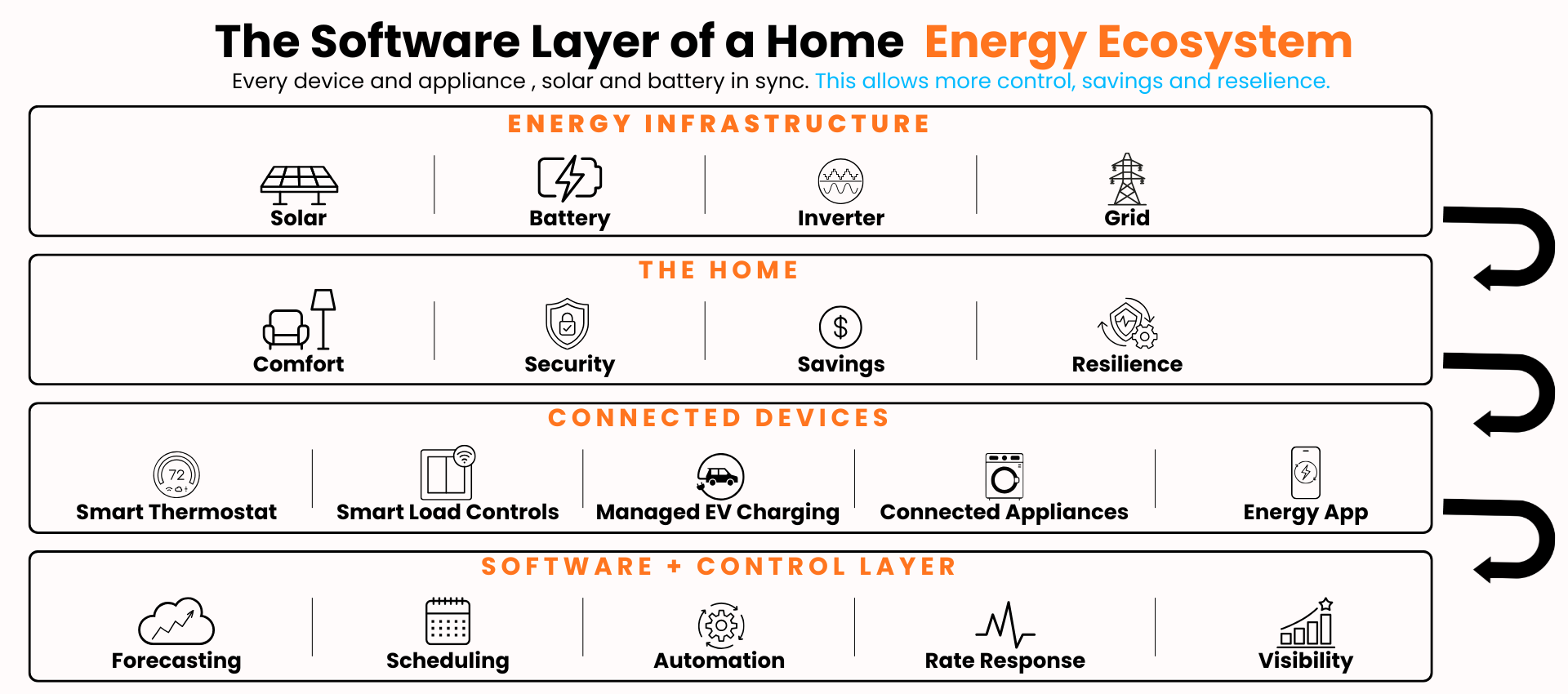
Once the major equipment is in place, the next question is how well the pieces communicate. A battery, inverter, EV charger, smart thermostat, connected appliances, load controls, and an energy app all have separate jobs. The system becomes more useful when they can share information and respond as part of the same home energy plan.
Smart thermostats are one of the clearest everyday examples of software-driven energy control inside the home. An advanced thermostat can respond to occupancy, weather, comfort settings, and time-of-use rates. Ecobee, for example, offers features that can preheat or precool a home when electricity is less expensive, then adjust heating or cooling when rates are higher.
That same idea applies across the larger home energy plan. Battery and inverter controls can decide when to charge, when to discharge, and how much stored energy to reserve for backup. Load controls can limit or pause high-demand circuits such as EV charging, dryers, or water heating when battery power is limited. An energy app can give homeowners visibility without requiring them to manage every decision hour by hour.
This is where the home starts to feel more intelligent without becoming more complicated. The value is not a single device on the wall. It is the software layer that helps solar, storage, comfort systems, and major loads work together without adding another layer of daily management.
Energy Optionality Is the New Home Advantage
The real payoff of an integrated system is optionality as rates, outages, and household loads keep changing. A homeowner with solar, battery backup, storage, smart controls, and connected loads has more room to maneuver when conditions shift. If rates go up, the home is able to use stored energy at a better time. If the power goes out, the home energy plan can protect the circuits that matter most. If the household later adds an EV, heat pump, or electric water heater, the energy plan does not have to start from zero.
This goes well beyond backup power. It gives the homeowner choices. Use solar now or store it for later. Preserve battery capacity or draw from it when rates are higher. Let the heat pump run normally or allow controls to make small adjustments when power is limited. The National Renewable Energy Laboratory’s (NREL) work on home energy management software points in this same direction: software that coordinates connected appliances, home batteries, and rooftop solar around homeowner preferences while helping improve comfort, convenience, cost, and other whole-home outcomes.⁴
For the homeowner, the benefit is not having to track every price signal, weather forecast, or utility program manually. The control layer needs enough visibility to act in line with the household’s priorities. That kind of optionality will matter more as homes become more electric and utility programs become more dynamic.
What Comes Next
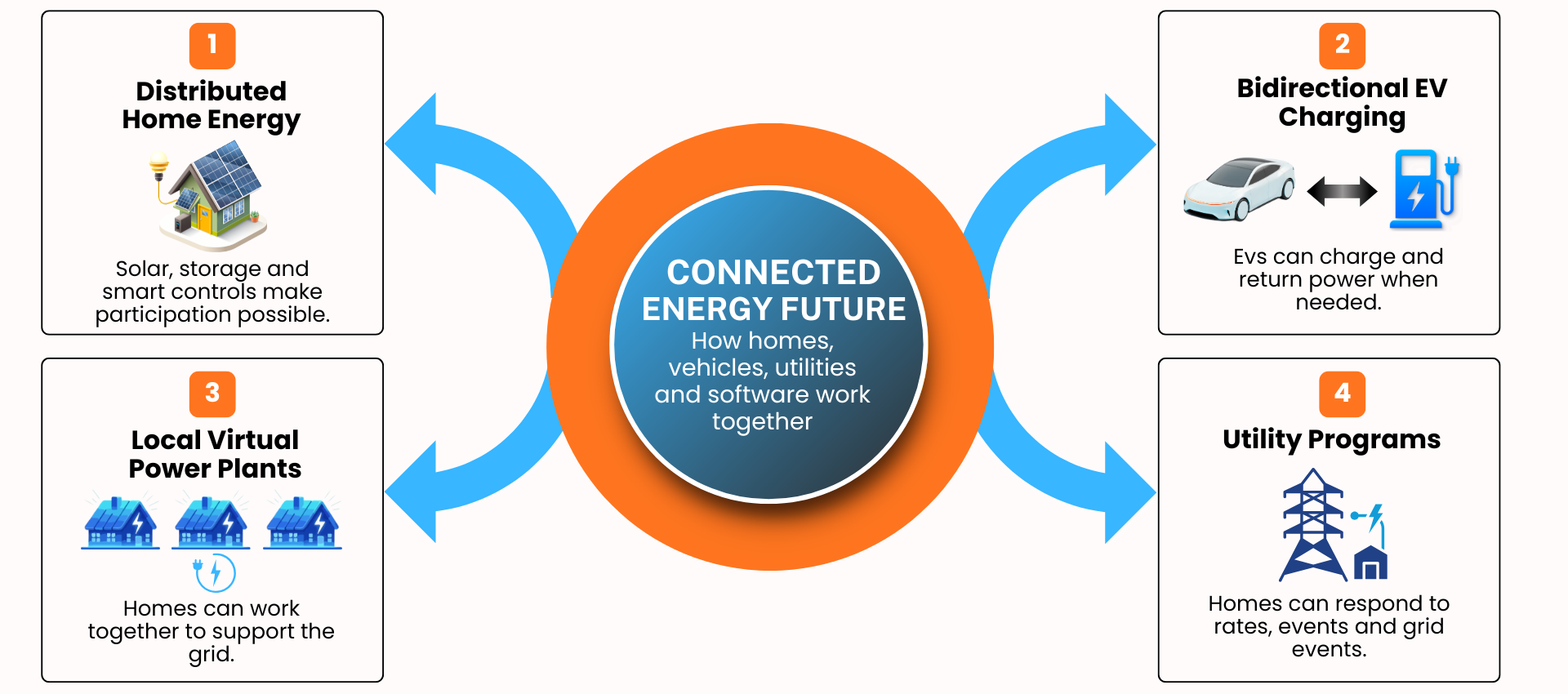
The next step is already taking shape in bidirectional EV charging, neighborhood-scale virtual power plants, and utility programs that reward homes for shifting energy use at the right times. The U.S. Department of Energy describes virtual power plants as a near-term solution supported by growing adoption of distributed energy resources, improvements in device software, VPP platforms, and grid integration software. Not every homeowner will use these tools immediately, and not every home will need them. But the homes best positioned to benefit will be the ones designed today with solar, storage, load control, and connected software already working together.
That is the real opportunity. An integrated ecosystem is not only about solving today’s outage or rate problem. It also prepares the home to act as an intelligent part of a future grid where electricity is not just consumed, but stored, managed, shared, and timed with far more precision.
Randy Sprout, Chief Operating Officer, brings 35 years of executive and engineering leadership. With degrees from Cornell and an MBA from Harvard, he has led global teams across technology and energy sectors. Randy led Clean Energy Innovators to Generac’s Clean Energy Project of the Year, reflecting his commitment to innovation and performance.
*This article was sponsored by Clean Energy Innovators.
Sign up for CleanTechnica's Weekly Substack for Zach and Scott's in-depth analyses and high level summaries, sign up for our daily newsletter, and follow us on Google News!
Have a tip for CleanTechnica? Want to advertise? Want to suggest a guest for our CleanTech Talk podcast? Contact us here.
Sign up for our daily newsletter for 15 new cleantech stories a day. Or sign up for our weekly one on top stories of the week if daily is too frequent.


CleanTechnica uses affiliate links. See our policy here.
CleanTechnica's Comment Policy

