
200 White-Hot “Toaster Ovens” To Expand the US Wind Power Profile
Support CleanTechnica's work through a Substack subscription, on Patreon, or on Stripe. Help us produce all of the high-quality, original content we publish week after week despite the challenges of content-scraping AI, antisocial media, inflation, and other hurdles.
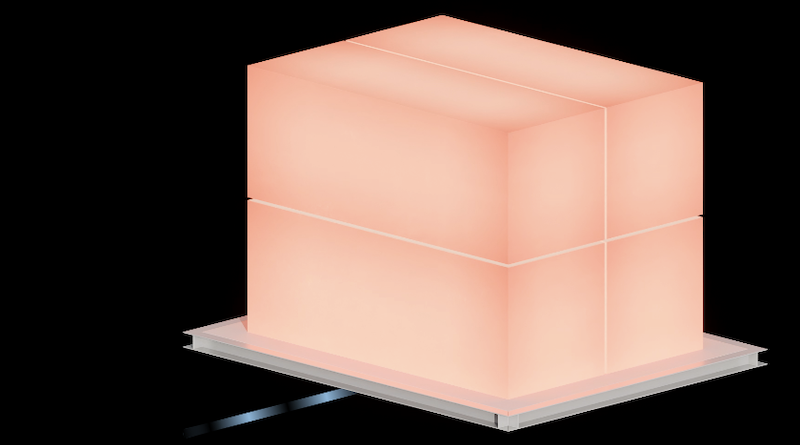
The US wind industry has been fighting an uphill battle against the sharp U-turn in federal energy policy, but wind power keeps on insisting upon itself. The latest development involves one of the largest energy storage projects in the world, a new 5 gigawatt-hour behemoth taking shape in South Dakota that deploys more than 200 blocks of solid carbon in a system that has been compared to a giant toaster oven.
Readers please note the following clarification: The POET project deploys direct heat from the Antora Energy system. The company’s technology also includes thermophotovoltaic cells, but that is not part of the POET project. In addition to wind power, the system is also compatible with solar power.
Beating The Wind Power Curtailment Problem
The new energy storage project was commissioned by the leading biofuel firm POET to reduce the cost of natural gas consumed by its Big Stone City ethanol plant in North Dakota. Once fully up and running, it will suck excess, low-cost wind power out of wind turbines during off-peak hours, when the turbines would otherwise be curtailed due to low demand, and deploy it for use at the POET facility.
The firm behind the storage system is Antora Energy, a California-based startup that has developed specialized carbon blocks to store excess energy from wind or solar farms. They heat up and glow with light when charged with electricity, and they are dual-purpose. Where conventional batteries only discharge electricity, the Antora system can discharge electricity or produce high heat to to run industrial process, whichever is needed.
The electricity end of the equation is handled by thermophotovoltaic cells. Similar to photovoltaic cells (aka solar cells), thermophotovoltaic cells capture and convert light. However, they primarily capture the infrared light emitted by superheated objects when they glow, with the emitter typically consisting of a tungsten filament. The effect is somewhat similar to a toaster or toaster oven.
“Antora Energy turns intermittent renewable electricity into a low-cost, reliable, on-demand source of zero-carbon heat and power,” the company explains. “To do this, we start by heating up a ‘thermal battery’ to glowing-hot temperatures so they emit a beam of light with 500 times the intensity of sunlight.”
“This light can be used to provide high-temperature heat to industrial processes, or it can be converted back into electricity using Antora’s thermophotovoltaic (TPV) cells,” Antora elaborates.
What Is This TPV Of Which You Speak?
TPV cells were invented in the 1960’s, just a few years after after Bell Labs introduced the first practical silicon solar cell in 1954. Silicon solar cells eventually went on to achieve widespread commercial application, but TPV cells languished in the shadows due to their high costs relative to their efficiency.
Researchers anticipated that TPV cells could reach 50% efficiency, but it lodged at 29% in the 1980’s. Further efforts in the 1990’s included the US Navy, attracted by the maintenance-free nature of the technology and its compatibility with nuclear-powered submarines. However, the best effort remained stuck at 32%.
Antora is on a mission to make the thermophotovoltaic wallflower blossom. The company spun out of research at MIT and it soon caught the eye of the US Department of Energy. In 2018 Antora won a slot in the new Shell GameChanger Accelerator, a transformative energy technology incubator in partnership with the former National Renewable Energy Laboratory (now the National Laboratory of the Rockies). In 2019, the Energy Department’s ARPA-E office for high risk, high reward energy projects provided an award of $7.9 million for further development.
All that hard work paid off. In 2022 Antora reported a conversion efficiency of 40%. “Since the first demonstration of 29% efficient TPVs using an integrated back surface reflector and a tungsten emitter at 2,000 °C, TPV fabrication and performance have improved,” the researchers explained in the journal Nature.
“However, despite predictions that TPV efficiencies can exceed 50%, the demonstrated efficiencies are still only as high as 32%, albeit at much lower temperatures below 1,300 °C,” they continued. In contrast, Antora reported that its new TPV cells were optimized at much higher temperatures, in the range of 1,900–2,400 °C.
“These cells can be integrated into a TPV system for thermal energy grid storage to enable dispatchable renewable energy,” the researchers concluded, referring to the conversion of intermittent renewables — namely, wind power and solar power — into a storage system that can deliver electricity (or heat) on demand, regardless of the weather, season, or time of day.
Next Steps To The Decarbonized Grid Of The Future
In addition to improving the conversion efficiency of TPV cells, Antora also applied itself to optimizing the manufacturing process. By the earlier part of 2025 the company’s pilot manufacturing facility in Sunnyvale, California was producing TPV cells, and it was building a full scale, commercial-level plant in San Jose with an assist from the advanced manufacturing software firm Manufacturo.
“Antora’s factory-made thermal batteries consist of not only a storage medium — carbon blocks — but also insulation, enclosures, charging and discharging equipment, and other components that comprise an integrated module,” the company explained.
“These thermal batteries will leave the facility ready to be road-shipped and installed at industrial sites across the country, providing a drop-in decarbonization solution that directly displaces on-site fossil fuel use,” they added.
More Wind Power For The USA
The hookup with POET was also in the works by the end of last year, and the project serves as a demonstration of Antora’s ability to develop a utility-scale energy storage system swiftly. The storage system at Big Stone was built in less than 12 months. It is coming online in stages, with partial power delivered to the plant as of this writing, and full power expected by October.
“They’re taking excess wind energy that doesn’t have a home on the grid and otherwise would be wasted, and they’re capturing that,” POET president and COO Jeff Lautt told South Dakota News Watch in a recent interview.
“Nobody’s got a switch for the wind, so it blows when it wants to blow, yet there’s a steady demand for power that has to be met, and this system will provide for that,” Lautt added.
The curtailment issue is not simply one of wasted energy. Wind turbine owners lose revenue when their turbines are curtailed due to low demand. Shunting some of that excess wind power into energy storage systems helps to squeeze more economic value from existing wind farms. It also enables wind to continue contributing more electricity to the nation’s grid, despite the Trump administration’s increasingly extreme efforts to stop growth altogether.
Another approach to the curtailment issue is to pair wind power with 24/7 industrial operations that can use the electricity from wind turbines without necessarily including a storage element. For an interesting take on that strategy, check out the Texas startup TalusAg. The company has developed an all-electric green ammonia production system that can run on excess energy from wind or solar farms.
As for the current state of federal energy policy, the consulting firm Wood Mackenzie is among those anticipating that wind power will continue to grow. “Right now, the US generates around 12% of its electricity from wind. It is the country’s fourth-largest source of electricity,” the firm explains.
“While current sentiment remains cautious, wind is not in its final chapter,” they emphasize. You can say that again. After all, the wind will continue to blow long after Trump leaves office as scheduled on January 20, 2029 — peacefully this time, one hopes.
Photo: More than 200 carbon blocks will store wind power, to replace the natural gas used by an ethanol plant in South Dakota (cropped, courtesy of Antora).
Sign up for CleanTechnica's Weekly Substack for Zach and Scott's in-depth analyses and high level summaries, sign up for our daily newsletter, and follow us on Google News!
Have a tip for CleanTechnica? Want to advertise? Want to suggest a guest for our CleanTech Talk podcast? Contact us here.
Sign up for our daily newsletter for 10–15 new cleantech stories a day. Or sign up for our weekly one on top stories of the week if daily is too frequent.


CleanTechnica uses affiliate links. See our policy here.
CleanTechnica's Comment Policy

