
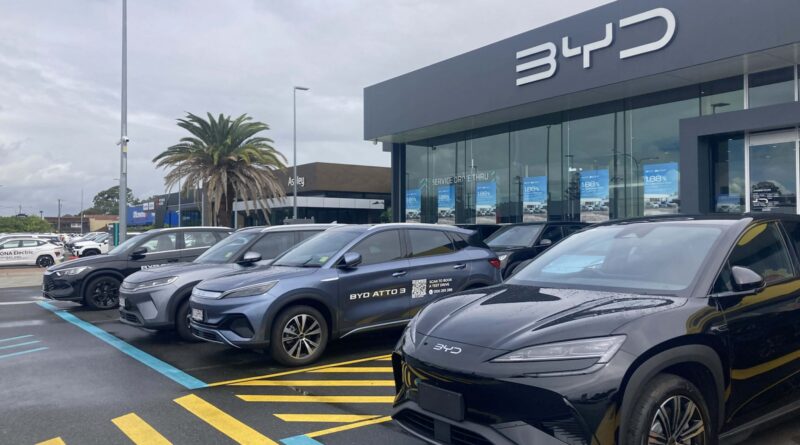
EV Penetration Continues to Grow Down Under — April Update
Support CleanTechnica's work through a Substack subscription, on Patreon, or on Stripe. Help us produce all of the high-quality, original content we publish week after week despite the challenges of content-scraping AI, antisocial media, inflation, and other hurdles.
In April 2026, 25,087 plugin vehicles were sold into the Australian market, out of 94,049 total vehicle sales. This represents almost 27% of the market. Battery electric vehicles achieved 15,459 units sold, and plugin hybrids 9,628. Month on month, BEV numbers appear to have stayed steady, while PHEVs have increased. Sealed hybrids are still growing (6%) in popularity. The overall market is down. The months of May and June should bring higher numbers of BEVs and PHEVs ordered at the start of the US war on Iran. These vehicles have not got off the RORO from China yet!
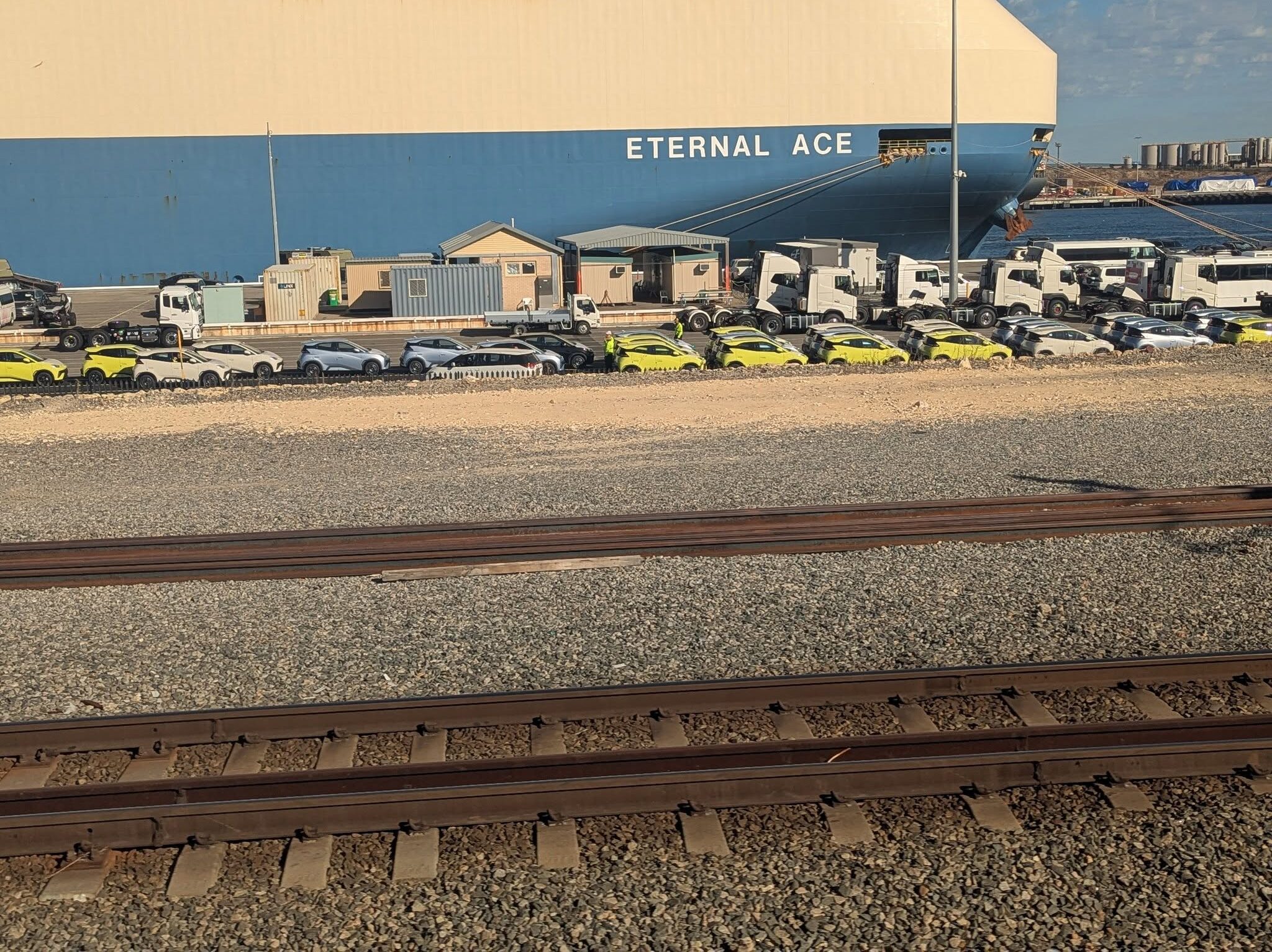
What is becoming clear is the identities of vehicles that are not selling in Australia. The buying public is turning its back on diesel (down almost 21.7% year on year) and petrol (down 30% year on year). It is even making the morning news! Taking the grandchildren to school, we heard it on the radio: There has been a sharp decline in diesel ute sales. The Toyota RAV4 hybrid is the highest selling car, and Toyota the highest selling auto brand, but BYD is just behind Toyota at #2.
This year is showing steady progress in electric vehicle penetration of the Australian market. CleanTechnica has reported the plugin-vehicle penetration in Australia for January — 16%, February — 19%, and March — 23%. Now we see that April reached 27%. Has Australia started its ascent up the S-curve of new technology adoption? It won’t take long to find out.
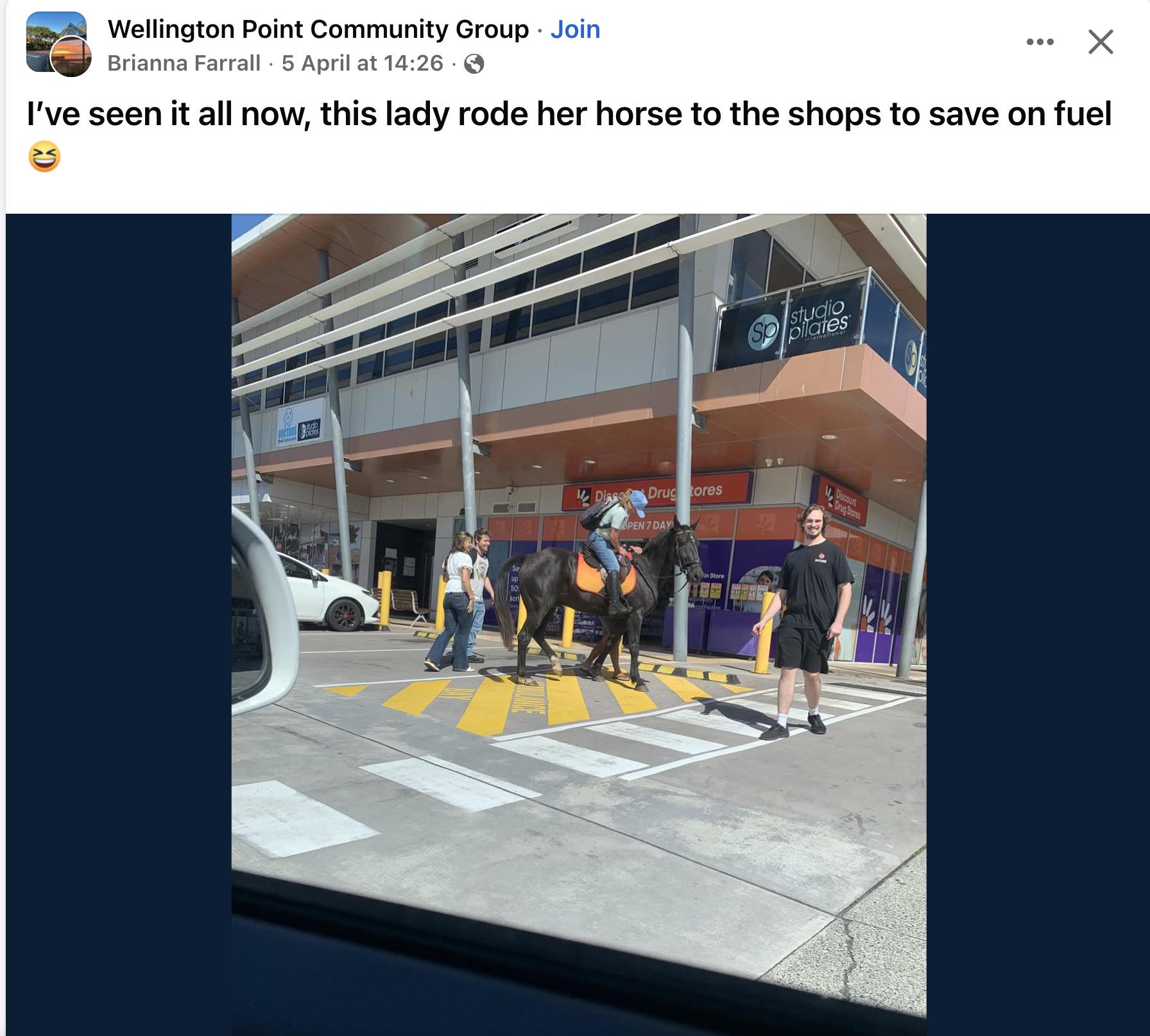
At the height of the fuel panic, while some were queuing at servos to keep their tanks full, others went back in time and took the horse shopping! “This lady came to our pharmacy with a horse to save fuel costs,” my friend Lawrence reported on Facebook. As petrol hits $2.50 a litre, “Australians are saying ‘Hold my horse!’” One person commented: “we should go back to the old days of horses and steam trains.”
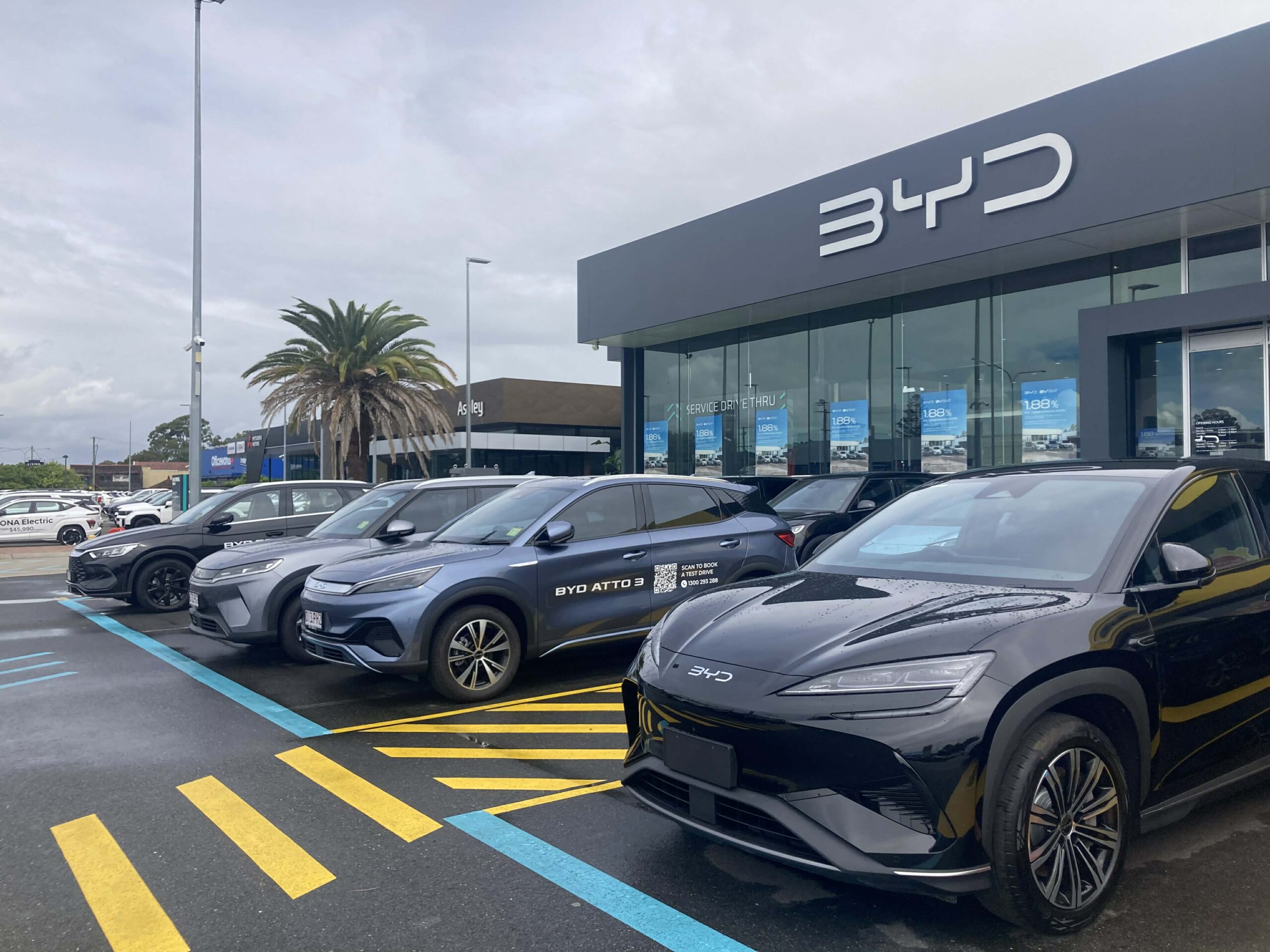
The 10 top selling BEVs in Australia for April 2026 were:
- BYD Sealion 7 — 1,780 sales | year to date 6,248
- Geely EX 5 — 1,202 | 2,639
- Zeekr 7X — 973 | 2,698
- Tesla Model Y — 822 | 6,719
- Kia EV5 — 794 | 1,942
- Jaecoo J5 — 692 | 1,845
- BYD Atto 3 — 664 | 1,748
- BYD Atto 2 — 660 | 2,141
- BYD Atto 1 — 533 | 1,615
- MG 4 — 522 | 1,538
- Toyota BZ4X — 483 | 1,323
- BYD Dolphin — 445 | 1,350
- Kia EV3 — 445 | 1,306
- MG S5 — 408 | 1,173
- Tesla Model 3 — 403 | 1,766

I know I said top ten, but I just had to keep going to until we found the Tesla Model 3! What a difference the beginning of the quarter looks like. More ships full of Teslas will arrive from China soon, but there will not be enough, I expect, to overtake BYD’s numerical superiority. I remember attending the launch of the Atto 3 four years ago — who would have thought that BYD would overtake Tesla so quickly? For the nostalgia buffs, here is the article.
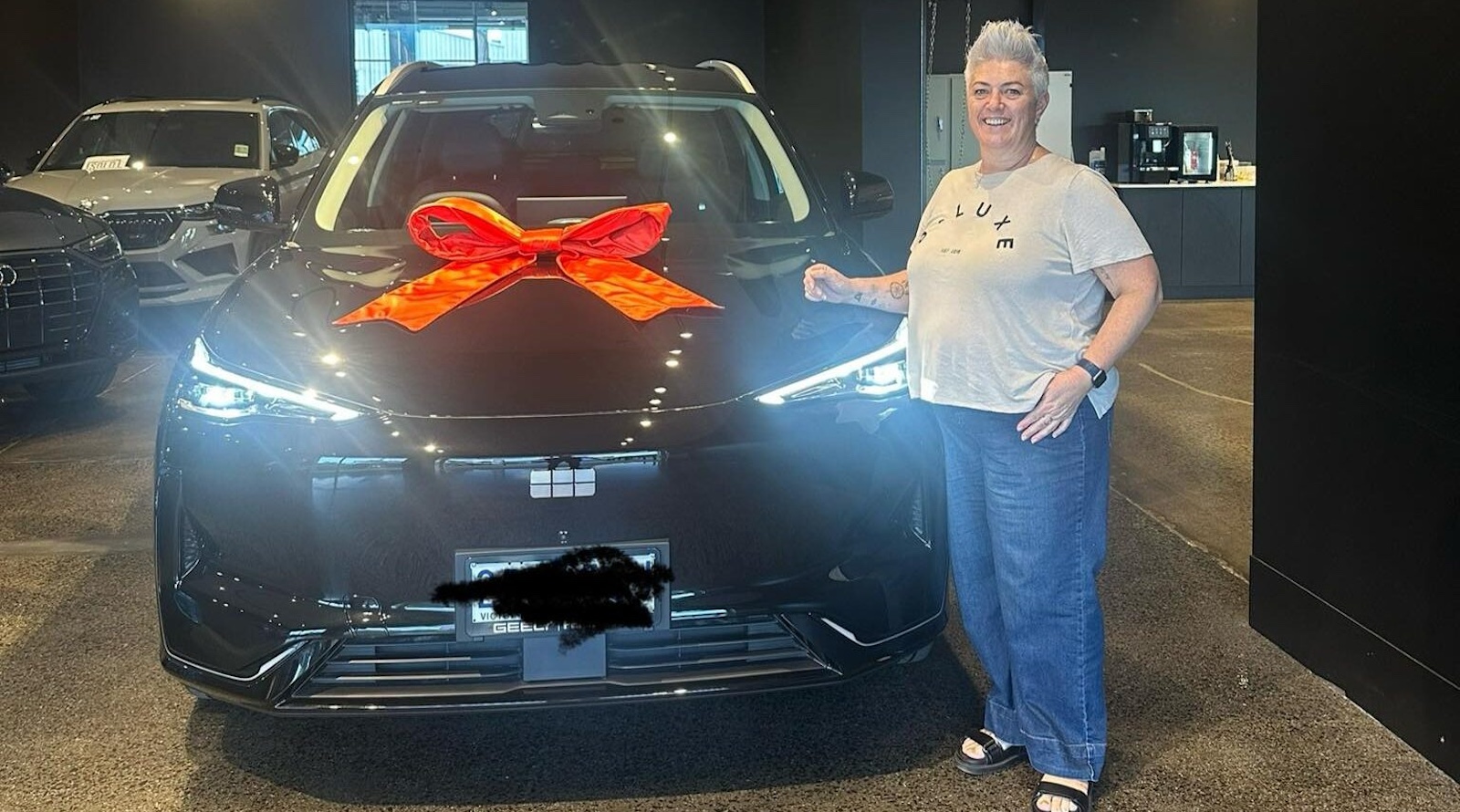
The Geely EX5 as the #2 EV delivered more vehicles than the Toyota Corolla Cross. Zeekr made it to #3 by delivering almost 1,000 cars, its highest delivery total yet.
Getting back to the top 15 EVs, who is missing? Only one Japanese brand! If we cheated and added the 175 Subaru Solterras sold, we could move Toyota up into the top 10. One south Korean brand, no European brands, no GM, no Fords. To put it in market context, the Toyota RAV4 sold 3,729 units, the Ford Ranger — 3,661, and the Toyota HiLux — 2,835. The BYD Sealion was placed #8. It is the first full month of sales of the refreshed Toyota RAV4.
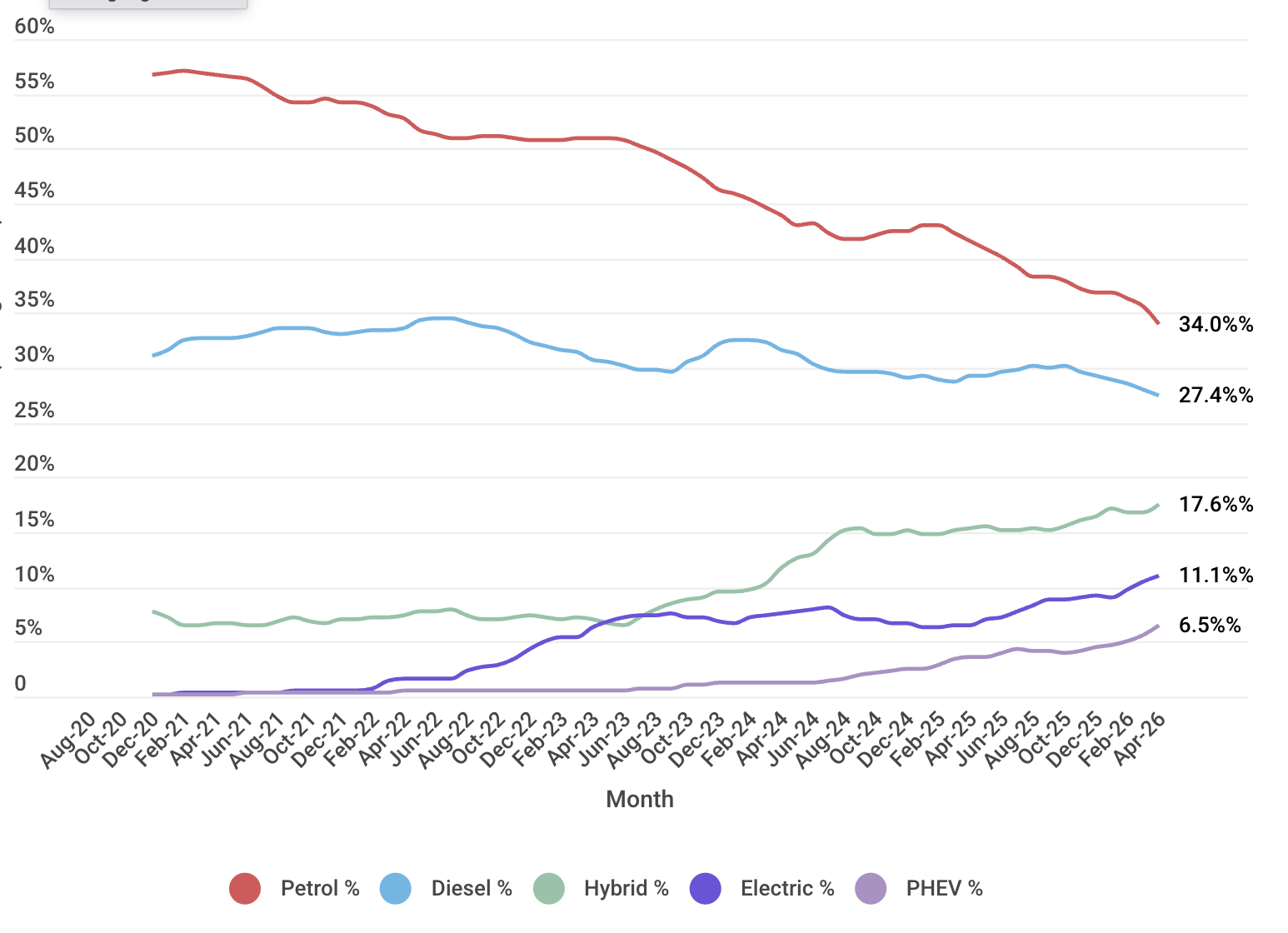
Charts on Drive show (over six years) the decline of petrol only powered cars from a peak of 57% to a current low of 34%; diesel seems to be holding steady around 30%; hybrids have risen from 8% to 18%; BEVs have gone from nothing to 11%; and PHEVs have gone from nothing to 6%. All this in the past six years.
“The increase in supply of EVs since the introduction of the New Vehicle Efficiency Standard, combined with higher petrol prices and the continued support provided through the Federal Government’s Electric Car Discount, is now translating into stronger demand,” said Federal Chamber of Automotive Industries (FCAI) chief executive Tony Weber.
He added that the Electric Car Discount, which the government confirmed this week will be extended into 2027, will continue to sustain EV sales momentum in Australia.
“There are around 110 EV models available to Australians, and the supply of EVs continues to increase. The Electric Car Discount has provided important stimulus to the market, and its continuation will support the growth of EVs,” Mr Weber said.
Since PHEVs make up at least a third of plugin vehicle sales, let’s spend a bit of ink on them. As expected, the many BYD PHEV models lead the market with over 3,000 sales, comprised mainly of the Shark 6 dual-cab ute and Sealion 8. The Sealion 5 & 6 also provide affordable options. BYD’s PHEV lineup continues to expand with the Seal 6 Tourer. Other notable models sold include the GWM Tank 300 Hi4 T off-roader, the aging Mitsubishi Outlander, the Chery Tiggo 7 Super Hybrid, and the Canon Alpha, also from Great Wall.
To help cash-strapped Australian motorists, a car enthusiast has created a chart to show how far can you travel on $1 worth of either petrol or electricity. The issue is, though, while petrol prices are reasonably consistent across the country, depending on where you charge, there is a wide variety of electricity costs. I, for example, can charge for nothing from my solar most days. Various electricity retailers also have plans for charging at reduced cost depending on the time of day. The website authors include this helpful explanatory note: on the right plan, an EV could travel 160 km per $AU 1, 25 times the distance of a petrol-powered car.
Thanks to a reduction (26 cents per litre) in the Australian federal government excise on petrol, the cost of petrol is now back to where it was before the latest Middle East oil war. Diesel prices are still high. (Yay, more interest in electric trucks!) The horses can have a bit of a rest and Aussies can look forward to the delivery of their latest EV purchase from China! The future is bright, electric, and becoming more affordable!
Sign up for CleanTechnica's Weekly Substack for Zach and Scott's in-depth analyses and high level summaries, sign up for our daily newsletter, and follow us on Google News!
Have a tip for CleanTechnica? Want to advertise? Want to suggest a guest for our CleanTech Talk podcast? Contact us here.
Sign up for our daily newsletter for 10–15 new cleantech stories a day. Or sign up for our weekly one on top stories of the week if daily is too frequent.


CleanTechnica uses affiliate links. See our policy here.
CleanTechnica's Comment Policy

