
Donut Lab — Battery Specs Proven, But Not All Of Them
Support CleanTechnica's work through a Substack subscription or on Stripe.
A month ago, Donut Lab in Finland announced it had developed a solid-state battery. The world expects such news from CATL or BYD, but a small group of entrepreneurs in Helsinki? Armchair experts from around the world roundly dismissed the announcement. Skeptics said it wasn’t a battery at all, but rather a supercapacitor. They said it did not use lithium and that it could not survive high or low temperatures.
To counter the doubters, Donut Lab hired VTT, a respected Finnish testing laboratory, to put the battery through its paces. It also created a special website called I Donut Believe, where it has published the results obtained by VTT. Readers are encouraged to visit the site to see for themselves all the specifics.
Not A Supercapacitor
One of the critiques of the Donut Lab device was that it is not a battery at all but rather a supercapacitor. The third testing report from VTT dispels that notion. According to test results published on March 3, 2026, the third test evaluated the Donut Battery’s ability to retain charge when not in use.
“Since we unveiled the Donut Battery, there has been a lot of speculation and theories about whether it is a supercapacitor,” says Donut Lab CTO Ville Piippo. “In all its simplicity, this test proves that it is a battery. Supercapacitors charge and discharge quickly, but they also lose their charge quickly when not in use. The Donut Battery behaves like a battery and can maintain a charge for significantly longer.”
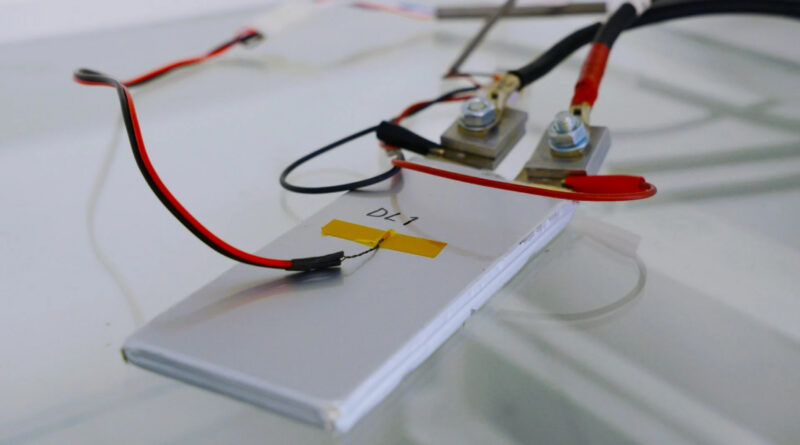
The company says the battery charge retention measurement was carried out using a fairly simple research setup. The Donut Battery was connected at room temperature to the research laboratory’s battery tester, which repeatedly measured the cell voltage every 10 seconds. As in the previous test, which measured battery performance at very high temperatures, the third test also began with a 1C capacity test. This demonstrated that the cell was precisely the same as the other test examples.
Proven In Testing

After the capacity test, Donut Lab says the battery cell was charged to approximately 50 percent charge and left connected to the battery tester for ten days. The cell was then discharged to measure the remaining energy capacity. “The results show that the battery cell voltage stabilizes during the first 10 hours after charging. Over the next nine or so days, the voltage curve continues to stabilize. A capacity test at the end of the test period confirmed that the voltage drop corresponds to the amount of energy in watt-hours.”
“The Donut Battery behaved in the test exactly as a battery should. If the test had been performed with a supercapacitor, the charge would have fallen linearly much faster during the same time period,” the company says.
Five Test Protocols
So far, Donut Lab has made 5 test protocols public. The first confirmed fast charging — the cell reached 80% in 4.5 minutes at 11C. The second showed the cell survived a 100° C discharge, though the cell lost its vacuum during the test. The third — referenced above — retained 97.7 percent charge after 10 days. The fourth moved to pack level, sustaining 100 kW charging in a Verge TS Pro motorcycle, and the fifth tested cycling resilience of a damaged cell.
No Energy Density Numbers Available
Energy density is easily verified by weighing a cell and measuring its output, and yet no independent verification has been done yet, which continues to make some observers skeptical. In addition, there is another concern. CEO Marko Lehtimäk has stated clearly that Donut Lab cells would be found in a production Verge motorcycle by the end of Q1, which is now just 6 days away.
It’s fair to say that Donut Lab has attracted a lot of interest since it announced its solid-state battery back in February, but that a lot of people are adopting a “wait and see” attitude before fully accepting the company’s claims. I have to admit that dribbling out the specs for the battery does raise some doubts in my mind.
Most new battery companies hit the ground running with reams of technical details and pricing information. To date, the testing procedures have involved three battery cells. We need much more proof than that before we declare the Donut Lab solid-state battery to be the key to the future.
Sign up for CleanTechnica's Weekly Substack for Zach and Scott's in-depth analyses and high level summaries, sign up for our daily newsletter, and follow us on Google News!
Have a tip for CleanTechnica? Want to advertise? Want to suggest a guest for our CleanTech Talk podcast? Contact us here.
Sign up for our daily newsletter for 15 new cleantech stories a day. Or sign up for our weekly one on top stories of the week if daily is too frequent.
CleanTechnica uses affiliate links. See our policy here.
CleanTechnica's Comment Policy

