
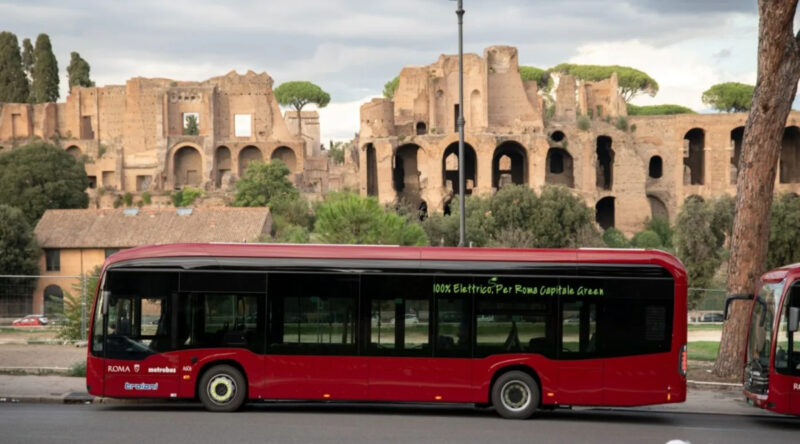
Electric Buses Were 56% Of EU City Bus Market In 2025
Support CleanTechnica's work through a Substack subscription, on Patreon, or on Stripe. Help us produce all of the high-quality, original content we publish week after week despite the challenges of content-scraping AI, antisocial media, inflation, and other hurdles.
At an electric vehicle ride and drive event for consumers, it seemed pretty clear the people who drove EVs themselves liked them and were interested or very interested. The decision-making process for everyday people involves much online research and personal test drives. While EVs in the US have become overly politicized, along with clean renewable energy, in many countries around the world they are recognized as simply better technology. They are much more energy efficient and generate far less carbon emissions and toxic air pollution that harms humans. They also can be run on renewable electricity — not only fossil fuels which are harmful and non-renewable.
Electric buses provide the same benefits and make even more sense because they move a huge number of people on daily routes and sometimes in urban areas where toxic air pollution needs to be reduced or eliminated.
The game-changer for sustainable transportation might turn out to be more fleet vehicle adoption, because mass transit provides services to huge numbers of people and in countries where mass transit moves more people than personal transportation.
Transport & Environment just published some information about how much growth there has been in the electric bus market, saying, “Six out of ten new EU city buses were zero-emission (ZE) in 2025, as battery-electric and fuel cell powertrains made up 56% and 4% of new sales respectively. This was unimaginable back in 2019 when the Clean Vehicles Directive was first adopted. Back then, electric buses stood at a mere 12% of the market. Now, it is clear that heavy vehicles can go electric, and do so fast.”
It is possible that just like with the ride and drive events for individuals which support greater EV adoption, when masses of people ride electric buses and experience how much quieter they are and therefore more comfortable and there are no diesel fumes, they like electric buses more. Of course, some also understand they are better for the environment and they want cleaner air in their cities, suburbs, and neighborhoods.
Drivers of electric buses may be healthier as well because they are not exposed to any toxic diesel fumes or exhaust. On a long shift, the driver of an electric bus might be more comfortable because of the relative quiet and not having to hear the sound of a diesel engine the whole work day.
Another success story is how fast electric buses have appeared in EU cities, and that growth may mean no more diesel buses at all fairly soon, says Transport & Environment. “How soon will the remaining 40% go zero-emission? If the growth rate observed in 2023–25 persists, we could reach 100% ZE city buses by 2028, seven years ahead of the 2035 target.”
If indeed there are only zero-emissions buses in EU cities by 2028, this feat will be a great accomplishment. Electrification of city buses is an effective way to introduce hundreds of thousands of people, if not millions, to electric vehicles.
While some may believe it is not possible to reach 100% zero-emissions buses in EU cities so quickly, it has already been accomplished in a handful of countries, according to Transport & Environment. “Five EU Member States had 100% ZE city buses in 2025: Bulgaria, Denmark, Estonia, Latvia, and Slovenia. Another six reached over 90% ZE shares: the Netherlands, Luxembourg, Finland, Belgium, Lithuania, and Romania.”
It should be noted the zero-emissions buses are not hybrids or EREVs. Hybrids and EREVs are not good for the environment or human health because they use fossil fuels and fossil fuels are good for neither.
Sign up for CleanTechnica's Weekly Substack for Zach and Scott's in-depth analyses and high level summaries, sign up for our daily newsletter, and follow us on Google News!
Have a tip for CleanTechnica? Want to advertise? Want to suggest a guest for our CleanTech Talk podcast? Contact us here.
Sign up for our daily newsletter for 10–15 new cleantech stories a day. Or sign up for our weekly one on top stories of the week if daily is too frequent.


CleanTechnica uses affiliate links. See our policy here.
CleanTechnica's Comment Policy

