
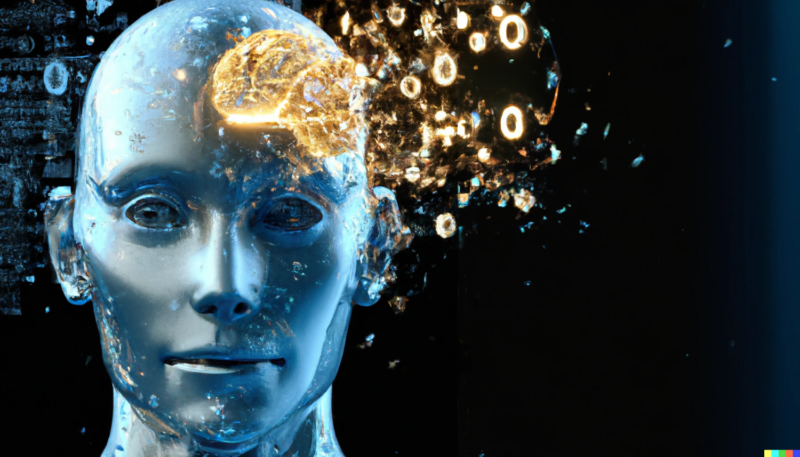
AI & Its Discontents — Part One
Support CleanTechnica's work through a Substack subscription, on Patreon, or on Stripe. Help us produce all of the high-quality, original content we publish week after week despite the challenges of content-scraping AI, antisocial media, inflation, and other hurdles.
In December, I noticed there were a lot of stories about AI — the misleading label given to large language model (LLM) computer programs that sort through virtually every byte of digitized data ever created to provide answers to questions posed to it.
Most of us are aware of chat bots — those digital assistants that pop up when we access many websites looking for information. They have largely replaced the humans in call centers who used to provide customer service. If you go to the web page of any retailer, a “digital assistant” will appear to assist you with your search. But AI is more than that. A physician I know claims it will revolutionize medicine and make the best available information available to anyone with a cell phone at very low cost.
An article in the New York Times this morning reports that doctors in China are using AI to detect pancreatic cancer — one of the most aggressive and difficult to treat diseases known to medicine — by analyzing the results of routine CT scans. Also in the Times today is a report that says Americans are more alarmed at the rise of AI than people in most other countries.
At CleanTechnica, we have already established ourselves as AI skeptics. Some might say on this topic we are tech adverse Luddites, which is a pretty damning characterization for an outfit that purports to bring its readers information about the world of technology. For every report of some new benefit ascribed to AI, there are others that focus on its dangers, such as its ability to mislead rather then inform.
In the final analysis, AI is a tool. Like any tool, it can be used for either good or evil. G. Gordon Liddy, part of the shadowy gang that resorted to skulduggery to get Richard Nixon re-elected, claimed there were half a dozen ways to kill a person with nothing but a No. 2 pencil.
What follows is an attempt to describe the pluses and minuses of AI so our readers can make up their own minds about its benefits and burdens so they can take reasonable steps to protect themselves and their loved ones from its less than desirable characteristics.
AI & Political Power
One of the most vocal critics of AI is Senator Bernie Sanders. In November, 2025, he posted this pointed critique of AI on his Senate web site:
“What should concern us all is that, with the strong support of President Trump, some of the wealthiest people on Earth — including Elon Musk, Larry Ellison, Mark Zuckerberg and Jeff Bezos — are investing hundreds of billions to advance AI and robotics. What is their goal? Is it to improve life for ordinary people? Is it to provide quality health care for all? Is it to address the existential threat of climate change? Maybe. But I doubt it. My guess is that they simply want to become even richer and more powerful than they are today.
“Let me be clear: If we do not act, AI, automation and robotics could be devastating for the working class. Last month, I released a report showing that these technologies could replace nearly 100 million jobs in America over the next decade — including 40% of registered nurses, 47% of truck drivers, 64% of accountants, 65% of teaching assistants and 89% of fast food workers.
“But don’t take it from me. Elon Musk said that, as a result of AI and robotics, “probably none of us will have a job…If you want a job that’s kind of like a hobby you can do a job. But otherwise, AI and robotics will provide any goods and services you want.” Bill Gates predicted that humans “won’t be needed for most things,” such as manufacturing products, delivering packages, or growing food over the next decade due to AI. And during our conversation, Dr. Hinton told me, “the people who lose their jobs won’t have other jobs to go to… it seems very likely to a large amount of people that we will get massive unemployment because of AI.”
“If Musk, Gates, and Dr. Hinton are even half right in their predictions, what happens to the tens of millions of Americans who suddenly find that the jobs they held for decades no longer exist? In this brave new world, how do these Americans pay for health care, food, housing and the other necessities of life?
“Here is the bottom line: AI and robotics are revolutionary and transformative technologies. They must benefit all of us, not just a handful of billionaires. We do not simply need a more “efficient” society — we need a more just, humane and democratic society where people live healthier, happier and more fulfilling lives.”
Notice that Sanders is not opposed to AI; instead he is opposed to the further enrichment of those who are already some or the wealthiest — and most powerful — people in history.
By now, we are all aware of the mad dash to build data centers in the US and in many places around the world. Those data centers are voracious consumers of electricity, which is fueling a push by the fossil fuel industry to build more methane-powered thermal generating stations to meet that need. Not only does that mean more air pollution, it also means higher utility bills for ordinary citizens. That in turn has created a backlash against those data centers in many communities.
AI & Young Minds
There are growing reports of young people relying on AI for emotional support. “If this trend continues, what does it mean over the years when people are not getting their support, their interaction from other human beings, but from a machine?” Sanders said. “What does that mean to humanity?”
Katie Britt is a Republican senator from Alabama who is concerned with this interaction. She has co-sponsored the Guardianship Over Artificial Intelligence Relationships (Guard) Act, which seeks to ban AI companions for minors. It also mandates that AI companions disclose their non-human status and lack of professional credentials. The act would establish criminal liability if companies make AI companions available to minors that solicit or produce sexually explicit content, encourage self-harm, or promote violence.
Britt said she had met with parents who have told her “devastating stories about their children where chatbots ultimately…..had isolated them from their parents, had talked to them about suicide. If these AI companies can make the most brilliant machines in the world, they could do us all a service by putting up proper guardrails that did not allow for minors to utilize these things, that also told the user consistently that they are not a physician, they are not a psychiatrist, ‘I am a machine.’”
Britt said AI companies should be held criminally liable if they create spaces where chat bots “are having these types of sensual and sexual relationships with young people or encouraging suicide.”
Everything Britt says should be intuitively obvious to the most casual observer, but the promoters of these artificial intelligence systems are vehemently opposed to such restrictions — or any restrictions, for that matter. Elon Musk’s Grok and Grokipedia have a disturbing habit of spouting authoritarian cant and making sexually suggestive comments. One parent was horrified recently when Grok asked her son if he could supply nude photos of himself.
Cutting edge medical diagnoses versus computer-generated porn. Clearly there is a lot to unpack about this latest tech geewizardry. Stay tuned for more on this subject.
Sign up for CleanTechnica's Weekly Substack for Zach and Scott's in-depth analyses and high level summaries, sign up for our daily newsletter, and follow us on Google News!
Have a tip for CleanTechnica? Want to advertise? Want to suggest a guest for our CleanTech Talk podcast? Contact us here.
Sign up for our daily newsletter for 10–15 new cleantech stories a day. Or sign up for our weekly one on top stories of the week if daily is too frequent.


CleanTechnica uses affiliate links. See our policy here.
CleanTechnica's Comment Policy

