

Philippine Transport Agency Suspends E-Trike Impounding, December to Be a Month of “Catch-and-Release”
Support CleanTechnica's work through a Substack subscription or on Stripe.
Or support our Kickstarter campaign!

31 days of warnings before the crackdown
The Philippine Land Transportation Office (LTO) has officially hit the brakes on its plan to begin impounding electric tricycles (e-trikes) and electric bikes (e-bikes) on national highways this December. Following a surge of public complaints and confusion over the new regulations, the agency announced on Sunday that “strict enforcement” will be deferred until January 2, 2026.
Instead of confiscating vehicles during the holiday season, the LTO and the Metropolitan Manila Development Authority (MMDA) have shifted gears to a month-long “information drive” aimed at educating the public on which roads are strictly off-limits to light electric vehicles (LEVs).
“Safety is the Priority”
LTO Chief Assistant Secretary Markus Lacanilao confirmed the delay in a video statement released on November 30, emphasizing that the postponement is not a retraction of the policy, but a grace period for education. The agency maintains that the ban is necessary to prevent accidents on fast-moving major thoroughfares like EDSA, C5, and Commonwealth Avenue.
“There will be no impounding operation for the time being while we implement a comprehensive information drive to give everyone enough time to understand and comply with the regulations,” Assistant Secretary Lacanilao stated.
However, he issued a stern warning regarding the new deadline. “By January 2, 2026, we will begin our strict enforcement and there will be no extensions. This includes apprehension for those who will violate the ban covering National Highways.”
Lacanilao reiterated that the agency’s motive was rooted in public welfare rather than punishment. “Ultimately, the LTO has only one goal—not to inconvenience the public, but to ensure that our roads are safe, well-maintained, and with clear responsibilities for every user.”
Relief mixed with anxiety
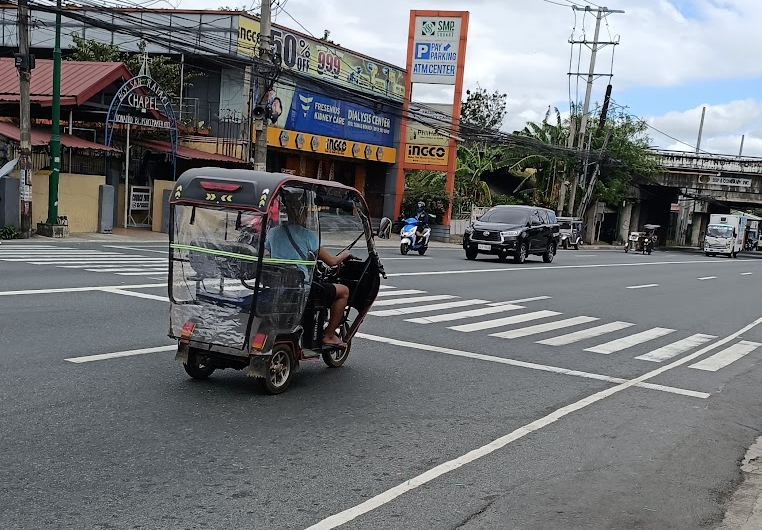
CleanTechnica went out in Manila to ask e-trike owners about the development.
Clearly, for the thousands of commuters and families who rely on e-trikes as an affordable alternative to public transport, the announcement brought immediate relief. Though, anxiety about the upcoming policy in the new year remains high.
Many owners argue that the ban disproportionately affects low-income households who use these vehicles for essential errands, such as bringing children to school or going to the market.
“This is a good development for now, but someone has to think twice, thrice, about taking out e-trikes,” says Harry C., who takes his granddaughter Sophia to school on an e-trike in Pasig. “This is a most convenient way and saves us a lot of money compared to using tricycles that are crowded and unsafe,” the 65-year old grandfather said.
“We are thankful for the extension, but we are still worried about what happens in January,” shared Janette J., a mother of two who uses a three-wheeled e-trike in Quezon City to transport her children. “It isn’t clear yet where we can cross or if we will be arrested just for entering the edge of the highway to get to our barangay. This e-trike is our family service; we cannot afford a car.”
Others expressed frustration over what they perceive as shifting rules.
“It is good they paused it, but they need to be consistent. One day they say it’s allowed in the bike lane, the next day they say ‘total ban’ on major roads,” Momon Benipayo, a Grab rider using an e-bike remarked. “I can’t understand this rule. It’s light electric vehicles. Does that include us? We just want to work. If they impound my bike in January, I lose my livelihood. We need clear maps, not just threats.”
“Our government officials obviously do not commute using public vehicles. They are so comfortable in their air conditioned SUVs. They don’t know how important e-trikes are, especially when the sun is hot or when it is raining. We cover only the short distances, so why ban us?” Guillermo Perez, an e-trike operator near the Pasay bus terminal blurted out in Tagalog. “This is insane because it is so insensitive and even irresponsible!”
“The rules are unclear to us. They said light commercial vehicles. Then they said national roads. I live in Makati and cross to BGC on my Inokim (an electric scooter) and that’s convenient and cost effective for me, am I included in the ban?” Armand B., a call center agent, told CleanTechnica. “Also I believe that the government is very ineffective and stupid to ban e-trikes when at the beginning they allowed it to proliferate. They should have, at the point of sales, been clear where it can and cannot be used.”
The legal “gray area”
The crackdown has also sparked a debate among lawmakers. Representative Terry Ridon of the Bicol Saro Party-list has publicly challenged the LTO’s authority to impound private-use LEVs, citing the Electric Vehicle Industry Development Act (EVIDA).
According to Ridon, the law does not explicitly require registration for e-vehicles used exclusively for private purposes, creating a legal gray area that the LTO attempts to bridge by citing older traffic codes (RA 4136) that require all vehicles on public highways to be registered.
Atty. Ariel Inton, spokesperson of the Land Transportation and Franchising Regulatory Board and founder of Lawyers for Commuter Safety, told CleanTechnica that he agrees with Ridon in principle.
Catch-and-release
Throughout December 2025, motorists can expect to see LTO and MMDA enforcers flagging down e-trikes and e-bikes on major roads. However, instead of issuing tickets or towing vehicles, officers will be distributing flyers and explaining the specific boundaries of the ban.
The “No Impound” policy is effective immediately, but authorities reminded the public that this is not a free pass. Reckless driving and other traffic violations remain punishable offenses.
As the clock ticks toward January 2, 2026, both the government and e-vehicle owners are bracing for what promises to be a contentious start to the new year on Metro Manila’s roads.
Support CleanTechnica via Kickstarter

Sign up for CleanTechnica's Weekly Substack for Zach and Scott's in-depth analyses and high level summaries, sign up for our daily newsletter, and follow us on Google News!
Have a tip for CleanTechnica? Want to advertise? Want to suggest a guest for our CleanTech Talk podcast? Contact us here.
Sign up for our daily newsletter for 15 new cleantech stories a day. Or sign up for our weekly one on top stories of the week if daily is too frequent.
CleanTechnica uses affiliate links. See our policy here.
CleanTechnica's Comment Policy

