
Natural Gas Electricity Generation in the United States Spiked with July Heatwave — Global Heating Leading to More Fossil Fuel Use
Support CleanTechnica's work through a Substack subscription, on Patreon, or on Stripe. Help us produce all of the high-quality, original content we publish week after week despite the challenges of content-scraping AI, antisocial media, inflation, and other hurdles.
Editor’s note: Unfortunately, we’re already seeing examples of global heating leading to the burning of more fossil fuels, which of course is creating more global heating. It’s a vicious cycle. Here’s the latest example.
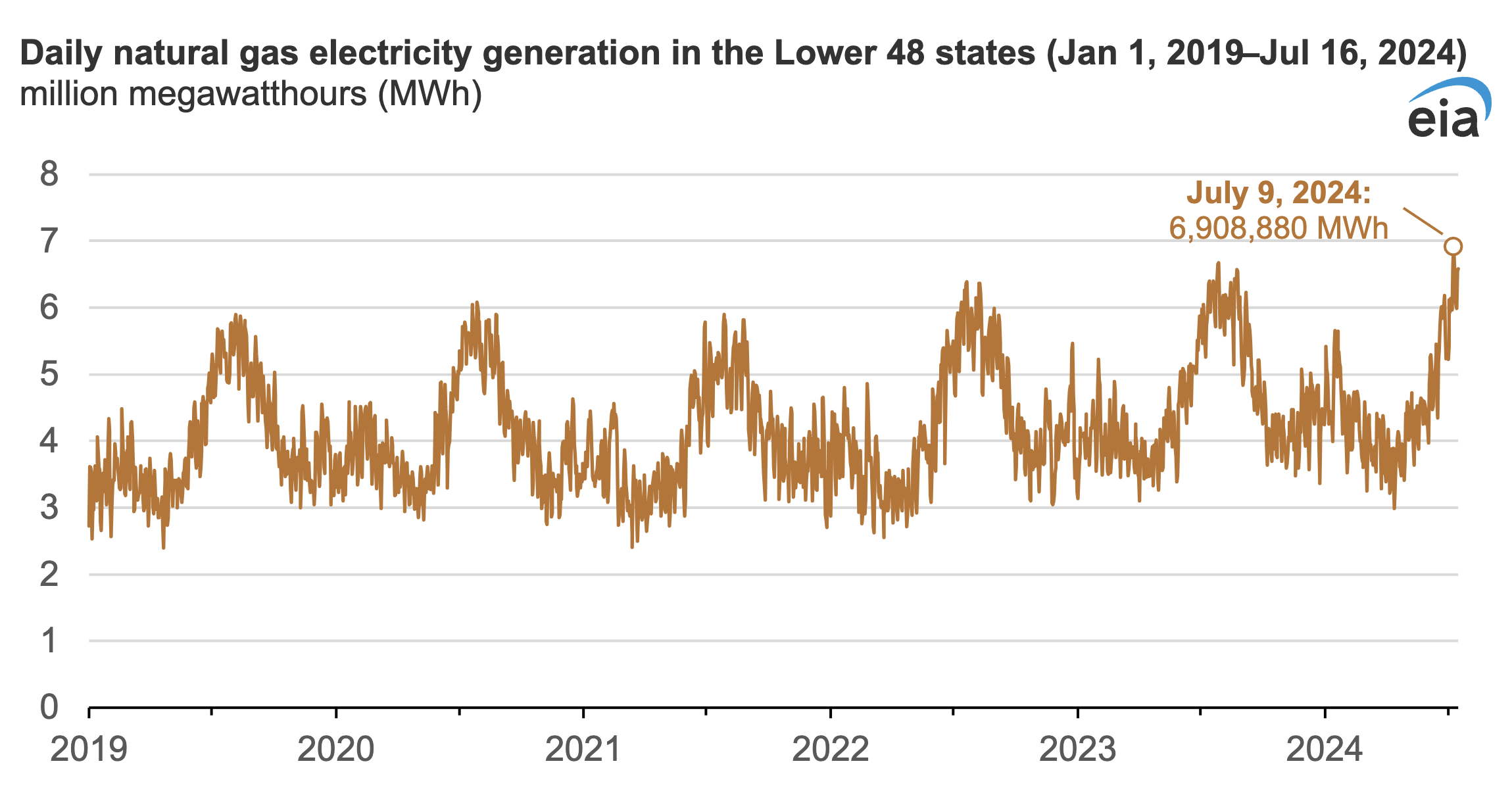
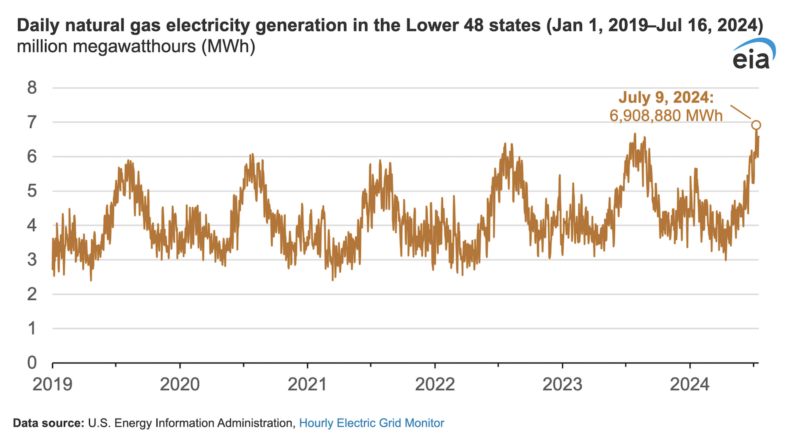
- U.S. power plant operators generated 6.9 million megawatthours (MWh) of electricity from natural gas on a daily basis in the Lower 48 states on July 9, 2024, probably the most in history and certainly since at least January 1, 2019, when we began to collect hourly data about natural gas generation.
- The spike in natural gas-fired generation on July 9 was because of both high temperatures across most of the country and a steep drop in wind generation.
- According to the National Weather Service, most of the United States experienced temperatures well above average on July 9, 2024. Temperatures were particularly high on the West Coast and East Coast.
- Wind generation in the Lower 48 states totaled 0.3 million MWh on July 9, 2024, much lower than the 1.3 million MWh daily average in June 2024.
Principal contributors: Kimberly Peterson, Chris Peterson. Originally published on Today in Energy.
Sign up for CleanTechnica's Weekly Substack for Zach and Scott's in-depth analyses and high level summaries, sign up for our daily newsletter, and follow us on Google News!
Have a tip for CleanTechnica? Want to advertise? Want to suggest a guest for our CleanTech Talk podcast? Contact us here.
Sign up for our daily newsletter for 10–15 new cleantech stories a day. Or sign up for our weekly one on top stories of the week if daily is too frequent.


CleanTechnica uses affiliate links. See our policy here.
CleanTechnica's Comment Policy

