Policy Research

Beyond Oʻahu: How The Other Hawaiian Islands Will Decarbonize

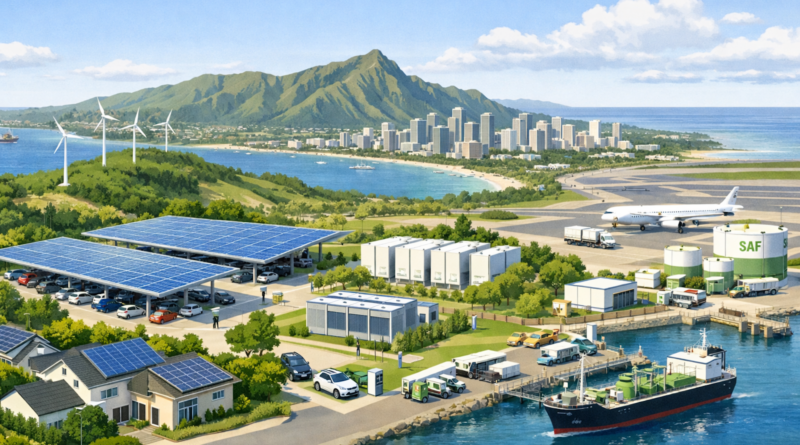
Oʻahu was the test case, but it was never the whole question. The real question for Hawaiʻi was always whether the same logic that makes decarbonization viable on the most populous island would also hold across the rest of the inhabited archipelago. If Oʻahu could get to a clean, resilient, … [continued]

Turning the Plan Into Action: Next Steps for Oʻahu’s Clean Energy System

This is the culminating article in a series exploring from the outside a decarbonization solution set and coarse roadmap for Hawaiʻi. It is a set of possible next actions that a Hawaiian agency, utility, authority, or coalition could undertake if the roadmap outlined in this series is worth exploring further. … [continued]

Oʻahu 2050: A Hard-Charging Roadmap to a Zero-Carbon Energy System

What follows is a draft roadmap for a decarbonized O’ahu. This roadmap does not appear out of nowhere. It follows a long chain of analysis that rebuilt Oʻahu’s energy system piece by piece. Earlier articles stripped away overseas aviation fuel, international maritime bunkering, and military demand to isolate the island’s … [continued]

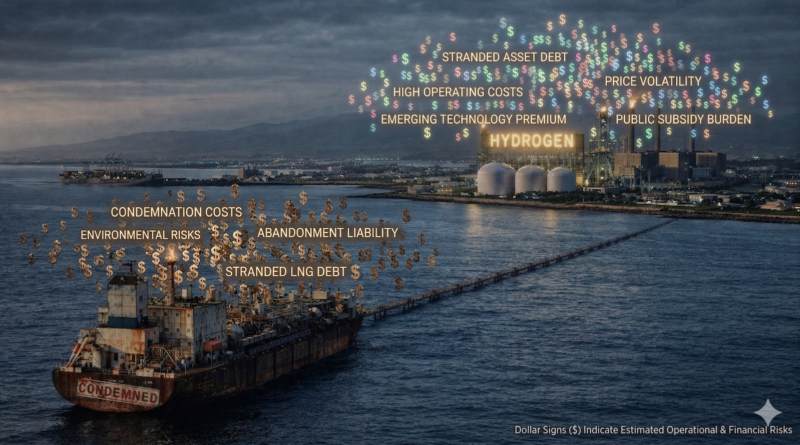
Hawaiʻi’s Latest LNG Plan Rests On Assumptions That Do Not Survive Scrutiny

Hawaiʻi’s debate over importing liquefied natural gas has turned on a state study that was supposed to show whether LNG could lower electricity costs on Oʻahu while serving as a bridge to a cleaner system later. The scenario sold for the past year turned out to be based on a … [continued]

Winning the Energy Transition on Oʻahu: It’s Not About Technology

The clean energy future for Oʻahu is no longer blocked by missing technology. The architecture is already visible. Once overseas aviation fuel, international bunkering, and military energy use are taken out of the frame, and once transportation, buildings, and industry are electrified, the civilian Oʻahu system settles into roughly 6,000 … [continued]

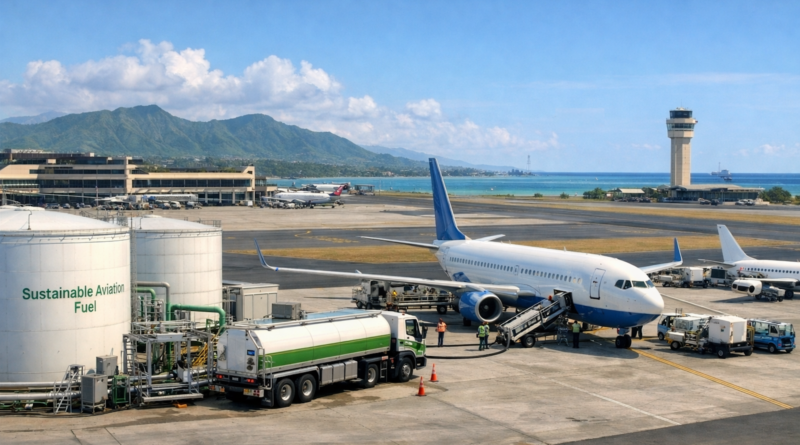
Solar at Home, Imported Biofuels for Crossing Oceans: Hawaiʻi’s Real Energy Strategy

The final piece of Hawaiʻi’s decarbonization puzzle is not on Oʻahu’s domestic grid. That part of the work is already largely bounded. In the earlier articles in this series, I stripped out overseas aviation fuel, ocean-crossing ship bunkering, and military energy use, then electrified ground transportation, local marine transport, buildings, … [continued]

LNG Need Not Apply: The Math of Oʻahu’s Clean Energy Future

The debate over LNG in Hawaiʻi persists because it sounds like a practical answer to a familiar problem. Oʻahu still relies heavily on imported fuel for electricity, so a different imported fuel can appear to be a reasonable bridge. LNG is marketed as dispatchable, cleaner than oil, and compatible with … [continued]

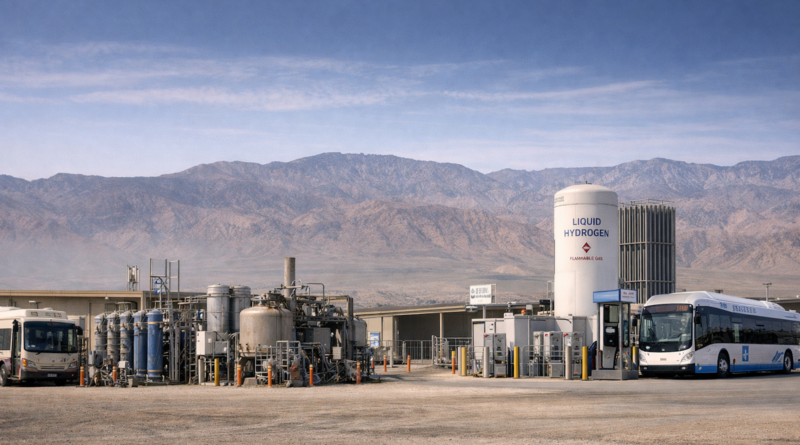
Gray Hydrogen, High Costs, and the Real Emissions of SunLine’s Fuel Cell Fleet

SunLine Transit Agency, which provides transportation for the large western California county that includes Palm Springs and Coachella, has spent a quarter century doing more than almost any transit agency in North America to try to make hydrogen buses work. It started hydrogen production and dispensing around 2000, has cycled … [continued]

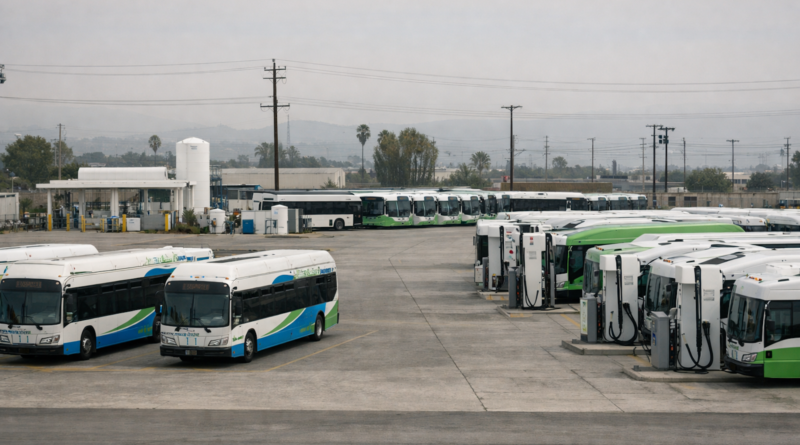
Ballard’s 500 Fuel Cell Deal Meets A Hydrogen Bus Market That Never Arrived

Ballard Power and New Flyer announced what sounds at first like a market-making agreement, a commercial arrangement for 500 fuel cell engines, or about 50 MW of modules, for hydrogen transit buses starting in 2026. On the surface, that reads like the kind of order that only appears when a … [continued]

Be Careful What You Wish For: Alberta’s Gas Price Shift

Alberta has spent years arguing that natural gas was undervalued because it was trapped in a basin with too few outlets. That argument was always partly right. The Alberta Energy Regulator says the average AECO-C price was only $1.45/GJ in 2024, down 47% from 2023’s global European Energy crisis prices, … [continued]