
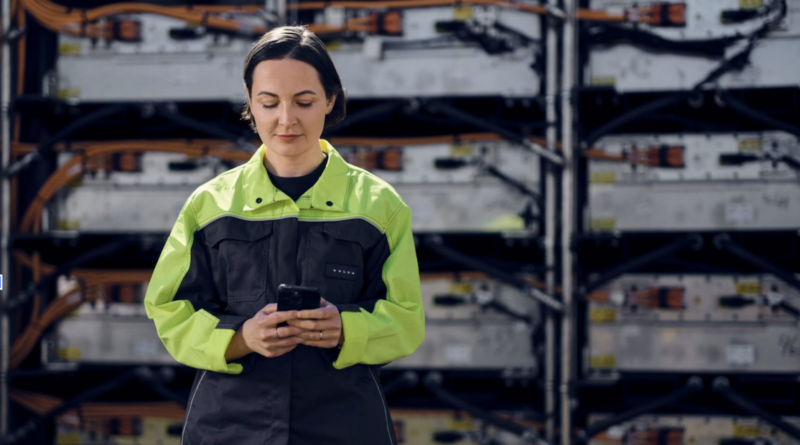
Volvo Energy | Sustainable Trucking With Extended Life Batteries
Support CleanTechnica's work through a Substack subscription or on Stripe.
We’re two years into the Volvo VNR Electric leading the way in zero emissions trucking, with the company on track to put 300,000 such trucks into operation in the coming years. It’s safe to say, then, that electric semi trucks aren’t coming soon. They’re already here, and the scope of heavy electric vehicle applications is growing from city and school buses to refuse and drayage trucks to true over-the-road semi tractors. As such, manufacturers are going to have to play a larger battery production, usage, and retirement than they do today – and that’s where Volvo Energy comes in.
“The battery is the heart of an electric truck,” explains Elisabeth Larsson, senior vice president of sales and services at Volvo Energy. “When properly maintained, it can deliver multiple lifecycles, including after its useful life in the truck. This concept — called “battery circularity” — is an investment in the overall sustainability plan, not just the truck. Volvo Energy is achieving battery circularity through a process deemed as the four Rs: refurbish, remanufacture, repurpose, and recycle.”
A division of the larger Volvo Group, Volvo Energy is working to develop battery circularity focusing on what it calls “the four Rs”:
- refurbishing/repairing
- remanufacturing
- repurposing
- recycling
Refurbishing/repairing a battery enables its continued use or, in some cases, reuse, while remanufacturing involves replacing modules to provide customers with “good-as-new” replacement batteries at a lower cost than new ones.
At the end of its vehicle lifecycle, a battery that’s degraded to less than 80% of its original capacity when new can be repurposed, utilized in applications like onsite energy storage where total capacity is less critical than it might be in a vehicle. This kind of repurposing can the lifespan of a truck’s battery by as much as a decade.
With these efforts, Volvo Energy hopes to not only contribute to sustainability, but also support charging, optimize energy usage in buildings or microgrids, and store green energy from intermittent energy sources like wind and solar.
“Customer conversations are a highlight of my job at Volvo Energy,” says Larsson. “I meet many fleet managers who are up to speed on battery lifecycle expectations. I also meet customers who know very little about the process but are eager to learn more. Common among all of them is the desire to boost their sustainability plans, and they look to Volvo Energy to help them achieve that goal.”
In an industry where one size does not fit all, Volvo, through Volvo Energy, is recognizing the importance of tailoring solutions to meet the unique requirements of each fleet.
“Volvo Energy provides value by assisting fleets in finding the most effective strategies to prolong the life of the battery,” Larsson continues. “There are fleets that want to optimize their usage and residual value by changing out batteries more frequently, but that hinges on the direction of advancing technology. Offering customers more options is part of our plan. I think there will be variations of business models in development that align according to what the customer finds most useful and cost effective.”
Source | Images: Volvo Energy.
Sign up for CleanTechnica's Weekly Substack for Zach and Scott's in-depth analyses and high level summaries, sign up for our daily newsletter, and follow us on Google News!
Have a tip for CleanTechnica? Want to advertise? Want to suggest a guest for our CleanTech Talk podcast? Contact us here.
Sign up for our daily newsletter for 15 new cleantech stories a day. Or sign up for our weekly one on top stories of the week if daily is too frequent.
CleanTechnica uses affiliate links. See our policy here.
CleanTechnica's Comment Policy
