Sheer Chaos As Paint-On Perovskite Solar Cells Take Over
Solar opponents will have to figure out a new line of attack when perovskite solar cells suddenly plaster the world.

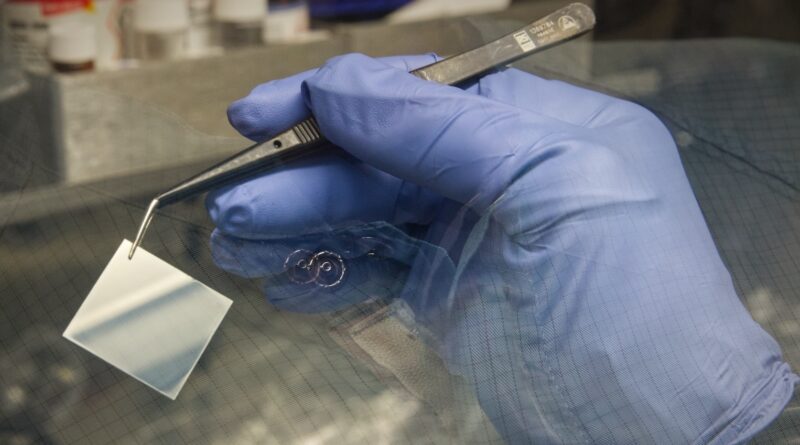
Solar opponents will have to figure out a new line of attack when perovskite solar cells suddenly plaster the world.

NASA is lending its financial muscle to help an Arizona startup send its self repairing solar panels into space and meet the demand for larger, more powerful arrays.
18 years of hard work has resulted in the startup infinityPV finally commercializing products with printed solar photovoltaic foil.
Originally published on Solar Love. As the saying goes, there ain’t no such thing as a free lunch. You can’t generate usable energy without some form of impact, whether it’s fossil fuels or renewables, and the Volkswagen “clean diesel” scandal provides ample evidence that technology solutions for fossil fuels are … [continued]

The future of the silicon thin-film market is looking bleak, according to a new report from EnergyTrend, a research division of TrendForce. After the (relatively) recent announcement from DuPont that it was planning to terminate its silicon thin-film operations, questions have certainly begun to come up about how much longer … [continued]

Thin-film solar cells may soon possess the ability to absorb a notably larger portion of the light that strikes them, thanks to the recent development of a “superabsorbing” design by researchers at North Carolina State University. As well as improving the light absorption efficiency of thin-film solar cells, the new … [continued]
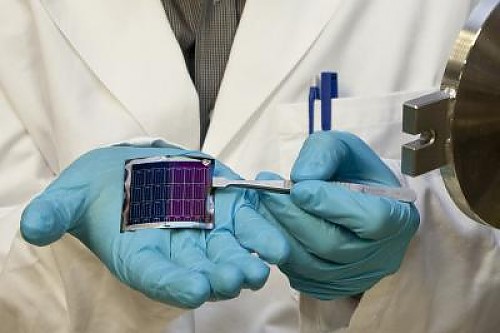
The solar cell efficiency horse race is in full swing and it seems like every other week a new record-breaking announcement comes out, but let’s take a step back and consider how efficiency is just one element in the installed cost of solar power. Another key factor is the cost … [continued]
Originally published on Solar Love. The Centre for Solar Energy and Hydrogen Research Baden-Württemberg (ZSW) has announced that it has set a new copper indium gallium diselenide (CIGS) thin-film solar cell efficiency record. The 20.8% record beats ZSW’s own previous record of 20.3% as well as the 20.4% multicrystalline PV cell record — … [continued]
Solar cells that are cheaper to produce and contain fewer toxic compounds may be a reality in the near future, thanks to new research from Oregon State University. By utilizing a commonly used antifreeze — ethylene glycol — and some other comparatively cheap materials to produce solar cells in a … [continued]
Solar industry manufacturing consortium PVMC and NREL aim to help reduce the installed cost of thin-film CIGS solar PV by 75%, an effort that falls right in line with targets set out in PVMC’s thin-film PV industry roadmap and President Obama’s SunShot Initiative.
