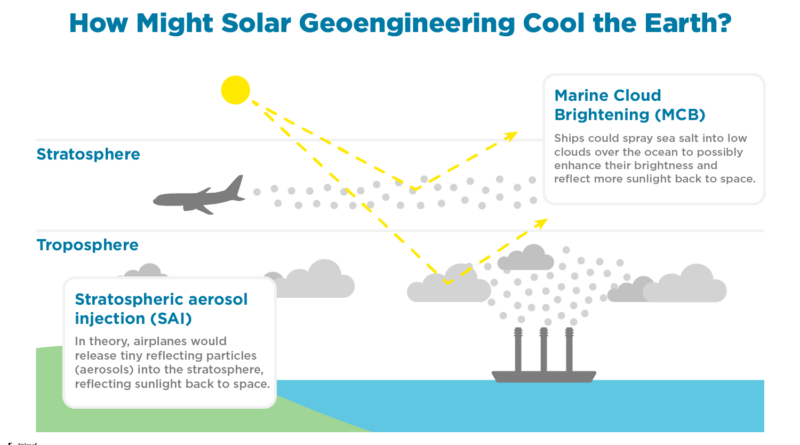
Geoengineering The Ocean — What Could Possibly Go Wrong?
The latest research examines the risks and rewards of geoengineering the ocean to make it absorb more carbon dioxide.

The latest research examines the risks and rewards of geoengineering the ocean to make it absorb more carbon dioxide.
When you’re on one side of the “political divide” and you see a lot of bad stuff about the president of the other side, it’s easy to think, “how the hell does anyone support this person?” However, it’s much harder for someone to turn on their “party leader,” especially if they have white hair and have been a dedicated member of that party for their whole adult life.
The Republican Party has won the popular vote in a presidential election only one time since 1988. That’s more than 30 years (or 7 elections) with just one popular vote win, which went to George W. Bush, possibly due to an Osama bin Laden video tape that came out 4 days before the election. In 2000, Bush won the electoral college (well, maybe*) despite the fact that Gore got more than half a million more votes. In 2016, Hillary Clinton won the popular vote by nearly 3 million votes, but lost the electoral college vote (by fewer than 60,000 votes in key states).
The 6th IPCC climate assessment is out and it describes a world speeding headlong toward disaster. Will we pay attention before it’s too late? (Probably not.)
Last week, I wrote about a US democratic crisis. It concerns Vladimir Putin and Donald Trump on the surface, but a bit more deeply, it concerns oil. Take a deep breath and bear with me a moment while I set the stage before connecting the dots.
One of the key lessons I learned while getting my first degree in sociology is a simple one, but it’s also a profound one that is too often glossed over. The lesson is that democracy is fundamentally built on two pillars: 1) widespread availability of accurate, nearly complete information; and 2) a citizenry that engages in politics.
High atop Mauna Loa on the island of Hawai’i, there is an observatory scientists use to study the cosmos. At 14,000 feet above sea level, it has a clearer view of the heavens than most places on Earth. (It is a neighbor of Kilauea, the volcano that erupted this week after a 6.9 magnitude earthquake struck the island.) The observatory is also an ideal place to monitor the Earth’s atmosphere in a place with no local pollution from large cities. One of the instruments installed there measures the concentration of carbon dioxide in the air.
A federal judge in New York has dismissed a suit brought by ExxonMobil against two attorneys general accusing them of conspiring to sue the company just to get reelected.
Donald Trump is not that normal, but he is human. He is a human who has lived essentially all of his life with a totally stacked hand, to bring in a gambling analogy. He has still managed to lose all of his or his companies’ cash several times, but then his connections in the benevolent and altruistic worlds of the mafia, luxury real estate, banking, and show business have bailed him out and let him start a fresh game with a new (again highly stacked) hand. As such, despite being human, The Donald has had a pretty abnormal life that has not fully warped his sense of reality by itself but which has warped his sense of what’s proper and normal for the rest of society. After all, his reality is indeed real, even if it’s not normal or proper.
As Energy Week limps to a close, tension mounts between the nuclear vision of Bill Gates and the natural gas leverage embodied by of Rex Tillerson.
