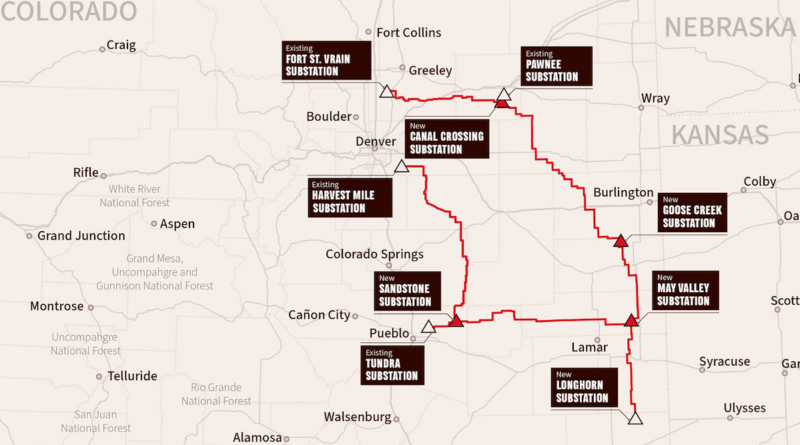
One State, 12 Counties, A Huge Pile Of Renewable Energy Projects
Renewable energy developers in Colorado are already swarming around the new Power Pathway transmission line, which will loop around 12 counties.

Renewable energy developers in Colorado are already swarming around the new Power Pathway transmission line, which will loop around 12 counties.
Medium- and heavy-duty electric trucks, like any electric vehicle, require charging infrastructure that is both accessible and effective. However, charging infrastructure for these vehicles presents a bigger challenge than that of smaller electric vehicles due to their larger size and greater power requirements. Firstly, medium- and heavy-duty electric trucks typically … [continued]
The Financial Times has reported another win for clean energy. NextEra, the world’s largest solar and wind power generator, has surpassed ExxonMobil in market value.
Southern California Edison, with 15 million customers, is adding 770 MW of battery storage to increase the dispatchability of renewable energy in its service area.
This big new community solar power plan is big news for renewable energy fans, and a proposed new transmission line adds even more pop to the picture.
New Green Deal meets old New Deal with new triple-hybrid renewable energy project for Oklahoma rural electric cooperative.
American telecommunications giant AT&T has announced it has signed a new 300 megawatt (MW) Power Purchase Agreement (PPA) with Florida-based electricity supplier NextEra Energy Resources to accompany a previous 520 MW deal signed in February.
Spanish wind energy giant Siemens Gamesa Renewable Energy has been awarded the contract to repower three wind farms in the United States for a total of 508 megawatts (MW), extending the lifespan and reliability of projects which would otherwise have reached their life’s end.
The Canada Pension Plan Investment Board has this week announced it has acquired a 396 megawatt (MW) wind and solar energy portfolio from NextEra Energy Partners for $582.3 million.
For traditional investor-owned utilities (IOUs) in Florida, corporate policy remains keyed on maximizing electricity sales and effectively justifying construction of new generation resources that are a high source of profit for stockholders. As regulated monopolies, IOUs are guaranteed a profit by the public service commission (PSC) both for selling electricity and associated transmission lines, but particularly for building power plants. And Florida with its fast-growing population and thus expanding residential sector with high levels of cooling electricity use has guaranteed the need for new power plants. As such, the state has been a gold mine for its IOUs in the state — the average household spends nearly $2000 annually for electricity. With millions of accounts, this is a multi-billion-dollar revenue stream.