National Renewable Energy Laboratory (NREL)

Artificial Intelligence Models Improve Efficiency of Battery Diagnostics

NREL-Developed Neural Networks Uncover New Insights Into Battery Health Resilient energy systems depend on reliable batteries. The lithium-ion (Li-ion) batteries powering our world must endure the steady strain of time, charge cycles, and environmental conditions that gradually wear them out through degradation. Understanding the health of a battery can help … [continued]

Mark Kutchenreiter, research technician, hosts a tour of the Solar Industrial Mesa Test Area at NREL's Golden, Colorado, campus.

NREL Announces 2025 Executive Energy Leadership Cohort

The U.S. Department of Energy’s National Renewable Energy Laboratory (NREL) has selected 19 leaders to participate in its 2025 Executive Energy Leadership program (Energy Execs). The program curriculum is structured to support decision makers from government, corporate, nonprofit, and community organizations as they work to apply energy practices in their … [continued]

Crysalis scaled up NREL’s original reactor operations to produce bio-based acetonitrile. The photo on the left shows NREL’s lab-scale reactor; the photo on the right shows the pilot-scale reactor in the Crysalis facility. Photos by Dennis Schroeder, NREL (left) and Gregory Cooper, NREL (right).

NREL & Crysalis Biosciences Collaborate To Scale Up Domestic Biomanufacturing Technologies

Public–Private Partnership Advances Research That Turns US Biomass Into National Sources of Fuel, Rubber, and Battery Materials The U.S. Department of Energy’s (DOE’s) National Renewable Energy Laboratory (NREL) is known for its groundbreaking research in impactful bioenergy technologies and invention of performance-advantaged chemicals and materials. But some of its most … [continued]

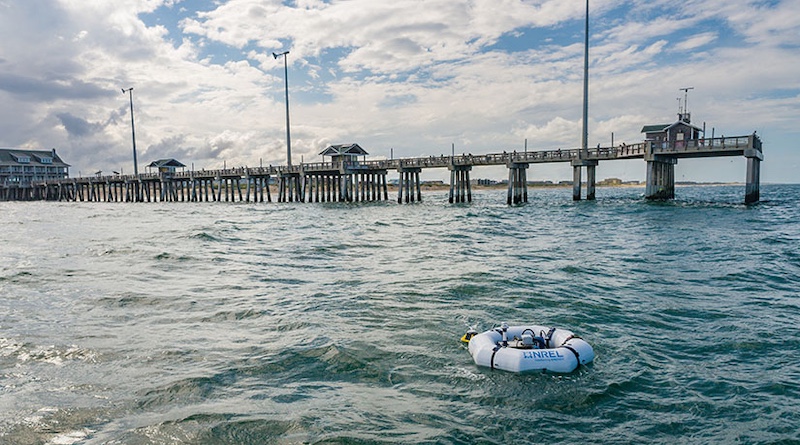
NREL's hydraulic and electric reverse osmosis (HERO) wave energy converter (WEC) is seen anchored off Jennette's Pier in Nags Head, North Carolina. This is NREL’s first marine-powered desalination device to weather ocean waters. Photo by John McCord / Coastal Studies Institute.

Updated Risk Management Framework Supports Success of Marine Energy Devices

The life of a wave energy converter (WEC) may sound idyllic—bobbing on ocean waves all day or swaying underwater, quietly generating electricity for the people living and working near shore. But in reality, it takes a lot of careful planning for salt water and electronics to achieve that perceived state … [continued]

HERO’s Mission: An Elevator Part Could Bolster Marine Energy Technologies

Latest HERO WEC Mission Status Update Examines How a Polyurethane Belt Could Improve Reliability of Wave Energy Converters The National Renewable Energy Laboratory’s (NREL’s) wave-powered desalination research is charting new waters by improving the robustness, reliability, and deployability of the hydraulic and electric reverse osmosis wave energy converter—or HERO WEC. To do this, … [continued]

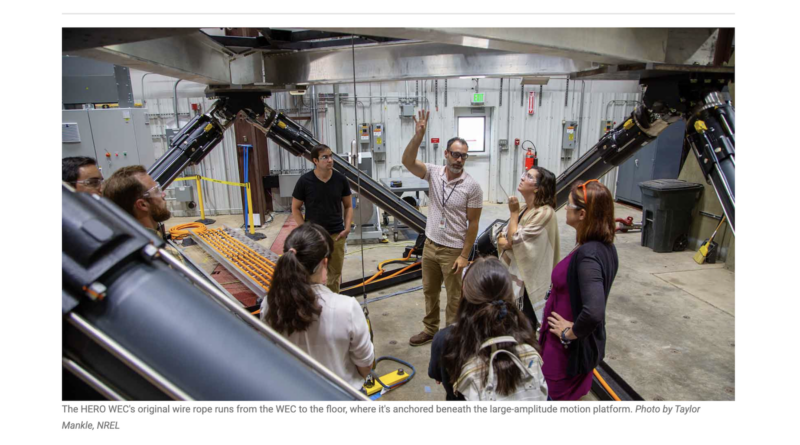
Photo by Werner Slocum, NREL.

15 Years & Counting: A Unique Solution for Transportation Data Sharing

Transportation Secure Data Center Is Growing Its Data Offerings This year, the Transportation Secure Data Center (TSDC) turns 15 years old, continuing to increase the availability and usability of travel and transit surveys and studies from municipalities, transit agencies, and other entities that want to share their results while protecting participant privacy. … [continued]

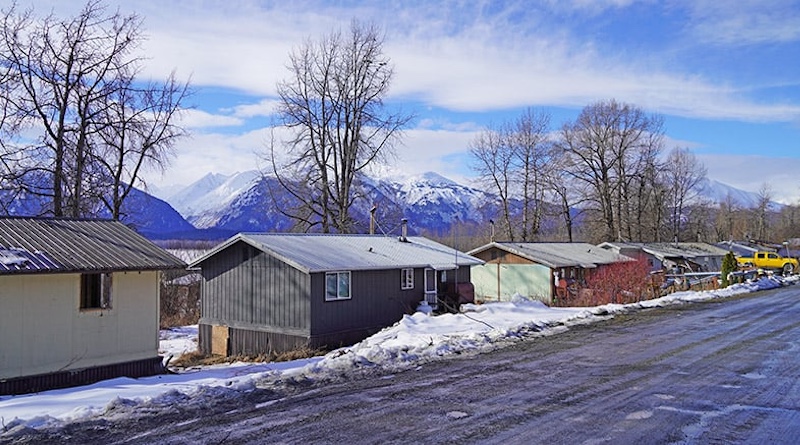
The majority of housing in Klukwan consists of modular units imported from the Lower 48 in the 1970s, not well suited to the extremes of Alaska. Photo by Molly Rettig, NREL.

NREL Partners With Chilkat Indian Village To Improve Housing in Klukwan, Alaska

A team of National Renewable Energy Laboratory (NREL) researchers and Tribal staff gathered around the wood stove in Charlie Spud’s home, trying to figure out why it was not drawing air. “Every time I turn on the bath fan, the stove backdrafts,” said Spud, 61, who built the home 13 … [continued]

Rory McIlmoil shares his insights into how microgrids could bolster grid resilience in times of high stress.

Microgrids Could Enhance Grid Resilience

NREL Researcher’s Personal Experience Inspires His Passion To Improve Local Grid Resilience This installment of the National Renewable Energy Laboratory’s (NREL’s) Tell Me Something Grid series features Rory McIlmoil, a researcher in NREL’s Grid Planning and Analysis Center. McIlmoil shares how microgrids could unlock greater grid resilience in the wake of … [continued]

NREL researcher Craig Turchi soaks up the sunshine along the banks of the Gunnison River in Colorado. Turchi is the manager of the Thermal Energy Science and Technologies group in NREL's Center for Energy Conversion and Storage Systems. His love for nature led him to work in solar technologies after completing his Ph.D. in chemical engineering at North Carolina State University. At NREL, his work has focused on a range of issues in concentrating solar technologies, from systems analysis to reducing water use at concentrating solar power plants in desert environments. Photo from Craig Turchi

NREL Researcher Craig Turchi Brings Small Business Experience to Big Concentrating Solar Projects

Turchi’s Years at a Tech Startup Gave Him a Savvy Outlook on Concentrating Solar Power (CSP) Systems Analysis and Innovation Honesty is the best policy, and from his early days at the National Renewable Energy Laboratory (NREL), Craig Turchi embraced that policy in his work as a chemical engineer in … [continued]